Best Golf Resorts in America
The phrase "golf resort" covers an enormous range of experiences. It includes properties where the golf is incidental to the spa, the pool, and the branded bathrobes, and it includes properties where the golf is the entire reason the place exists. This ranking focuses on the latter category: resorts where the courses are genuinely distinguished, where the accommodation supports the golf rather than distracting from it, and where the overall experience justifies the cost of getting there. Ten properties, ranked by the quality of what actually matters.
1. Bandon Dunes Golf Resort — Bandon, Oregon
Courses: 6 (plus two short courses). Anchor course: Pacific Dunes. Price tier: Premium. Best for: Serious golfers who treat a trip as a pilgrimage.
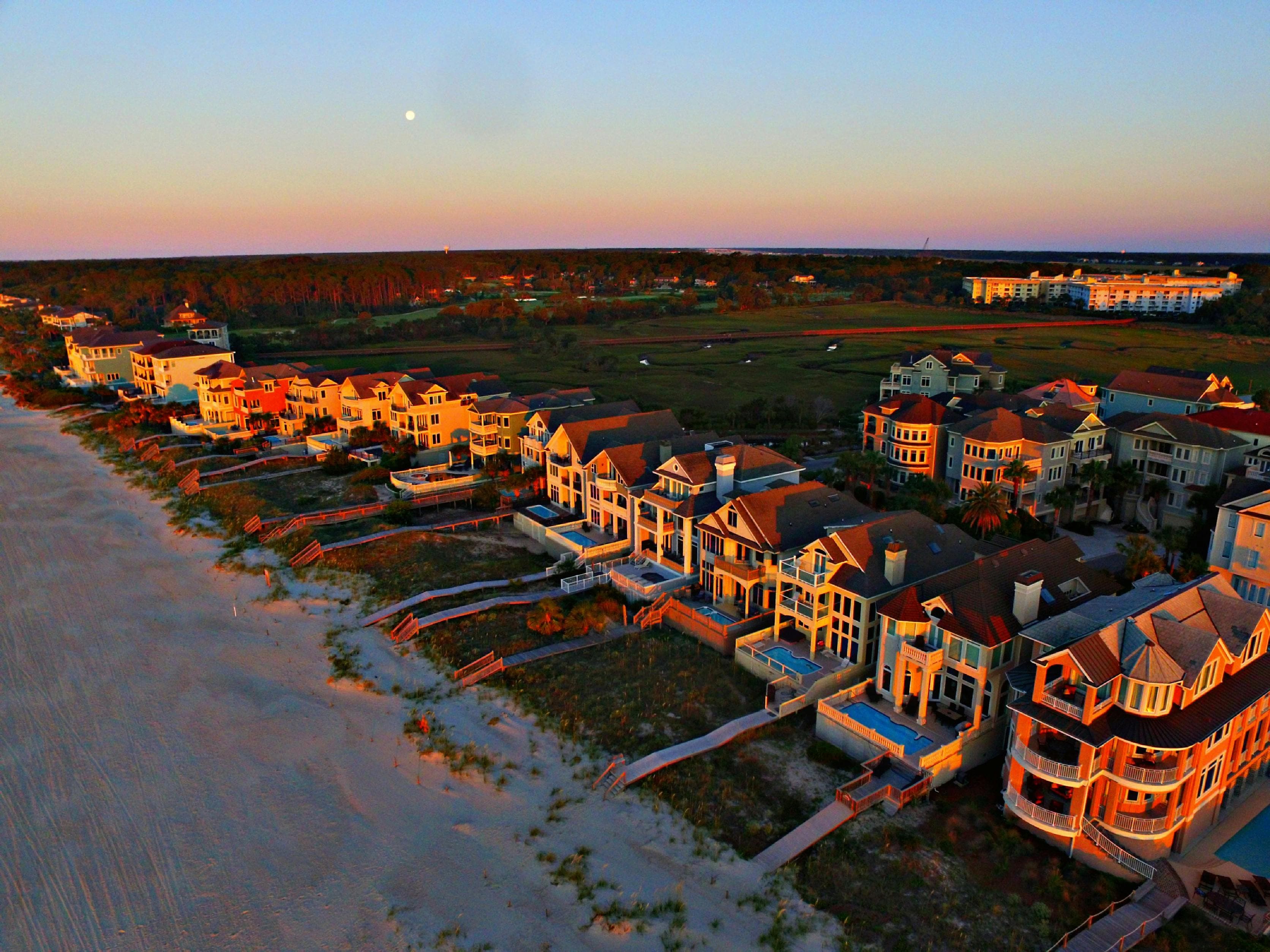
Harbour Town Golf Links
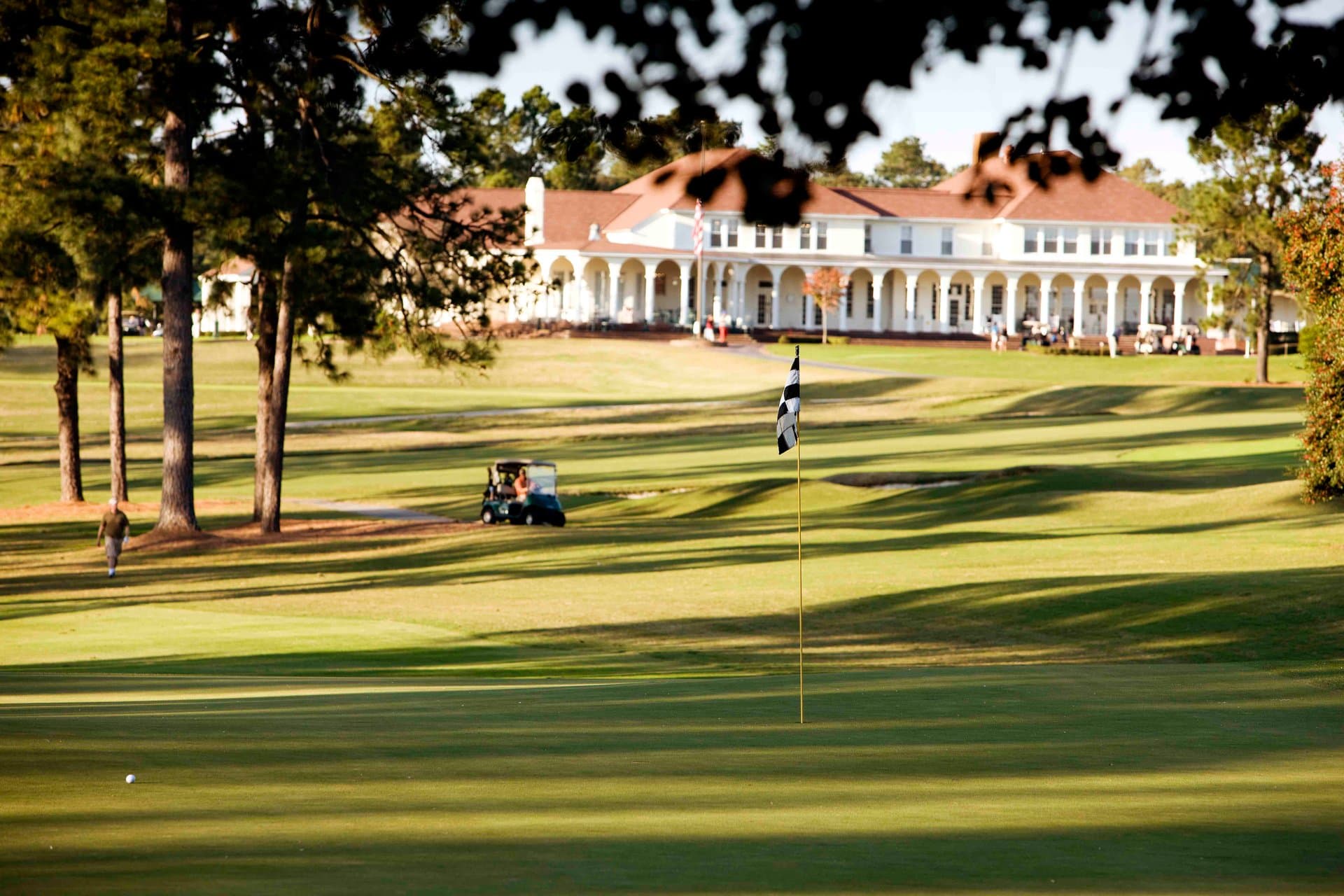
Pinehurst No. 2
Bandon Dunes occupies a position in American golf that has no real equivalent. Six full-length courses on a remote stretch of southern Oregon coastline, all walking-only, all routed through genuine coastal terrain rather than manufactured approximations of it. Pacific Dunes, designed by Tom Doak, consistently ranks among the top public courses in the country. Sheep Ranch, the newest addition, plays along the cliff edge with a freedom of routing that feels closer to the British Isles than to the American resort model.
Old Macdonald, Bandon Trails, and the original Bandon Dunes course round out a collection where even the "weakest" layout would be the best course at most other resorts.
The accommodation is comfortable without being ostentatious. Lodge rooms, cottages, and multi-bedroom units serve the purpose of feeding and resting golfers between rounds. The isolation is intentional and non-negotiable: the nearest commercial airport is in North Bend, a small regional field, and most visitors fly into Portland or Eugene before driving three to five hours south. That remoteness filters the guest list. People come to Bandon to play golf, and the resort is built around that singular premise. See the Bandon destination guide for full logistics.
2. Pinehurst Resort — Pinehurst, North Carolina
Courses: 9. Anchor course: Pinehurst No. 2. Price tier: Mid-range to premium. Best for: Golfers who value history and concentrated access.
Nine courses on a single property makes Pinehurst the deepest resort portfolio in the country. No. 2, restored by Coore and Crenshaw to its sandy, strategic origins, is the centerpiece and the reason most visitors book the trip. But the supporting cast is stronger than the reputation suggests. No. 4, redesigned by Gil Hanse, plays firm and fast through the longleaf pines. No. 8 offers a Tom Fazio design with enough length and variety to satisfy low-handicap players.
The newer Cradle short course has become one of the most popular rounds on property, filling the late-afternoon gap between the final putt and dinner.
Pinehurst village itself contributes to the experience in ways that isolated resorts cannot replicate. Restaurants, shops, and the quiet rhythm of a small Southern town give the non-golf hours a texture that a lodge corridor does not. Accommodation ranges from the historic Carolina Hotel to condominiums and villas on the resort perimeter. The Pinehurst destination guide covers each course in detail.
3. Pebble Beach Resorts — Pebble Beach, California
Courses: 3 (plus a 9-hole par-3). Anchor course: Pebble Beach Golf Links. Price tier: Ultra-premium. Best for: Golfers for whom the experience is worth the price, whatever that price is.
Pebble Beach Golf Links is the most famous public course in America, and the green fee reflects that status. The coastline along the back nine is genuinely spectacular, and the course's history as a U.S. Open venue lends each round a weight that few other courses can manufacture. Spyglass Hill, designed by Robert Trent Jones Sr., offers a more demanding test through forest and dunes. The Links at Spanish Bay provides a third option with a more relaxed, links-inspired character and sunset bagpipe ceremonies that are either charming or theatrical depending on personal tolerance.
The accommodation matches the pricing. The Lodge at Pebble Beach, the Inn at Spanish Bay, and Casa Palmero operate at a level where the term "luxury" is descriptive rather than aspirational. This is the most expensive golf trip in America by a comfortable margin, and the resort makes no apology for it. Visitors who balk at the cost are not the target audience.
4. Kiawah Island Golf Resort — Kiawah Island, South Carolina
Courses: 5. Anchor course: The Ocean Course. Price tier: Mid-range to premium. Best for: Golfers who want serious courses with beach and Charleston proximity.
The Ocean Course, designed by Pete Dye for the 1991 Ryder Cup, is one of the most demanding resort courses in the country. Fully exposed to Atlantic winds on a barrier island south of Charleston, it plays longer or shorter by two clubs depending on the day. The remaining four courses, including Osprey Point and Turtle Point, offer considerably more forgiving experiences and keep the resort accessible to golfers across the handicap spectrum.
Kiawah's advantage over purer golf resorts is breadth. The beach is real and substantial. Charleston is 30 minutes away, offering one of the best dining cities in the Southeast. Villas, cottages, and The Sanctuary hotel provide accommodation options that range from functional to refined. For couples or families where golf is the primary draw but not the only one, Kiawah balances those priorities better than almost any resort in the country.
5. Streamsong Resort — Streamsong, Florida
Courses: 3 (plus a 12-hole short course). Anchor course: Streamsong Blue (Tom Doak). Price tier: Mid-range to premium. Best for: Architecture enthusiasts and golfers who want immersion without distraction.
Streamsong sits on a former phosphate mine in central Florida, roughly 90 minutes from Tampa. Three courses by Coore and Crenshaw (Red), Tom Doak (Blue), and Gil Hanse (Black) share a single modern lodge, and The Chain, a 12-hole short course designed by Doak and Hanse, fills the late-afternoon window. The architectural pedigree concentrated on one property is unmatched outside Bandon.
The terrain is the surprise. Central Florida is not supposed to produce this kind of topography, but the mining history created sand ridges and elevation changes that the architects used to full effect. The resort is deliberately isolated, with no surrounding town or nightlife. Guests eat on property, walk to their rounds, and find that the days fill themselves. The Streamsong complete golf guide provides course-by-course analysis.
6. Destination Kohler (The American Club) — Kohler, Wisconsin
Courses: 4. Anchor course: Whistling Straits. Price tier: Premium. Best for: Golfers who want major championship pedigree in a condensed format.
Whistling Straits, designed by Pete Dye along Lake Michigan's shore, has hosted three PGA Championships and the 2021 Ryder Cup. Its faux-links terrain and relentless bunkering produce a course that looks and plays unlike anything else in the Midwest. Blackwolf Run's River Course offers a tighter, more wooded counterpoint, while the Irish Course and Meadow Valleys round out a four-course rotation that fills a long weekend without repetition.
Tip
7. Barton Creek Resort — Austin, Texas
Courses: 4. Anchor course: Fazio Foothills. Price tier: Mid-range. Best for: Golfers who want Hill Country golf combined with a city trip.
Barton Creek operates four courses in the Texas Hill Country west of Austin, headlined by the Tom Fazio-designed Foothills and Canyons courses. The Coore and Crenshaw course adds architectural interest for design-focused visitors. The resort itself has undergone renovation under Omni management, bringing the accommodation closer to the level of the golf.
Austin's proximity is the differentiator. Unlike isolated resorts where the golf is the entirety of the trip, Barton Creek places four strong courses within 20 minutes of a city with one of the most active dining and live music scenes in the country. For golfers traveling with non-golfing partners, or for those who want their evenings to have a different character than their days, that combination is difficult to replicate.
8. Sea Pines Resort — Hilton Head Island, South Carolina
Courses: 3. Anchor course: Harbour Town Golf Links. Price tier: Mid-range. Best for: Golfers who want a familiar tournament course in a relaxed coastal setting.
Harbour Town Golf Links, home of the RBC Heritage on the PGA Tour, is one of the most recognizable courses in American golf. The Pete Dye and Jack Nicklaus collaboration favors precision over power, with tight fairways threading through live oaks and Spanish moss toward the iconic lighthouse finish. Heron Point and Atlantic Dunes provide supporting rounds that keep a multi-day visit from requiring repeated plays of the same course.
Sea Pines is a residential and resort community rather than a standalone golf property, which gives it a quieter, more residential character than purpose-built resorts. The beach, the cycling paths, and Hilton Head's dining scene provide substance beyond the course.
9. Reunion Resort — Orlando, Florida
Courses: 3. Anchor course: Watson Course. Price tier: Mid-range. Best for: Families and groups who need golf plus non-golf infrastructure.
Reunion offers three courses by Jack Nicklaus, Arnold Palmer, and Tom Watson on a single property southwest of Orlando. None of the three is a destination course in isolation, but the combined portfolio, the rental home inventory, and the proximity to Orlando's broader infrastructure make it the strongest option for the golfer whose trip must also function as a family vacation.
The value proposition is competitive. Green fees and accommodation costs sit below comparable Florida resorts, and the ability to house a group in a multi-bedroom rental home rather than a block of hotel rooms simplifies logistics for parties of eight or more.
10. PGA Frisco — Frisco, Texas
Courses: 2 (plus a 10-hole short course). Anchor course: Fields Ranch East (Gil Hanse). Price tier: Mid-range. Best for: Architecture-minded golfers interested in a modern, purpose-built facility.
PGA Frisco is the newest entry on this list and the most deliberately contemporary. The Gil Hanse-designed Fields Ranch East opened to strong reviews, with wide fairways, creative green complexes, and a routing that rewards thoughtful play over raw distance. Fields Ranch West provides a second full-length option, and The Swing, a lighted 10-hole short course, fills the format gap for casual rounds.
The Omni PGA Frisco Resort anchors the accommodation, built alongside the PGA of America's new headquarters. The facility's ambition is evident in every detail, from the practice areas to the dining options. What it lacks is the accumulated history that defines Pinehurst or the natural terrain that elevates Bandon. PGA Frisco is betting that architectural quality and modern infrastructure can substitute for those qualities. The early evidence is encouraging.
How to Choose
The right resort depends on a single honest question: what kind of golf trip is this actually going to be. Bandon and Streamsong are for the trip where golf is the point and nothing else needs to compete for attention. Pebble Beach and Kohler are for the occasion that justifies the price. Kiawah and Hilton Head are for the trip that must accommodate interests beyond the course. Pinehurst offers the deepest single-property portfolio in the country. And Barton Creek, Orlando, and PGA Frisco serve golfers whose trips operate on a different set of practical constraints. Identify the constraint first. The resort follows.