How to Plan a Golf Bachelor Party
A golf bachelor party occupies a specific niche in the broader taxonomy of pre-wedding celebrations. It is not a pub crawl with an early alarm attached. It is a structured weekend where the golf is real, the camaraderie is genuine, and the best man's planning skills are tested in ways that the wedding itself will not require. Done well, it is the kind of trip the group talks about at every reunion for the next twenty years. Done poorly, it is a cautionary tale about booking twelve golfers into a two-bedroom condo.
Start with the Groom's Preferences
This seems obvious, but it is frequently ignored. The groom's handicap, budget comfort, and trip vision should drive every subsequent decision. If the groom is a single-digit player who has always wanted to play Pinehurst No. 2, the trip has a clear anchor. If the groom is a casual golfer who plays six times a year and cares more about the group experience than the course pedigree, a different set of priorities applies.
Ask three questions directly: How many rounds do you want to play? What is your budget range? What matters more, the golf or the social scene? The answers shape everything.
Choose the Right Destination
A golf bachelor party destination needs three things: strong courses, good nightlife or dining, and accommodation that fits the group. Not every golf destination qualifies.
TPC Scottsdale, Troon North, We-Ko-Pa, and Grayhawk provide a four-round rotation that satisfies any handicap. Old Town Scottsdale's bar and restaurant scene runs deep enough to keep the evenings interesting without requiring a plan. Group houses with private pools are abundant on VRBO and provide the communal living space that a bachelor party needs.
For the group that wants it all: Scottsdale is the most popular golf bachelor party destination in the country, and the reasons are obvious.
Las Vegas offers a different ratio: the golf is secondary to the overall Vegas experience, but courses like Shadow Creek, Cascata, and the Paiute complex are strong enough to anchor the daytime. The Strip handles the rest.
For the group that prioritizes the golf: Bandon Dunes is the ultimate golf bachelor party for a group of serious players. Walking-only links golf, no distractions, and a resort atmosphere that encourages the kind of post-round gathering where stories get told and retold. The trade-off is that there is no nightlife, no town to explore, and the nearest city of any size is five hours away. For the right group, this is the point.
Sand Valley offers a similar vibe in central Wisconsin: walking-only courses, remote setting, and a focus on the golf itself.
The Lido and Mammoth Dunes are among the best courses in the Midwest, and the resort's communal lodge atmosphere is well suited to group trips.
For the budget-conscious group: Myrtle Beach combines affordable golf, deep accommodation inventory, and enough dining and entertainment to sustain a weekend. A group of eight can play four rounds, stay in an oceanfront house, and eat well for under $1,000 per person. The courses range from value-oriented (Prestwick, Crow Creek) to genuinely excellent (Caledonia, True Blue), so the golf scales with the budget.
Sizing the Group
The ideal bachelor party golf group is eight to twelve people. Below eight, the event feels like a regular buddies trip rather than a celebration. Above twelve, the logistics become punishing.
Eight golfers form two foursomes, which is the cleanest number for golf. Twelve golfers form three foursomes, which is the maximum most courses can accommodate in adjacent tee times without significant gaps. Beyond twelve, you are looking at a shotgun start or spread-out tee times that split the group for most of the day.
Not everyone in the bachelor party group plays golf, and not every golfer wants to play every round. Build the itinerary to accommodate both. A pool day or a non-golf activity (go-karts, a sporting clay course, a boat rental) on one of the three days gives non-golfers something to do and gives exhausted golfers a reason to rest.
The Schedule That Works
A Friday-to-Sunday format is the most common and the most practical for working professionals.
Friday: Arrive by early afternoon. Play a casual nine-hole round or hit the range to shake off travel. Group dinner at a restaurant the groom will enjoy. Keep the evening moderate; the golf starts early the next day.
Saturday: The main event. A morning round at the best course on the itinerary, followed by lunch and an optional afternoon round at a second course. Saturday evening is the big dinner and the social peak of the weekend. This is where the toasts happen, the embarrassing stories surface, and the groom realizes his friends organized something memorable.
Sunday: A final round in the morning, often at a more relaxed course. The pace is easier, the stakes are lower, and the round functions as a warm-down after the previous day's intensity. Depart after lunch.
A Thursday-to-Sunday format adds a day and allows for a more relaxed pace: three rounds over three days with time for other activities. This is the better format if the budget and schedules allow.
Managing the Money
Group finances on a bachelor party are the best man's most important responsibility after making sure everyone has a good time. The groom should not pay for golf. This is a universal convention. Everything else is negotiable, but the groom's green fees, caddie costs, and ideally his share of the accommodation should be covered by the group.
For a group of eight (including the groom), splitting the groom's costs adds roughly 14 percent to each person's total. On a $1,200 per-person trip, that is approximately $170 extra per person. Communicate this early and directly: "The trip will cost approximately $1,400 per person including covering the groom's golf and accommodation."
Collect money in advance. Two payments work well: a deposit of 50 percent at the time of booking (eight to ten weeks before the trip) and the balance two weeks before. Use a payment app for transparency. Chasing people for money after the trip has ended is a task no best man should endure.
On-Course Competition
A bachelor party round without stakes is just golf. Light competition keeps the energy high and gives everyone something to play for.
A Nassau (separate bets on the front nine, back nine, and overall) with modest stakes ($5 to $10 per bet) works for groups with varied skill levels. A team scramble where the groom is a permanent captain and picks new partners each round creates rotation and ensures the groom is involved in every match.
Side bets add flavor: closest to the pin on par 3s, longest drive on a designated hole, fewest putts. Keep the amounts small enough that losing is funny rather than frustrating. The point is entertainment, not financial pressure.
The Groom's Moment
Create one moment during the trip that is specifically for the groom. This might be a toast at dinner, a custom headcover or engraved ball marker, or a group photo on the signature hole of the anchor course. It does not need to be elaborate. It needs to be sincere.
The bachelor party exists to mark a transition, and the golf trip format marks it with something the groom will carry forward: a memory of the courses, the group, and the weekend before the wedding that was about nothing except friendship and the game.
What to Avoid
Overcomplicating the schedule. Leave space for spontaneity. Not every hour needs to be planned.
Booking accommodation too small for the group. A four-bedroom house for twelve people means someone is sleeping on a couch, and that someone will be unhappy by Sunday morning.
Prioritizing the organizer's preferences over the groom's. If the groom wants to play a casual nine on Friday afternoon, do not book a full 18 at a course with a strict pace-of-play policy. If the groom wants Myrtle Beach, do not lobby for Bandon because it is a better golf destination. It is his weekend.
The verdict
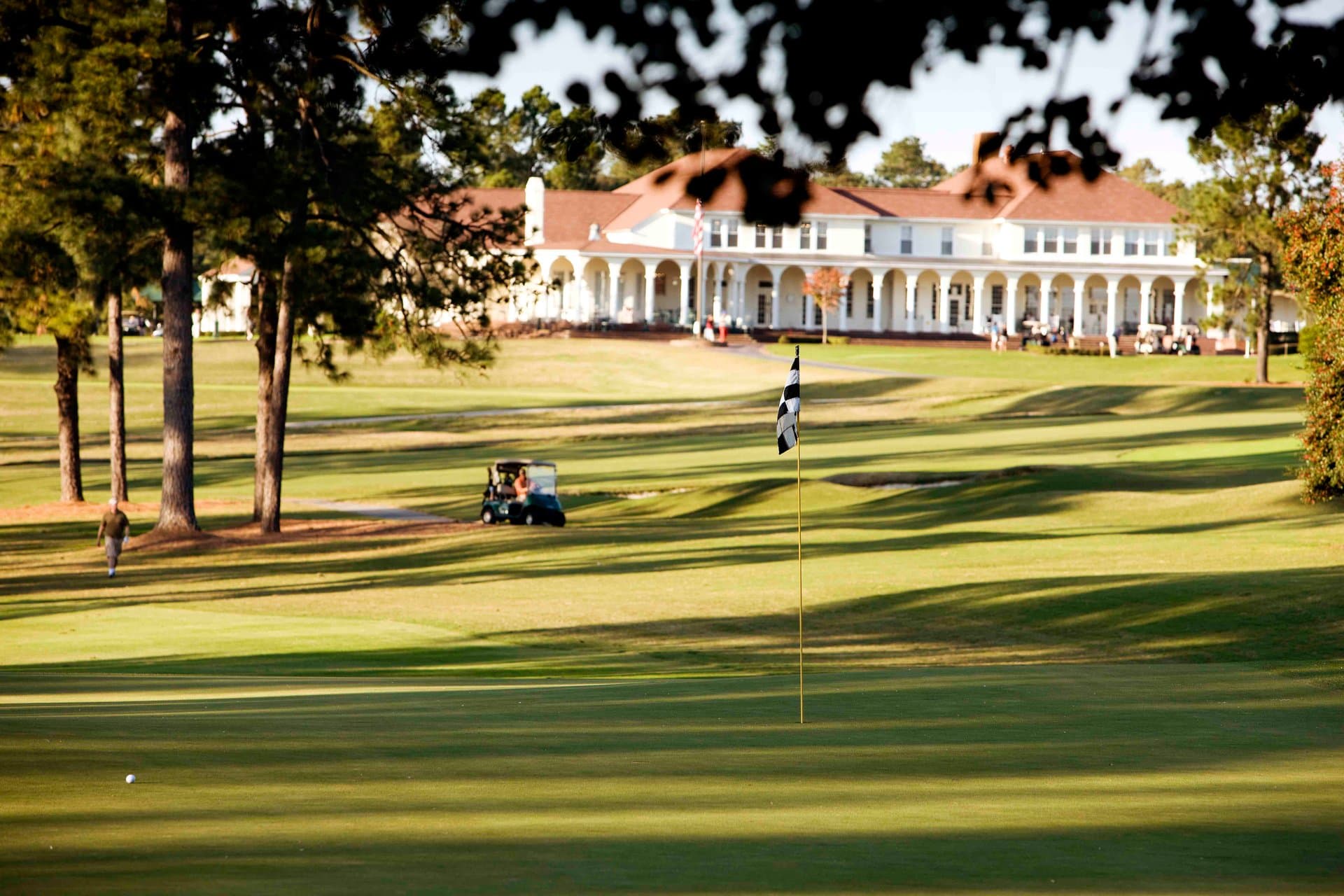
Pinehurst No. 2