Gil Hanse and the New Wave of American Course Design
For most of the twenty-first century, the conversation about modern golf architecture has centered on two firms. Bill Coore and Ben Crenshaw built Sand Valley, Streamsong Blue, and the definitive restoration of Pinehurst No. 2. Tom Doak designed Pacific Dunes, the reversible Loop at Forest Dunes, and Streamsong Red. Together, they established the minimalist philosophy as the dominant approach in serious American course design. The next generation of that philosophy has a clear standard-bearer, and it is Gil Hanse.
Hanse studied under Doak in the late 1980s, absorbing the same reverence for Golden Age principles and the same commitment to working with existing terrain rather than imposing manufactured landforms. Where Hanse has distinguished himself is in range. His portfolio spans private retreats, resort renovations, municipal upgrades, and one Olympic venue, and the design quality has remained consistent across all of them. That breadth, the ability to produce architecturally serious work within vastly different commercial contexts, is what separates Hanse from architects who excel in a single register.
The Olympic Course in Rio
The commission that introduced Hanse to the broader public was the golf course for the 2016 Olympic Games in Rio de Janeiro. The project was politically fraught, environmentally scrutinized, and logistically demanding. Hanse built an entirely new course on a sandy site in the Reserva de Marapendi, a nature reserve in the Barra da Tijuca neighborhood. The timeline was compressed, the regulatory obstacles were substantial, and the course needed to function for Olympic competition while remaining viable as a public facility after the Games concluded.
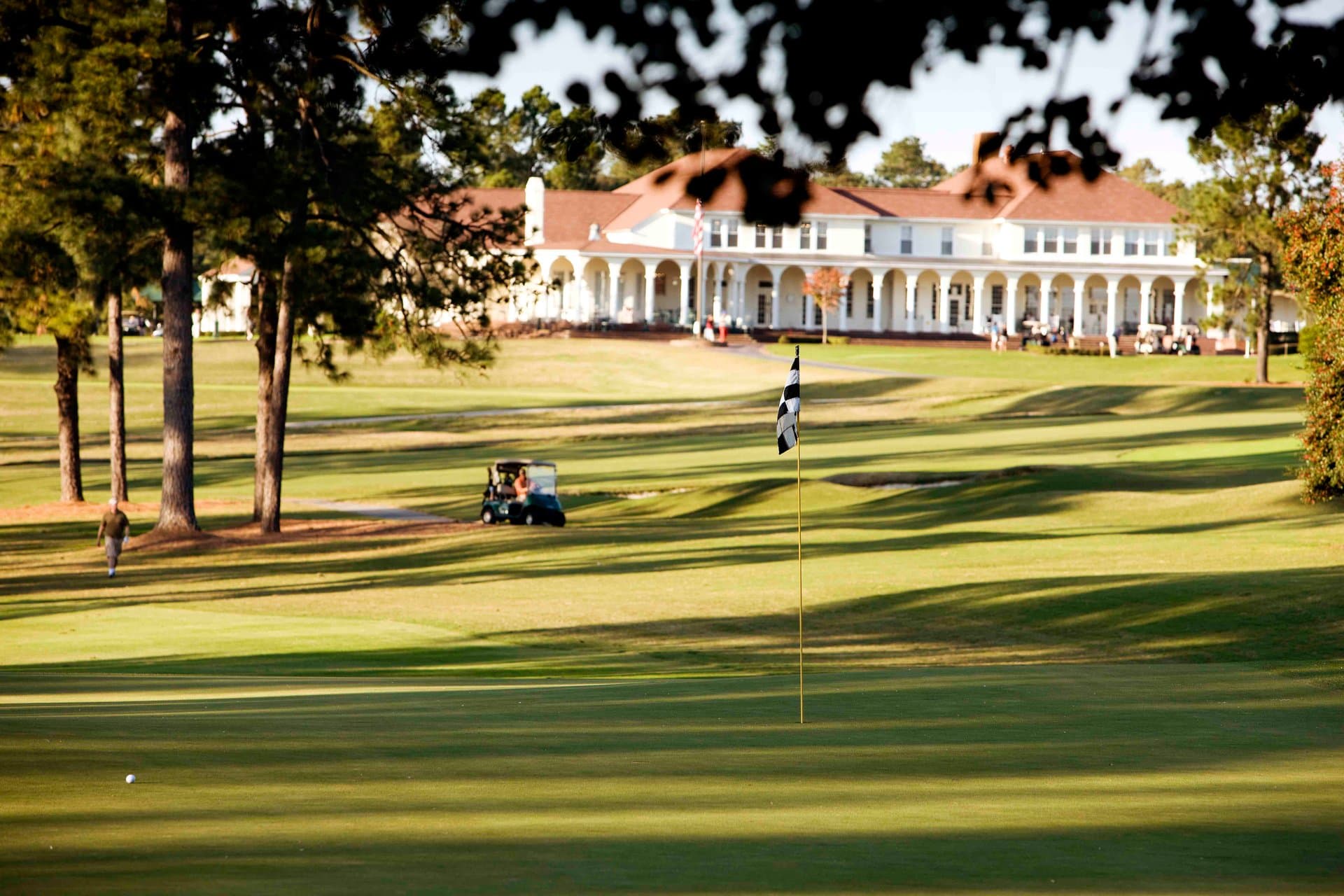
Pinehurst No. 2
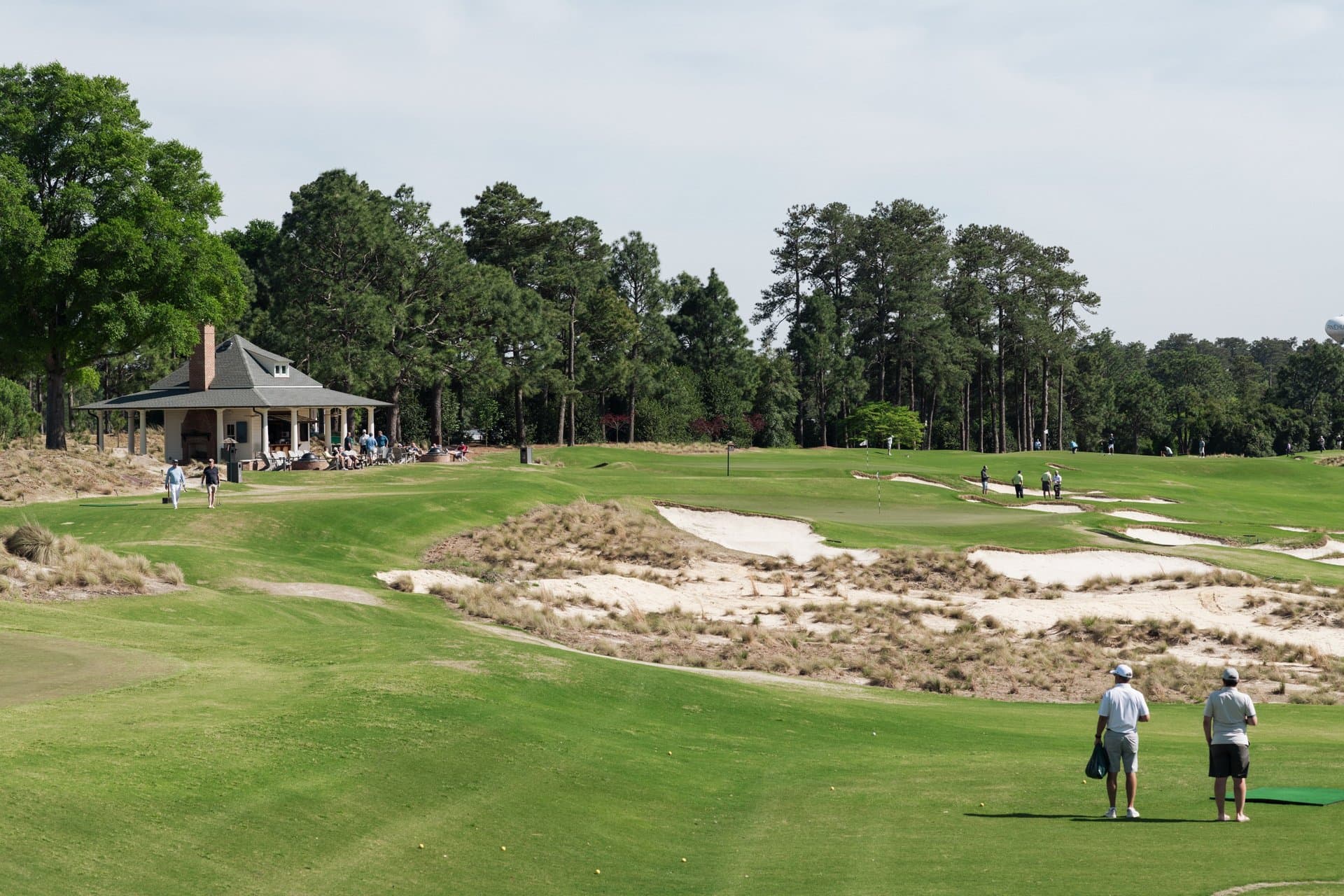
Pinehurst No. 4
Hanse delivered a links-inspired layout on sandy subsoil that drains quickly, plays firm, and rewards creative shot-making. The course features minimal rough, wide playing corridors, and green complexes with the internal contours that define Hanse's work. During the Olympic tournament, the course drew praise from the competitors for its strategic variety and from architects for its restraint. Hanse resisted the temptation to build a spectacle. He built a golf course, and the distinction mattered.
The Olympic Course remains open to the public in Rio, which aligns with one of the quiet themes of Hanse's career: an interest in making architecturally ambitious golf available to a broad audience.
Streamsong Black
Streamsong Black in central Florida was Hanse's first major new-build project in the United States, and it required him to share a stage with Coore/Crenshaw (Blue) and Doak (Red). The three courses opened on a former phosphate mine in Polk County, a site whose sculpted terrain and sandy soil bore no resemblance to the flat, water-hazard-heavy courses typical of the state. Hanse had to produce a course that held its own alongside two designs from the architects who had defined the minimalist movement. He did.
Several feature false fronts that reject approaches landing short, sending the ball back down slopes into collection areas. Others have back-to-front tilts that make downhill putts genuinely dangerous. The greens are large, which creates a deceptive impression of accessibility. Reaching the putting surface is not the challenge. Reaching the correct sector of the putting surface is.
The green complexes at Streamsong Black are among the most sophisticated in Hanse's body of work.
The fairways at Black are wide, the bunkers are rugged and deep, and the routing uses the site's elevation changes to create visual interest and strategic variety that Florida courses rarely achieve. For golfers visiting Streamsong, Black is the course that tends to surprise most on first play and improve most on the second round.
Ohoopee Match Club
If Streamsong Black demonstrated Hanse's ability to work within the public resort model, Ohoopee Match Club in rural Georgia demonstrated his capacity for something less constrained. Located on sandy soil near Cobbtown, roughly two hours from Savannah, Ohoopee is a private club built for match play. The course opened in 2018 to limited public attention, partly because of its private status and partly because of its remote location.
Among architects and serious students of course design, it became one of the most discussed new courses in America.
The site is sandy, flat, and covered with longleaf pine, a landscape that recalls the Sandhills of North Carolina where Donald Ross built his finest work. Hanse used the existing terrain to build a course with wide fairways, firm playing surfaces, and green complexes that reward precise iron play without punishing reasonable misses excessively. The routing loops through the pines with an informality that feels closer to a Golden Age course than a modern design.
Ohoopee is not accessible to visiting golfers without a member invitation, which limits its direct relevance for travel planning. Its significance lies in what it reveals about Hanse's range. The same architect who built a course for Olympic television built a course for twenty friends playing nine holes on a Tuesday afternoon. Both are excellent.
The Coore/Crenshaw Succession
The question of who follows Coore and Crenshaw as the most influential force in American course design is not idle speculation. Coore and Crenshaw remain active, but their body of work is mature, and the next wave of commissions will inevitably shift toward younger architects. Hanse, along with designers like Mike Keiser's favored collaborators and a handful of others, represents the generation that will shape American golf architecture for the next two decades.
What Hanse brings to that role is an unusual combination of intellectual seriousness and commercial pragmatism. His courses are designed to be maintained efficiently. Wide fairways reduce mowing costs. Sandy, well-drained surfaces reduce irrigation needs. Walkable routings reduce the infrastructure required for cart paths. These practical considerations are not peripheral to the design. They are part of it.
Public Courses Worth the Trip
For golfers who want to experience Hanse's work firsthand, the public portfolio is substantial and growing. Streamsong Black is the most accessible starting point, available to resort guests at Streamsong Resort in central Florida. Pinehurst No. 4, Hanse's 2018 renovation that stripped the course back to its Sandhills foundation, plays alongside Donald Ross's No. 2 as an architectural equal. PGA Frisco's Fields Ranch East in north Texas brought Hanse's design philosophy to one of the most prominent new public facilities in recent memory.
Each of these courses looks different from the others because their sites look different. Streamsong Black plays across reclaimed mining terrain with dramatic elevation changes. Pinehurst No. 4 moves through sandy Sandhills beneath longleaf pines. Fields Ranch East traverses open prairie north of Dallas. What connects them is the same architectural intelligence: green complexes that create genuine strategic decisions, fairways wide enough for all abilities but shaped to reward precise positioning, and a commitment to the idea that the terrain should dictate the design rather than the other way around.
The verdict