The Best Pete Dye Courses Open to the Public
Pete Dye changed American golf architecture more fundamentally than any designer since Donald Ross. His courses are immediately recognisable: railroad tie bulkheads, pot bunkers borrowed from Scottish links, optical illusions that make distances hard to judge, and a persistent sense that something unpleasant awaits any shot that misses its intended target. Dye's courses are polarising. Some golfers find them unfair. Others recognise that the difficulty is the design, that Dye built courses that demand thought before execution and punish mindless aggression with a consistency that borders on personal.
Dye died in 2020 at the age of 94, leaving behind a portfolio of more than 100 courses. Many of his finest designs are locked behind private memberships. What follows are the Dye courses that any golfer can play, provided they are willing to book a tee time and accept the consequences.
But a significant number are open to the public, and several rank among the best courses in the country regardless of access.
Whistling Straits (Straits Course), Kohler, Wisconsin
Dye's most ambitious public course, built on a flat stretch of Lake Michigan shoreline that he transformed into something resembling an Irish links through massive earthmoving and over 1,000 bunkers. Whistling Straits hosted three PGA Championships and the 2021 Ryder Cup, and it plays harder than any other course on this list when the wind arrives off the lake. The Straits Course is walking-only, caddies are available, and the experience of approaching the par-3 17th with the lake behind the green and bunkers in every direction captures Dye's philosophy perfectly: the most visually intimidating shot is often the most straightforward, if you can control your nerves.
Green fees run $400-$500 and include access to Kohler's full resort infrastructure through the American Club. The season runs May through October, and tee times open in early spring.
TPC Sawgrass (Stadium Course), Ponte Vedra Beach, Florida
The course that invented the concept of the stadium golf course, designed specifically for The Players Championship. The island green 17th is the most famous single hole in American golf, but the Stadium Course is a complete design that demands precision on every shot. Dye routed the course through Florida wetlands and surrounded greens with mounding that creates natural amphitheatres for spectators. For everyday golfers, those same mounds create runoff areas that punish marginal shots with uneven stances and blind recoveries.
TPC Sawgrass is available through the resort with green fees in the $400-$550 range depending on season. The booking window extends 90 days for resort guests and 60 days for public play. The course is immaculately maintained year-round, and pace of play is managed with unusual diligence.
The Ocean Course at Kiawah Island, South Carolina
Dye built The Ocean Course for the 1991 Ryder Cup, the "War on the Shore" that remains the most dramatic team competition in golf history. He raised the fairways onto dune ridges to maximise ocean exposure, which also maximised wind exposure, turning a coastal South Carolina course into something that plays like a British Open venue when conditions are right. Every hole offers views of either the Atlantic or the tidal marsh behind the island, and many offer both. The course is long (over 7,800 yards from the tips), exposed, and relentless.
Forecaddies are mandatory and included in the green fee, which runs $400-$500 depending on season. Resort guests at Kiawah receive priority booking. The course is walkable and rewards the stamina required by the walking-only forecaddie policy.
Harbour Town Golf Links, Hilton Head, South Carolina
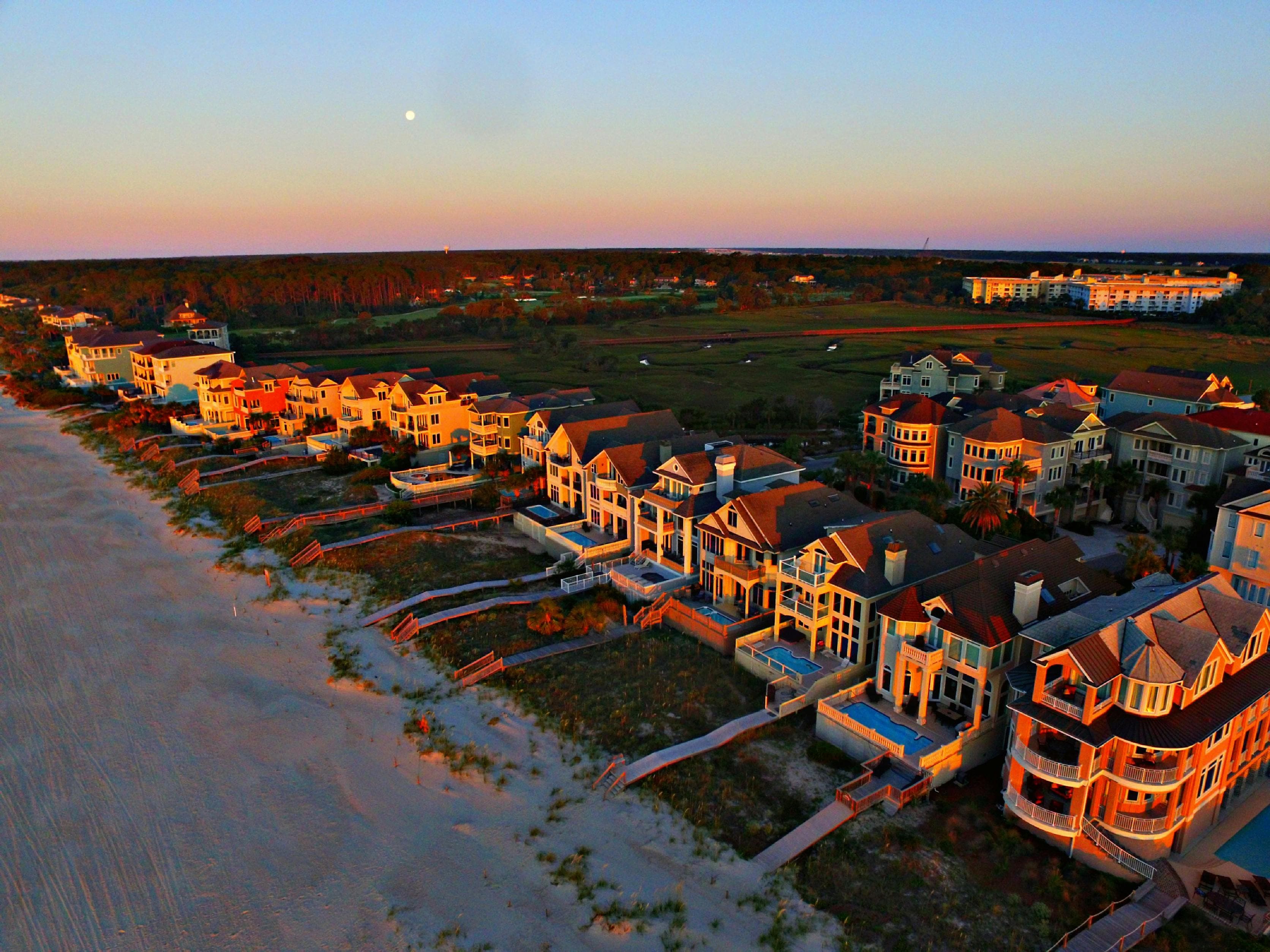
Dye's collaboration with Jack Nicklaus, built in 1969, and host of the RBC Heritage on the PGA Tour since 1969. Harbour Town is the course that proved Dye's ideas could work at the highest level. At just over 7,000 yards, it is short by modern standards, but the tight, tree-lined fairways and small greens demand accuracy that length cannot replace. The 18th hole, a par 4 finishing toward the iconic Harbour Town Lighthouse on Calibogue Sound, is one of the most recognisable closing holes in golf.
Tip
Blackwolf Run (River Course), Kohler, Wisconsin
The original Dye course at Kohler, routed along the banks of the Sheboygan River through dense Wisconsin forest. The River Course hosted the 2012 U.S. Women's Open and offers a Dye experience distinct from Whistling Straits: woodland rather than links, intimate rather than exposed, with the river appearing on eleven holes as both scenery and hazard. The course rewards patience and course management, which is characteristic of Dye's inland designs. The 11th, a par 3 played across the river to a narrow green backed by forest, captures the tension that Dye built into every course he designed.
Green fees are typically bundled with Whistling Straits in resort packages, and the course is available to American Club guests and public players through the Destination Kohler website.
True Blue Golf Club, Pawleys Island, South Carolina
Dye's Grand Strand counterpart to Caledonia, built on the same former rice plantation with a more aggressive design philosophy. True Blue features enormous waste bunkers that can swallow entire golf carts, severe green complexes, and a par-3 14th hole with a tabletop green that summarises Dye's design ethos in a single shot: visually terrifying, strategically clear, and brutally honest about the consequences of poor execution. The course is more accessible than its reputation suggests. The width off the tee is generous, and the difficulty concentrates around the greens, where Dye's contours demand creative short-game solutions that most golfers have never attempted.
Green fees at True Blue are remarkably reasonable for a course of this quality, typically $100-$175 depending on season. The Myrtle Beach location provides abundant accommodation options, and tee times book through the course website with standard advance windows. Pairing True Blue with a round at Caledonia across the road provides one of the best 36-hole days in American golf.
PGA West (Stadium Course), La Quinta, California
Dye's desert stadium course, built for the old Skins Game and known for its dramatic features. The par-3 17th, "Alcatraz," is an island green surrounded by rocks and bunkers that plays 168 yards and feels twice that. The course has deep bunkers, severe green contours, and the kind of visual intimidation that Dye perfected throughout his career. PGA West Stadium plays through the Palm Springs valley floor with mountain views in every direction.
Green fees range from $150-$300 depending on season, with summer rates dropping below $100. The course books through the PGA West website and is available to all players without a resort stay requirement.
Teeth of the Dog, Casa de Campo, Dominican Republic
Seven holes play along the Caribbean Sea on coral rock coastline, and the inland holes route through tropical forest with Dye's characteristic strategic bunker placements. Teeth of the Dog consistently ranks among the best courses in the Caribbean and regularly appears on lists of the top 50 courses outside the United States.
Not technically in America, but included because it is the best Dye course that most American golfers can access with the least friction.
Green fees are included in resort stay packages at Casa de Campo, and the course is available to all resort guests. Direct flights from Miami and New York make access straightforward for American golfers.
The Dye Difference
Playing a Pete Dye course is not a neutral experience. His courses generate opinions, usually strong ones, usually within the first three holes. The railroad ties will annoy purists. The optical illusions will frustrate golfers who play by sight rather than feel. And the penalty for a slightly missed shot will occasionally feel disproportionate to the error. All of this is intentional. Dye designed courses that make you think, and he was comfortable with the possibility that thinking might not help. The public courses on this list represent the best opportunities to experience that philosophy firsthand, without needing to know a member or secure an invitation.
Harbour Town Golf Links