Arnold Palmer's Bay Hill Club & Lodge: Review and Playing Guide
Par: 72 | Yardage: 7,381 (tips) | Designer: Dick Wilson (1961), Arnold Palmer redesign | Type: Resort (lodge guests) | Green Fee: $250–$350 | Walking: Cart included
Bay Hill Club & Lodge occupies a peculiar position in American golf. It is simultaneously one of the most televised courses in the country, a private club with genuine exclusivity, and a resort property accessible to anyone willing to book a room. That combination exists almost nowhere else.
The reason it works is Arnold Palmer, who purchased the property in 1974, made it his winter home, and spent the next four decades shaping both the golf course and its identity with a level of personal investment that no other professional golfer has matched at any single property.
The result is a course that carries more accumulated meaning than its physical setting might suggest. Bay Hill sits in southwest Orlando, surrounded by residential development and modest lakes, without the dramatic topography of a mountain course or the manufactured spectacle of a theme-park resort. What it offers instead is substance: a legitimate championship test that has sorted PGA Tour fields every March since 1979, maintained to a standard that reflects both Palmer's expectations and the demands of modern tournament golf.
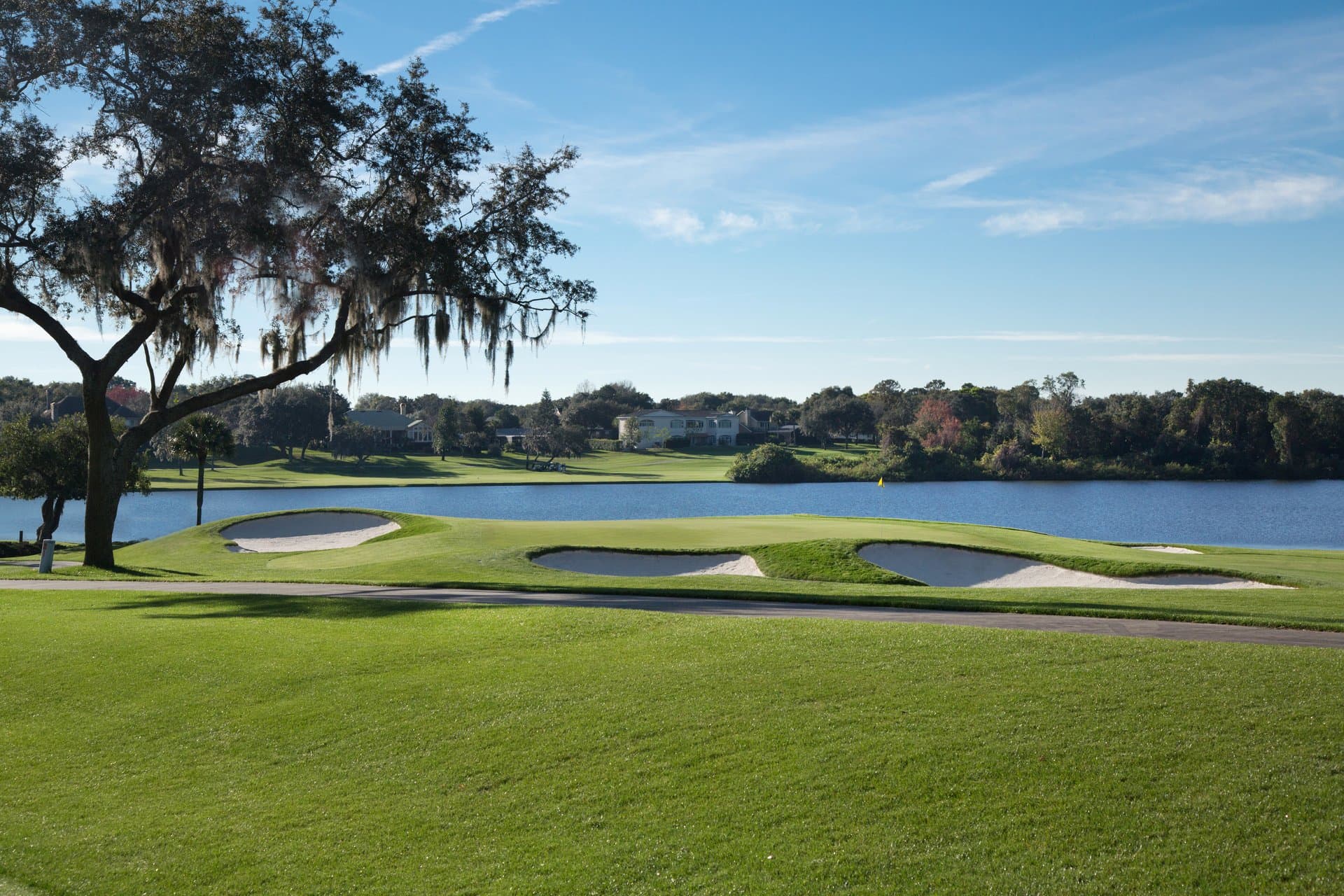
Arnold Palmer's Bay Hill Club & Lodge
Where to stay in Orlando
Planning the trip? Compare live prices across every nearby hotel and rental in one search.
Prices and availability from Booking.com, Expedia and others via Stay22. GolfTrailsHQ may earn a commission at no additional cost to you.
The Design Story
Dick Wilson completed the original layout in 1961, routing 18 holes across gently rolling terrain punctuated by a chain of lakes that would become the course's defining strategic feature. Wilson was a prolific Florida architect whose best work, including Pine Tree and Doral's Blue Monster, shared a common sensibility: wide corridors off the tee, firm and well-contoured greens, and water hazards positioned to create genuine decision points rather than mere visual distraction.
Palmer acquired the property thirteen years later and began a process of gradual, sustained modification. He did not demolish Wilson's routing or impose an entirely new vision. Instead, he worked incrementally, reshaping greens, adjusting bunker placement, adding length, and refining the strategic questions that the course asks. The process continued for decades. Each change reflected Palmer's playing philosophy: attack when the situation rewards aggression, but recognize that the course will punish anything careless.
Bay Hill, more than any other course, plays like Palmer thought about golf.
The collaboration between Wilson's original structure and Palmer's evolving modifications produced a layout that feels both classical and modern. The routing is logical, moving outward from the clubhouse through the property's interior before arriving at the lake-defined holes that provide the course's climax. There are no gimmicks, no forced carries designed solely to intimidate, and no holes that rely on visual spectacle to disguise thin strategic content.
How the Course Plays
Bay Hill is a ball-striker's course. The fairways are generous enough to keep tee shots in play for competent golfers, but the angles into greens reward precision off the tee with meaningfully better approach positions. The green complexes are the course's most sophisticated feature. Surfaces are not dramatically contoured by modern standards, but they are sufficiently shaped that pin positions create distinct challenges. A front pin and a back pin on the same green can require fundamentally different approach strategies.
The par 4s carry the round's difficulty. Several exceed 450 yards from the back tees, and the combination of Florida's humid air, which reduces ball flight compared to drier climates, and the course's subtle elevation changes creates approach shots that play longer than the yardage suggests. The par 3s are well distributed across the card, ranging from a short iron to a mid-iron, each protected differently. The par 5s offer legitimate birdie opportunities for longer hitters willing to challenge the water hazards that guard the greens.
Conditioning is consistently excellent. The Bermuda grass fairways are maintained to tournament specifications, and the green speeds, while not the extreme surfaces that PGA Tour players face during the Arnold Palmer Invitational, are fast enough to demand respect. Bunkers are well-maintained throughout. The maintenance standard is visible on every hole.
Signature Moments
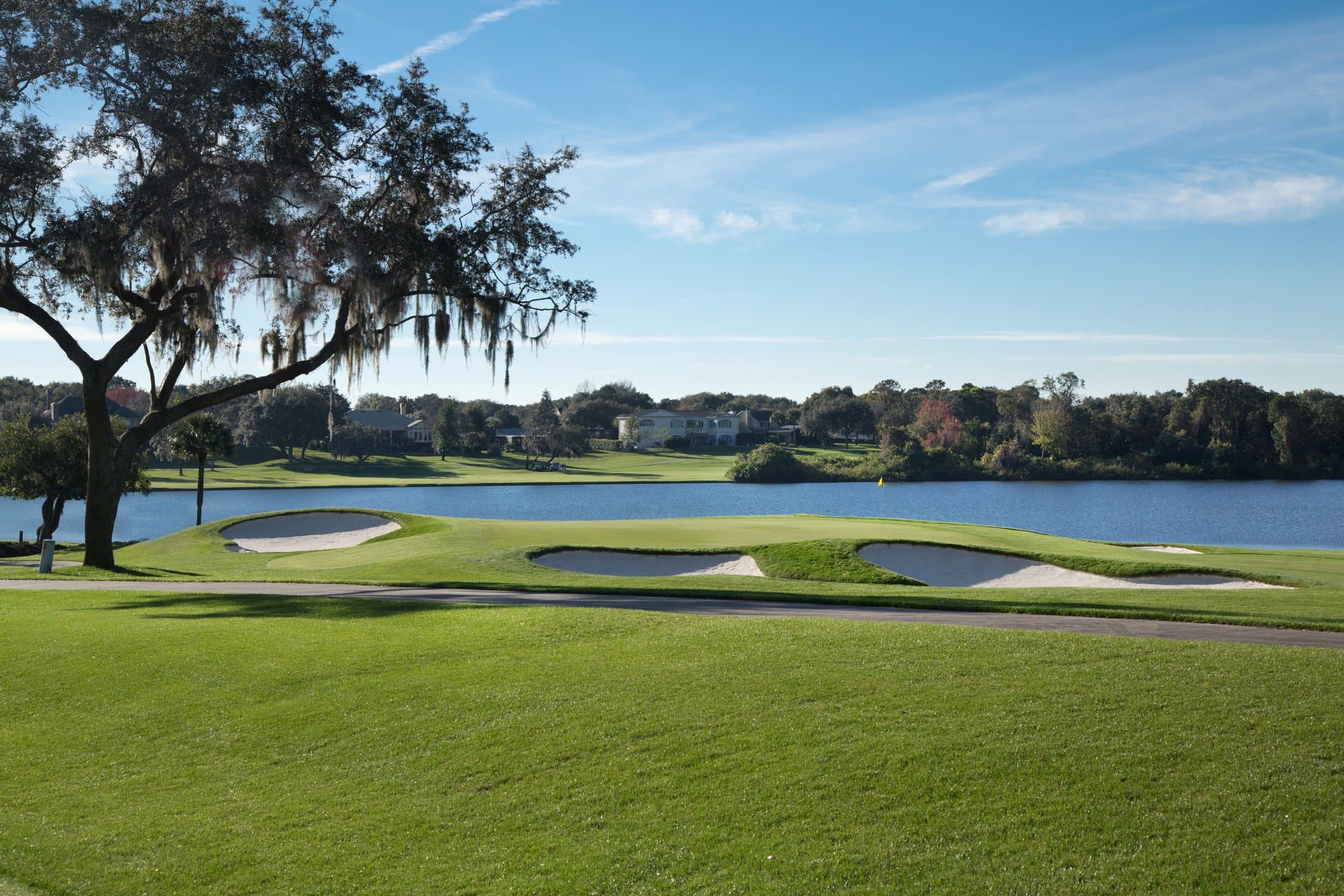
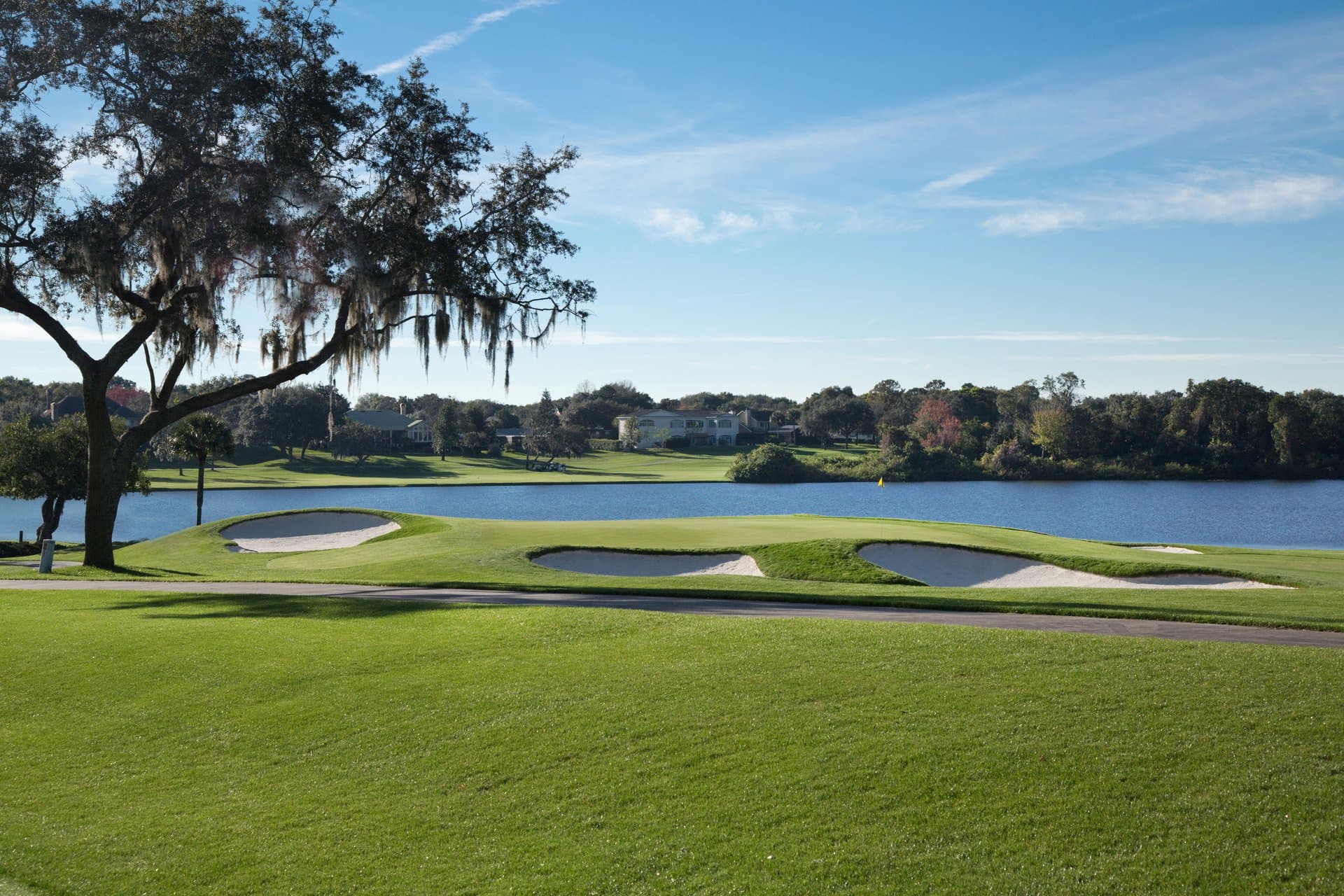
The finishing stretch from the 15th through the 18th is among the strongest closing sequences in PGA Tour golf. The holes run along and around the largest lake on the property, and water becomes a constant factor in strategic calculations.
Palmer's presence remains tangible on the property. His office, memorabilia from a career that shaped modern professional golf, and the umbrella logo that has become synonymous with the resort are all part of the experience. For golfers who grew up watching Palmer play, the connection to that history is significant. For younger golfers encountering the property without that context, the course itself provides sufficient justification.
Practical Information
Tip
Room-and-golf packages typically range from $250 to $350 for the round depending on season, with peak rates coinciding with the winter and early spring months when Orlando golf is in highest demand.
The lodge itself is functional rather than luxurious. Rooms are comfortable, the dining options are adequate, and the proximity to the first tee is convenient. Golfers expecting a Four Seasons experience should calibrate their expectations accordingly. What the lodge offers is access, and the access is the point.
Arnold Palmer's Bay Hill Club & Lodge
Orlando's broader golf landscape provides strong options for multi-day trips. Tranquilo at the Four Seasons, Orange County National, and Reunion Resort each offer quality golf within a reasonable drive. But Bay Hill stands apart from all of them. The combination of tournament pedigree, Palmer's personal legacy, and a golf course that genuinely rewards good play makes it the centerpiece of any serious Orlando golf trip.
The verdict