Arnold Palmer's Course Design Legacy
Arnold Palmer's name on a golf course carries a weight that has little to do with architecture. Palmer was the most popular golfer of the twentieth century, the man who made professional golf a television sport, and his celebrity alone was enough to sell real estate and fill tee sheets. The design firm that bears his name, Arnold Palmer Design Company, has produced more than 300 courses worldwide. The quantity invites skepticism. With that much output, how much of it reflects genuine design thought, and how much is a famous signature on someone else's work?
The honest answer is that the portfolio is uneven, as any body of work that large would be. Palmer liked big golf. He liked courses that asked players to take on risk, that rewarded the bold drive and the committed approach shot. When his design team had good sites and adequate budgets, that philosophy produced courses worth playing.
But the best Palmer designs share qualities that reflect the man's own playing philosophy: bold lines off the tee, generous fairways that reward aggressive play, and green complexes that are dramatic in scale without being punitive in practice.
Bay Hill Club and Lodge
Bay Hill in Orlando is the course most closely associated with Palmer, and it is the one where his design influence was most direct. Palmer acquired the club in 1974 and spent decades refining the layout, working with original designer Dick Wilson's routing while reshaping holes to reflect his own ideas about how golf should play. The course hosts the Arnold Palmer Invitational on the PGA Tour each March, and the tournament conditioning extends through the season.
King's North at Myrtle Beach National
The 18th, a par 4 that plays along a lake to a peninsula green, has produced some of the most dramatic finishes in PGA Tour history. Robert Gamez holed out from the fairway to win here in 1990. Palmer's own legacy at the hole includes both triumphs and disasters, which is fitting for a course designed by a man who never played conservatively.
The closing stretch at Bay Hill is among the strongest in Florida.
Bay Hill is technically a private club with resort access, and the green fees reflect the pedigree. But for golfers visiting Orlando, a round at Bay Hill provides something the area's other courses cannot: a direct connection to Palmer's playing and design philosophy on the course he cared most about.
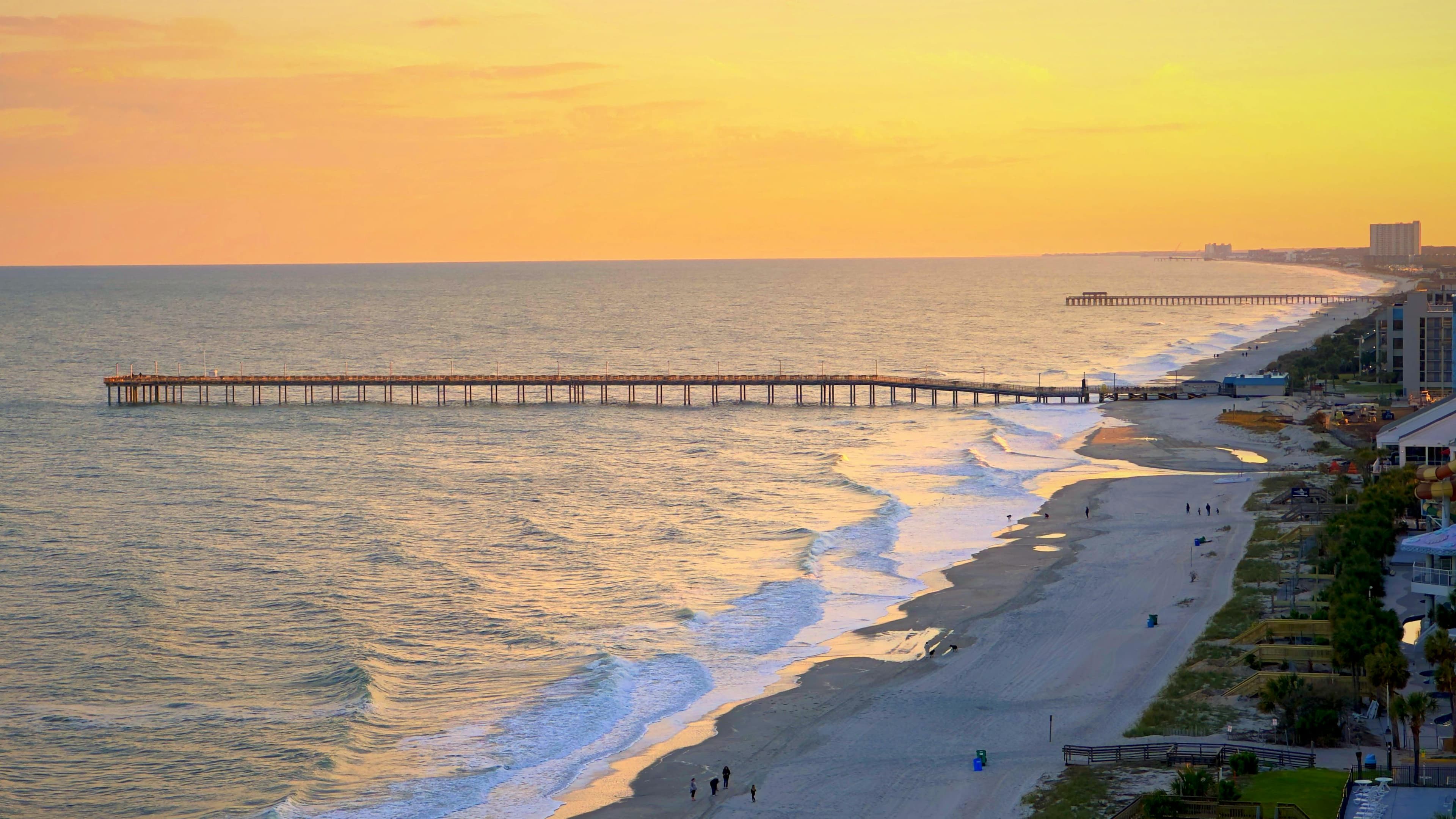
King's North at Myrtle Beach National
This hole captures Palmer's design ethos precisely. He wanted golfers to face genuine choices, not the illusion of choice. King's North delivers those decisions at a price point well below the premium Myrtle Beach courses, making it one of the best values on the Grand Strand for golfers who want strategic interest without the corresponding green fee.
The Classic Club, Palm Springs
In the Coachella Valley, The Classic Club is a Palmer design that has hosted the Bob Hope Classic (now The American Express) and offers desert golf with more generous dimensions than many of its neighbors. The fairways are wider than the Pete Dye and Jack Nicklaus courses at nearby PGA West, and the greens are large enough to accept a variety of approach shots. This is Palmer's populist instinct at work: make the course playable for the resort golfer while preserving enough difficulty for the professional event.
The conditioning at The Classic Club is consistently strong, and the desert mountain backdrop provides the visual drama that the Palm Springs market demands. At green fees substantially below the area's premium options, it represents Palmer's best contribution to desert golf.
Kapalua Bay Course and SilverRock
Palmer's reach extends beyond the mainland. The Bay Course at Kapalua in Maui is a resort course set along the Hawaiian coastline, with ocean views from most holes and a routing that uses the volcanic terrain's natural slopes. It lacks the strategic depth of the Plantation Course above it, but as a resort experience combining golf and landscape, it delivers.
SilverRock in La Quinta, California, is an underappreciated Palmer design built on a site that offers views of the Santa Rosa Mountains. The course has been well maintained since the city of La Quinta took over operations, and at moderate green fees, it is one of the better values in the Coachella Valley.
The Palmer Design Philosophy
Palmer did not pretend to be a design intellectual. He did not theorize about routing principles or publish essays on green complex philosophy. He built courses that he would have enjoyed playing, which meant courses that rewarded aggressive play, offered width off the tee, and presented at least one moment per round where the golfer had to decide between the safe play and the exciting one.
His best courses reflect this direct, uncomplicated approach. They are not subtle. They do not require multiple rounds to decode. What they offer is honest, enjoyable golf that accommodates a wide range of abilities without condescending to anyone. The Gambler hole at King's North, the 18th at Bay Hill, the open desert lines at The Classic Club: these are holes designed by someone who believed that golf should be fun, that risk should be real, and that the bold play should be rewarded more often than it is punished.
The verdict