The Ultimate American Golf Road Trip
The concept is simple and slightly unhinged: start on one coast, finish on the other, and play the best public-access golf courses in America along the way. Three weeks. Twelve stops. Roughly thirty rounds. A rental car with steadily increasing mileage and a trunk full of gear that smells progressively worse.
This is not a trip most people will take in one go. It is a framework. Pull any three- or four-day segment out and you have an excellent standalone trip. String the whole thing together, and you have the kind of experience that restructures your relationship with both golf and geography.
The route runs roughly west to east, chasing the sun and the season. Late September through early October is ideal: the desert has cooled, the Midwest is in its autumn prime, and the Southeast offers warm days without summer humidity.
Leg 1: The Pacific Coast (Days 1-5)
Pebble Beach, California — 2 nights
Start at the beginning. Two nights at The Lodge or the Inn at Spanish Bay, with rounds at Pebble Beach Golf Links and Spyglass Hill. The 7th at Pebble Beach, 106 yards over ocean, is the starting image for every golf trip that follows. Allow an afternoon to walk 17-Mile Drive and have dinner in Carmel.
Bandon, Oregon — 3 nights
Drive north to Bandon Dunes Golf Resort, approximately eight hours up the coast (or fly into North Bend from San Francisco). Three nights, four rounds: Pacific Dunes, Sheep Ranch, Bandon Dunes, and Old Macdonald. Walk every round. Play The Punchbowl putting course on the afternoon between rounds. This is the section of the trip where your body establishes the rhythm it will carry for the next two weeks.
Mileage so far: approximately 750 miles by car, or one flight plus 90-minute drive.
Leg 2: The Mountain West (Days 6-8)
Lake Tahoe, California/Nevada — 2 nights
From Bandon, fly or drive to Reno and continue to Lake Tahoe. Two rounds: Edgewood Tahoe on the south shore, where the lakefront holes and alpine setting create a visual experience unlike anything on the trip so far, and Coyote Moon in Truckee, where the mountain isolation and absence of houses on the course reward careful play. Stay at the Edgewood Tahoe Resort or a Truckee rental.
Coeur d'Alene, Idaho — 1 night
A one-night stop for the single-course experience: the Coeur d'Alene Resort Golf Course, with its famous floating green on the 14th reached by mahogany boat. The mandatory forecaddie is included in the green fee, and the lakeside setting is striking enough to justify the detour. This is the kind of course that exists for exactly this sort of trip.
Cumulative mileage: approximately 1,800 miles.
Leg 3: The Upper Midwest (Days 9-12)
Sand Valley, Wisconsin — 2 nights
Fly from Spokane to Chicago, then drive three hours north to Sand Valley. Two nights on the resort. Three rounds: Mammoth Dunes, whose fairways are among the widest in American golf; The Lido, Tom Doak's recreation of C.B. Macdonald's lost masterpiece; and the original Sand Valley course by Coore and Crenshaw. Walking only. The terrain in central Wisconsin, sandy and rolling with natural grass, will surprise anyone who associates the state exclusively with dairy farms.
Kohler, Wisconsin — 2 nights
Drive two and a half hours east to Destination Kohler. Two rounds: Whistling Straits, the Ryder Cup venue with over 1,000 bunkers along Lake Michigan, and Blackwolf Run River Course, Pete Dye's original design at the property. Stay at The American Club. The transition from Sand Valley's minimalist calm to Whistling Straits' lakeside intensity is one of the trip's defining contrasts.
Cumulative mileage: approximately 2,600 miles plus two flights.
Leg 4: The Southeast (Days 13-17)
Pinehurst, North Carolina — 2 nights
Fly from Milwaukee to Raleigh-Durham, then drive 90 minutes to the Sandhills. Two nights at Pinehurst Resort. Rounds at No. 2 and No. 4, Donald Ross's masterpiece and Gil Hanse's acclaimed 2018 redesign, respectively. If time and energy allow, add Tobacco Road, thirty minutes north in Sanford, where Mike Strantz's sand-quarry design will challenge everything you think you know about course architecture. The slope rating of 150 is not decorative.
Kiawah Island, South Carolina — 2 nights
Three hours east to the coast. Two nights at Kiawah Island Golf Resort. The main event is The Ocean Course, Pete Dye's championship design where all eighteen holes have Atlantic views and ten run directly along the coastline. At 7,937 yards and a slope of 155 from the back tees, it is one of the most demanding courses on the trip. Add Osprey Point for a more relaxed round. Spend an evening in Charleston for dinner at one of the restaurants that have made the city a culinary destination.
Hilton Head Island, South Carolina — 1 night
An hour and a half south to Hilton Head for a single round at Harbour Town Golf Links. The course is short by modern standards, which is part of its appeal: Harbour Town rewards strategy and shot-shaping over raw distance. One round is enough. It will be among the rounds you remember longest.
The red-and-white striped lighthouse behind the 18th green is one of the most recognizable images in American golf.
Cumulative mileage: approximately 3,400 miles plus three flights.
Leg 5: The Deep South Detour (Days 18-19)
Streamsong, Florida — 2 nights
Fly from Savannah to Tampa, then drive an hour southeast to Streamsong Resort. Two rounds: Streamsong Red and Streamsong Blue, both by Tom Doak, built on reclaimed phosphate mining land that produces terrain more commonly associated with the British Isles than central Florida. The elevation changes and dune formations are genuinely disorienting for anyone expecting flat Florida golf.
This is one of the most surprising stops on the trip.
Cumulative mileage: approximately 3,700 miles plus four flights.
Leg 6: The Grand Finale (Days 20-21)
Scottsdale, Arizona — 2 nights
Fly from Tampa to Phoenix for the final stop. Two nights, three rounds: TPC Scottsdale Stadium Course, where the WM Phoenix Open fills the 16th hole colosseum with 20,000 fans each February; We-Ko-Pa Saguaro Course, the Coore and Crenshaw design that has been ranked Arizona's best public course for most of the past sixteen years; and Troon North Monument Course, where the desert landscape serves as both hazard and scenery. End the trip in the desert, with the particular quality of late-afternoon Arizona light turning the Sonoran landscape gold.
The Numbers
| Category | Estimate |
|---|---|
| Green fees (approx. 30 rounds) | $8,500 |
| Accommodation (20 nights) | $6,500 |
| Flights (4 one-way segments) | $1,800 |
| Rental car (21 days) | $1,500 |
| Caddie fees (where applicable) | $1,200 |
| Dining and incidentals | $3,000 |
| Total | $22,500 |
That figure will fluctuate considerably depending on choices. Stay in mid-range hotels instead of resort properties, and the accommodation drops by $3,000. Skip caddies where they are optional, and the caddie line drops by half. Play twenty rounds instead of thirty, and the trip becomes a two-week, $15,000 experience that still covers the essential stops.
The Practical Reality
Twenty-one days is a significant commitment. For most people, this trip works better as a series of legs taken over multiple years, building toward the complete route. Start with the section that excites you most. For many, that will be Bandon. For some, it will be the Sand Valley-Kohler Wisconsin combination. For the golfer who has never played the oceanside holes at Pebble Beach or Kiawah, the coastal legs may be irresistible.
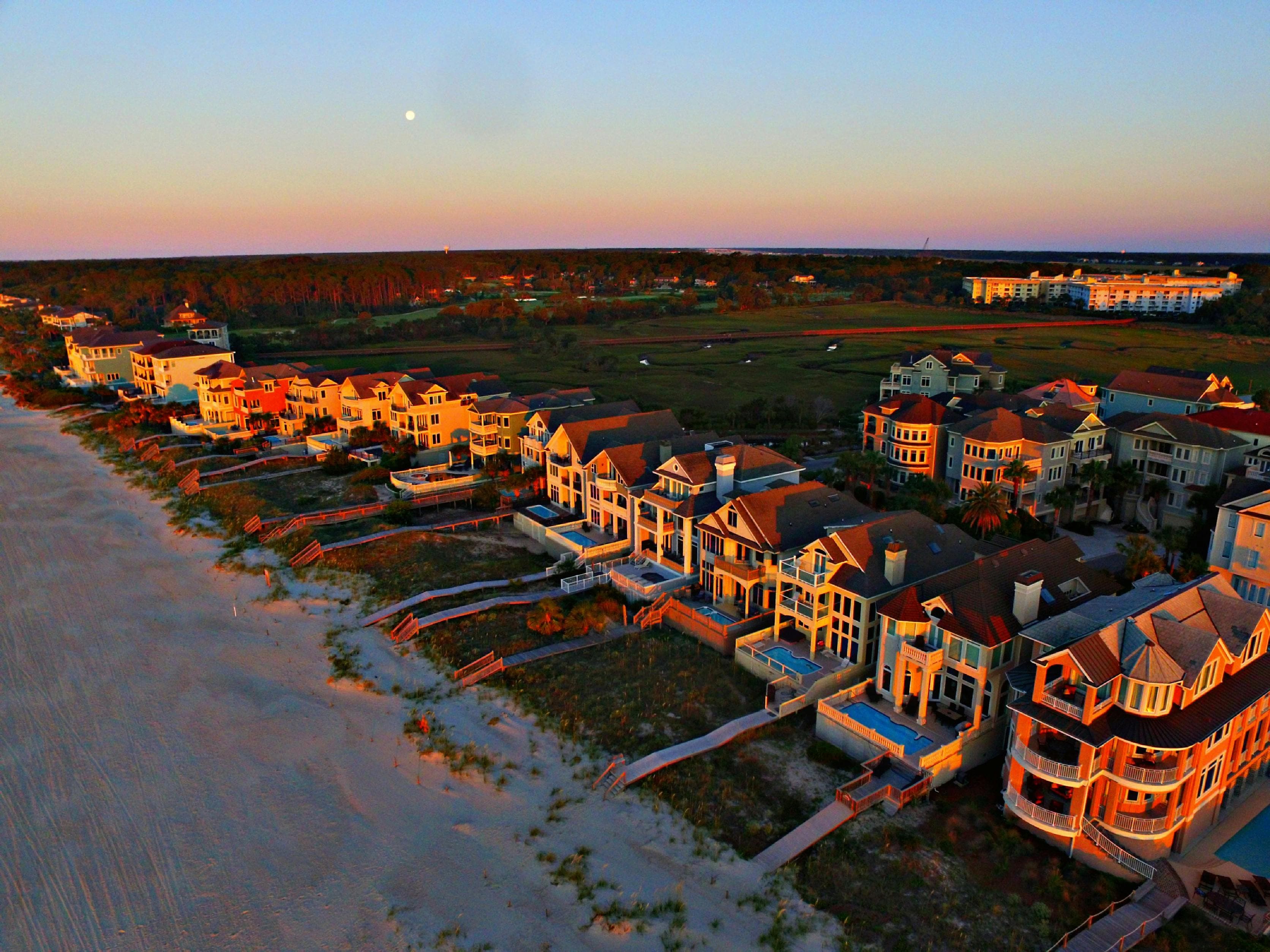
Harbour Town Golf Links
Tip
The verdict
Start the engine. The golf is waiting.