Where to stay in Scottsdale
Live prices from Booking.com, Expedia and more — every nearby hotel and rental in one search.
Prices and availability from Booking.com, Expedia and others via Stay22. GolfTrailsHQ may earn a commission at no additional cost to you.
Getting There
Phoenix Sky Harbor International Airport is the gateway, and it is a good one. PHX receives direct flights from most major American cities on all major carriers, with particular depth from Chicago, Dallas, Los Angeles, San Francisco, Denver, and the New York metro area. The airport sits roughly 14 miles southwest of Old Town Scottsdale, which translates to a 20- to 30-minute drive depending on traffic and the time of day. Rush hour on the 101 and 202 loops adds time during the morning and evening peaks, but the drive is straightforward on a well-signed freeway system.
Scottsdale Airport, a general aviation facility roughly nine miles from Old Town, handles private and charter flights but offers no commercial service. For the vast majority of visiting golfers, PHX is the arrival point.
For those who prefer to drive, the distances from neighboring metro areas are manageable. Las Vegas is roughly 302 miles northwest, a four-hour-and-40-minute drive through the desert on Interstate 17 and US-93. Los Angeles is 373 miles west, roughly five and a half hours on Interstate 10. Tucson sits 116 miles to the southeast, a comfortable hour-and-45-minute drive that makes it easy to combine the two destinations. Sedona, which many visitors add as a day trip, is 120 miles and two hours to the north through some of the most scenic highway driving in the Southwest.
Getting Around
A rental car is essential. This is not a hedged recommendation. The golf courses in this guide are distributed across a corridor that stretches roughly 30 miles from South Mountain in the south to Pinnacle Peak in the north, with outliers in Peoria (Quintero, 45 minutes northwest) and Maricopa (Ak-Chin Southern Dunes, 40 minutes south). Public transit does not connect the courses, and ride-sharing services, while available, become expensive at the distances involved. A golfer taking rideshare from Old Town Scottsdale to Troon North and back will spend more in a single day on transportation than a rental car costs for the entire trip.
Rental rates at PHX run approximately $29 to $35 per day for a compact, $35 to $45 for a mid-size, and $50 to $70 for an SUV. A mid-size vehicle accommodates two golf bags comfortably; groups of four with full travel bags should consider an SUV or minivan. The PHX Rental Car Center is connected to the terminals by an automated train, and the process from terminal to car is typically 20 to 30 minutes.
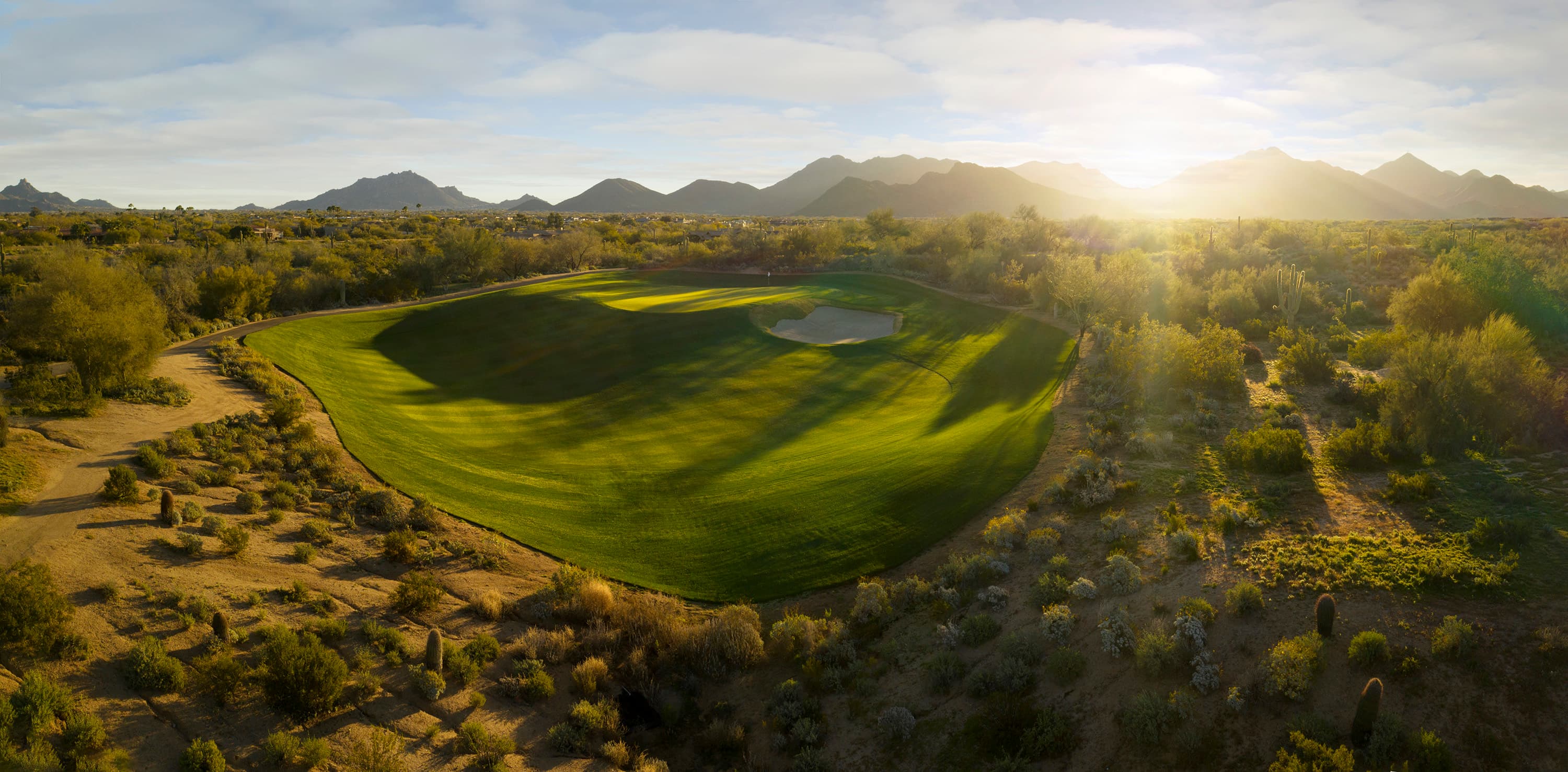
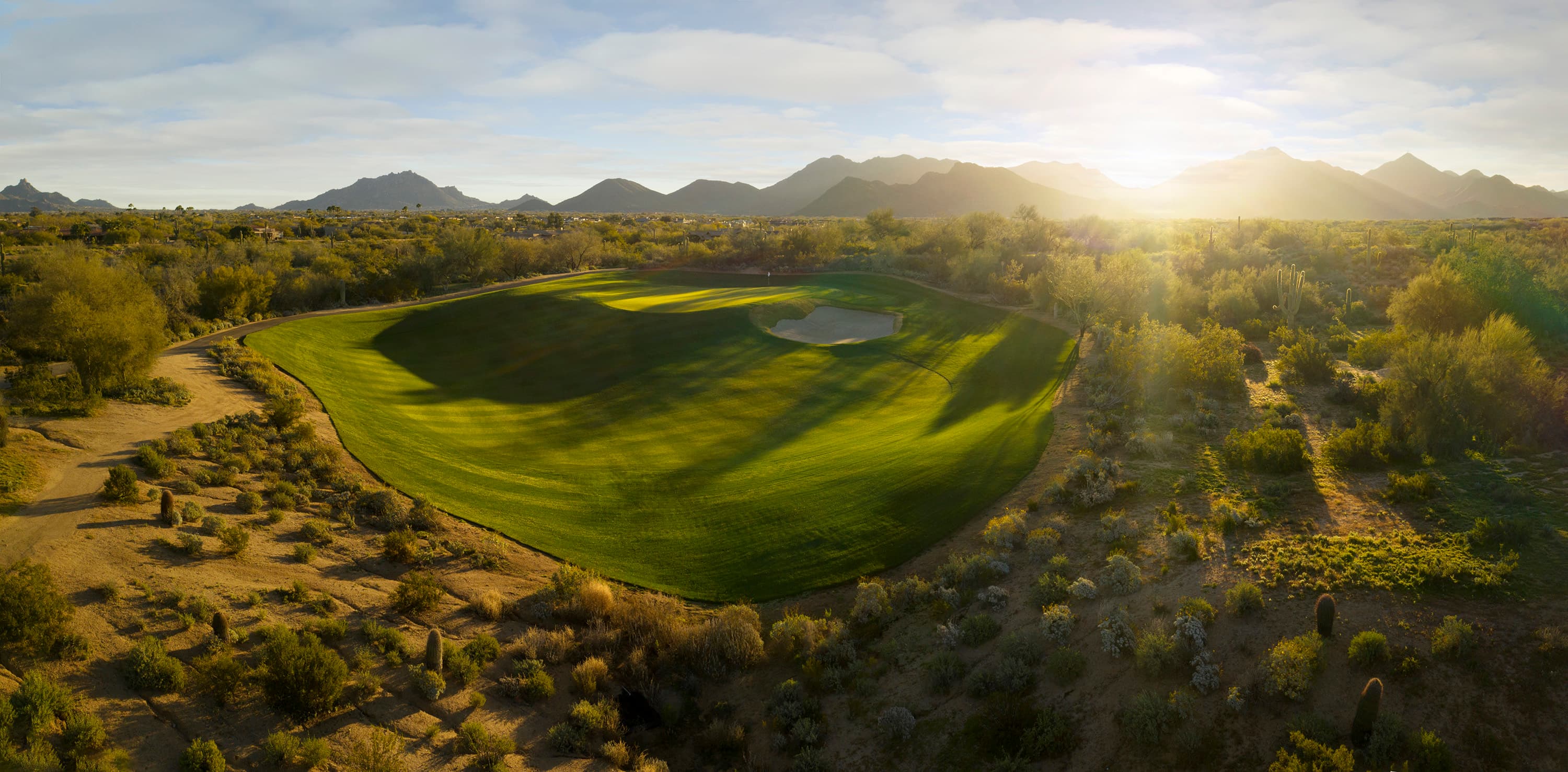
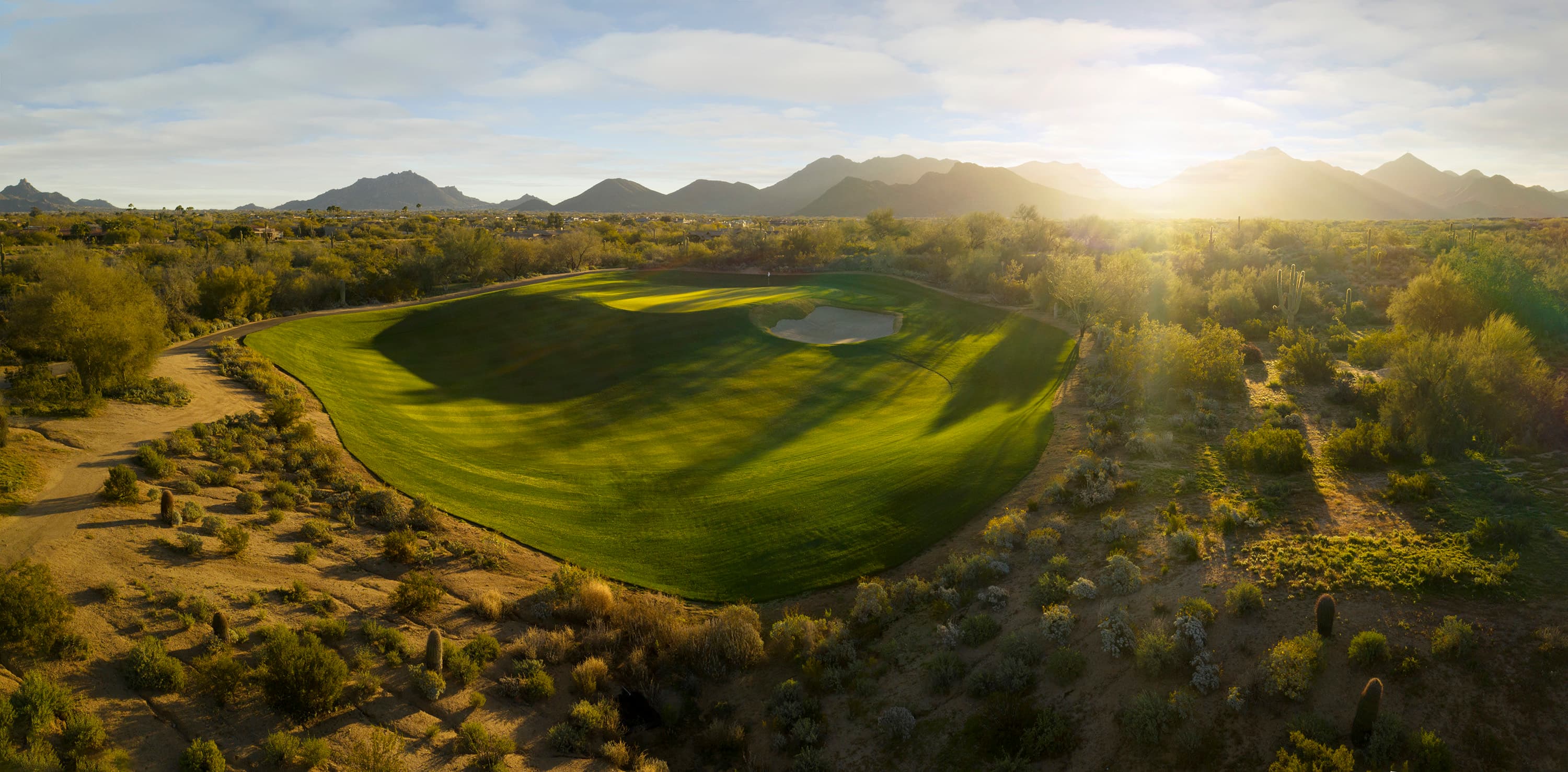
The driving itself is part of the experience. The routes between courses pass through open desert, mountain foothill terrain, and tribal land that provides a visual context for the golf. The drive from central Scottsdale north to Troon North, along Scottsdale Road through the transition from suburban development to desert foothills, establishes the character of the landscape before the round begins. The drive east to We-Ko-Pa on the Beeline Highway, through the Fort McDowell reservation, offers an even more dramatic version of the same transition.
When to Visit
The Scottsdale golf calendar divides into three distinct seasons, and the choice of when to visit is the single most consequential planning decision.
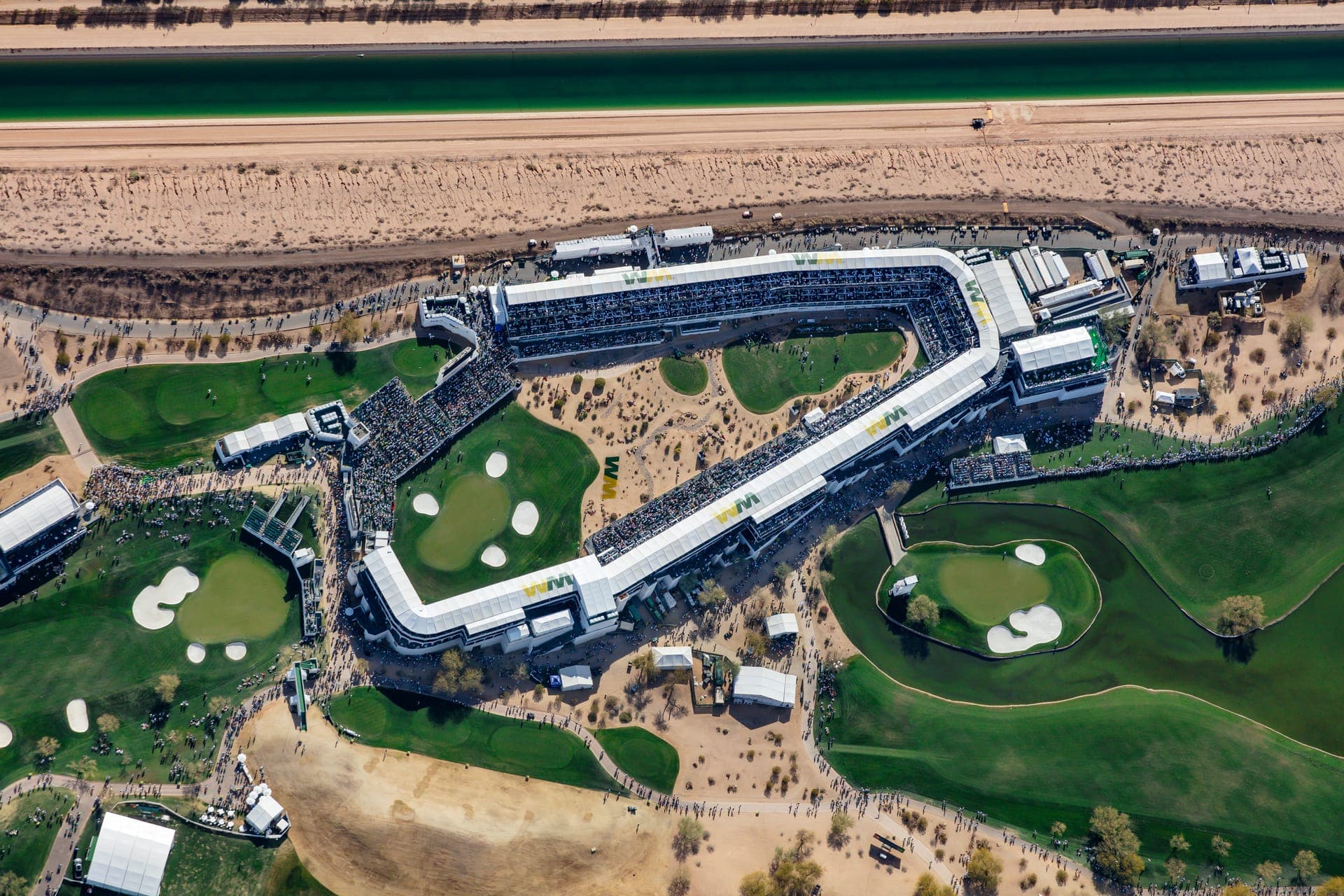
Peak season runs from January through April. This is when the destination operates at full capacity. The weather is ideal: January highs average 67 degrees Fahrenheit, February 71, March 76, and April 85. Rain is rare, wind is generally light, and the overseeded winter ryegrass produces playing surfaces that look and play like the best courses in the country. The trade-off is price. Green fees at the premium courses reach their annual maximum, accommodation rates climb accordingly, and the most popular tee times require advance booking. The WM Phoenix Open in early February and Cactus League spring training baseball in March bring additional visitor traffic that compounds the demand.
Shoulder season covers October through December and offers what may be the best combination of weather, pricing, and availability. October highs average 88 degrees, which is warm but manageable for a morning round. November settles to 75, and December to 66. Green fees drop 20 to 40 percent below peak rates at most courses, accommodation rates follow suit, and the tee sheets are less crowded. The overseeding transition happens in October, when courses close briefly to overseed Bermuda fairways with winter ryegrass. By November, the winter surfaces are established and the playing conditions match the peak season standard. For golfers with scheduling flexibility, November is arguably the optimal month: moderate temperatures, lower prices, uncrowded courses, and the desert light at its most photogenic.
Summer, from May through September, is a different proposition entirely. The numbers tell the story plainly. May highs average 94 degrees. June reaches 104. July and August sit at 104 to 106. September drops to 100, which counts as relief only by local standards. Afternoon rounds are physically inadvisable from June through August, and most experienced summer visitors start at dawn with a goal of finishing before 11 AM. The golf courses respond with dramatic discounts: summer rates at many premium courses drop 50 to 70 percent below peak pricing, and twilight rates can be lower still. A summer visitor paying $69 for a morning round at We-Ko-Pa Saguaro is playing the number-one-ranked course in Arizona at roughly one-quarter of the peak-season rate. The trade-off is the heat, and it is a genuine trade-off. The courses are empty, the conditioning remains high, and the experience is legitimate golf in a legitimate desert summer. Whether that appeals is a personal calculation that depends on heat tolerance and scheduling constraints.
Budget Planning
A Scottsdale golf trip scales across a wide range, and the destination accommodates each level without a meaningful drop in course quality.
The value tier runs approximately $1,200 to $1,800 per person for a three-night, four-round trip. This budget assumes a value or mid-range hotel at $80 to $160 per night, courses in the mid-range and hidden value tiers (Papago, Raven, Talking Stick O'odham, Lookout Mountain, Ocotillo), a rental car, and moderate dining. The courses at this level are genuinely good, not consolation prizes. Papago at 7,380 yards for $100 to $140 and the O'odham Course at $150 are rounds that most golfers will remember favorably.
The mid-range tier runs $2,000 to $3,000 per person for three to four nights and four rounds. This budget opens the premium courses (Troon North, Grayhawk Raptor, Quintero) and upscale accommodations (Grand Hyatt, Hotel Valley Ho, Boulders Resort). The mix of one premium round, two mid-range rounds, and one value round provides the best cross-section of the Scottsdale experience.
The luxury tier runs $3,500 to $5,500 per person for four nights and four rounds at the Fairmont or The Phoenician, with TPC Stadium, Troon North Monument, We-Ko-Pa Saguaro, and Grayhawk Raptor on the tee sheet. This tier includes spa time, premium dining, and the resort experience that the Five Diamond properties deliver. The green fees alone across four premium rounds can exceed $1,500 per person during peak season.
All three tiers produce a trip worth taking. The value tier golfer playing Papago and the O'odham Course is having a legitimate Scottsdale experience. The luxury tier golfer at TPC Stadium and Troon North is having a different version of the same experience. The quality floor in Scottsdale is higher than at most golf destinations, which means the budget decision affects the context of the trip more than the quality of the golf.
Local Knowledge
Tee times book earliest at the highest-demand courses during peak weekends in January through March. Advance booking of two to four weeks is standard for TPC Stadium, Troon North, and We-Ko-Pa during this window. Midweek tee times are substantially easier to secure and occasionally cheaper through dynamic pricing at courses that use that model.
The sun is the consistent environmental factor. Sunscreen, a hat, and water are not optional equipment from October through April and are critical from May through September. The dry desert air dehydrates faster than humid climates, and golfers who are not deliberate about water intake will feel the effects by the back nine.
Tipping at resort courses follows the standard: $5 to $10 for the bag drop attendant, $2 to $5 for the beverage cart. Caddies, where available, follow standard caddie tipping guidelines. The Scottsdale golf culture is relaxed in dress code but not in pace of play; four-hour rounds are the expected standard at most daily-fee courses, and marshals enforce the pace at the busier facilities.
For first-time visitors, the most common planning mistake is underestimating the distances. The corridor stretches 30 miles from the southern courses to the northern courses, and a round at Quintero or Ak-Chin Southern Dunes adds another 40 minutes of driving in each direction. Building 45 minutes of buffer between the end of one activity and the start of another prevents the trip from becoming a logistics exercise. Scottsdale works best when the pace is unhurried, and the desert light, when viewed from a car window rather than through a rearview mirror, is part of the experience rather than a backdrop to a schedule.