Scottsdale, Arizona
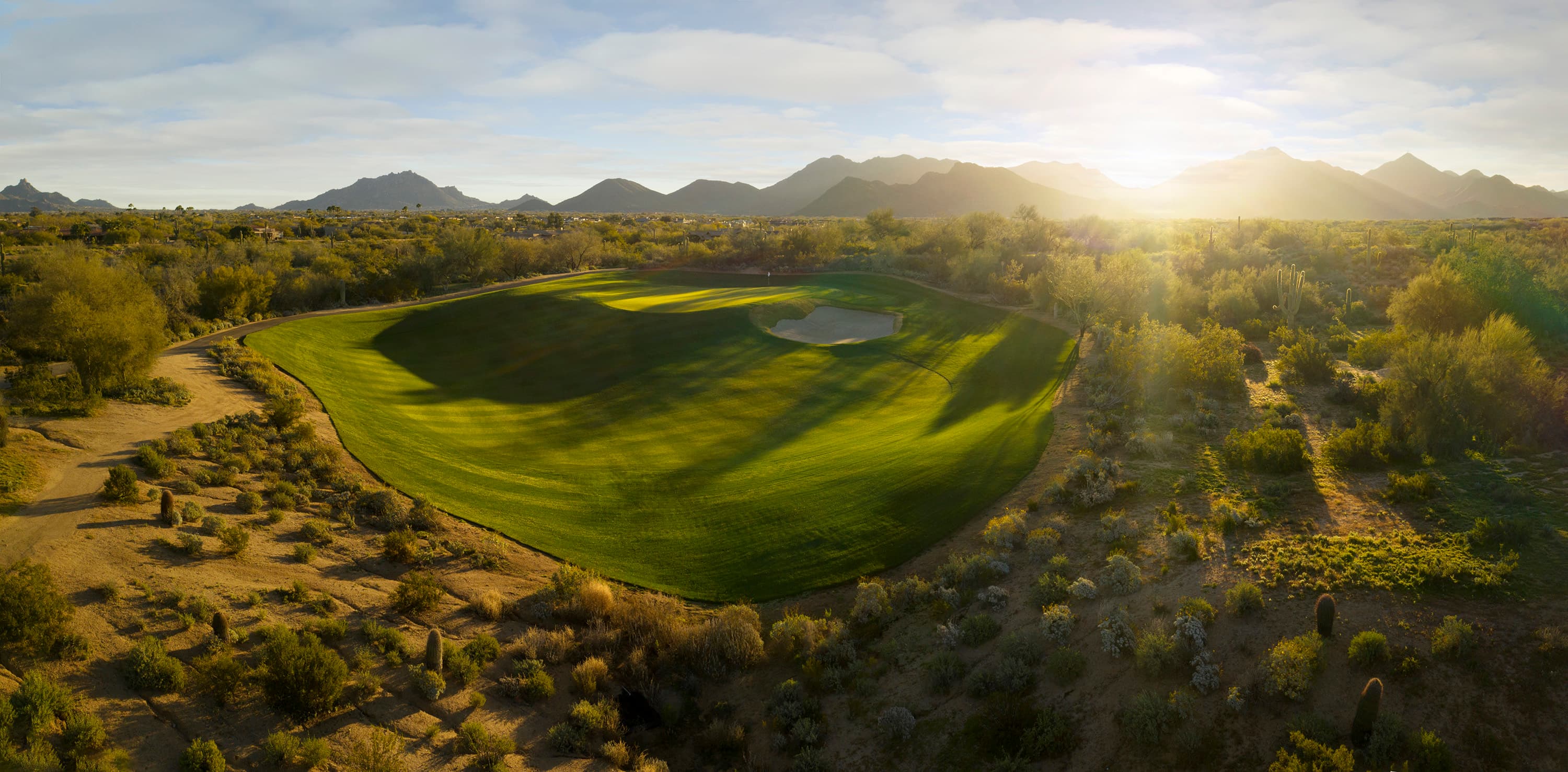
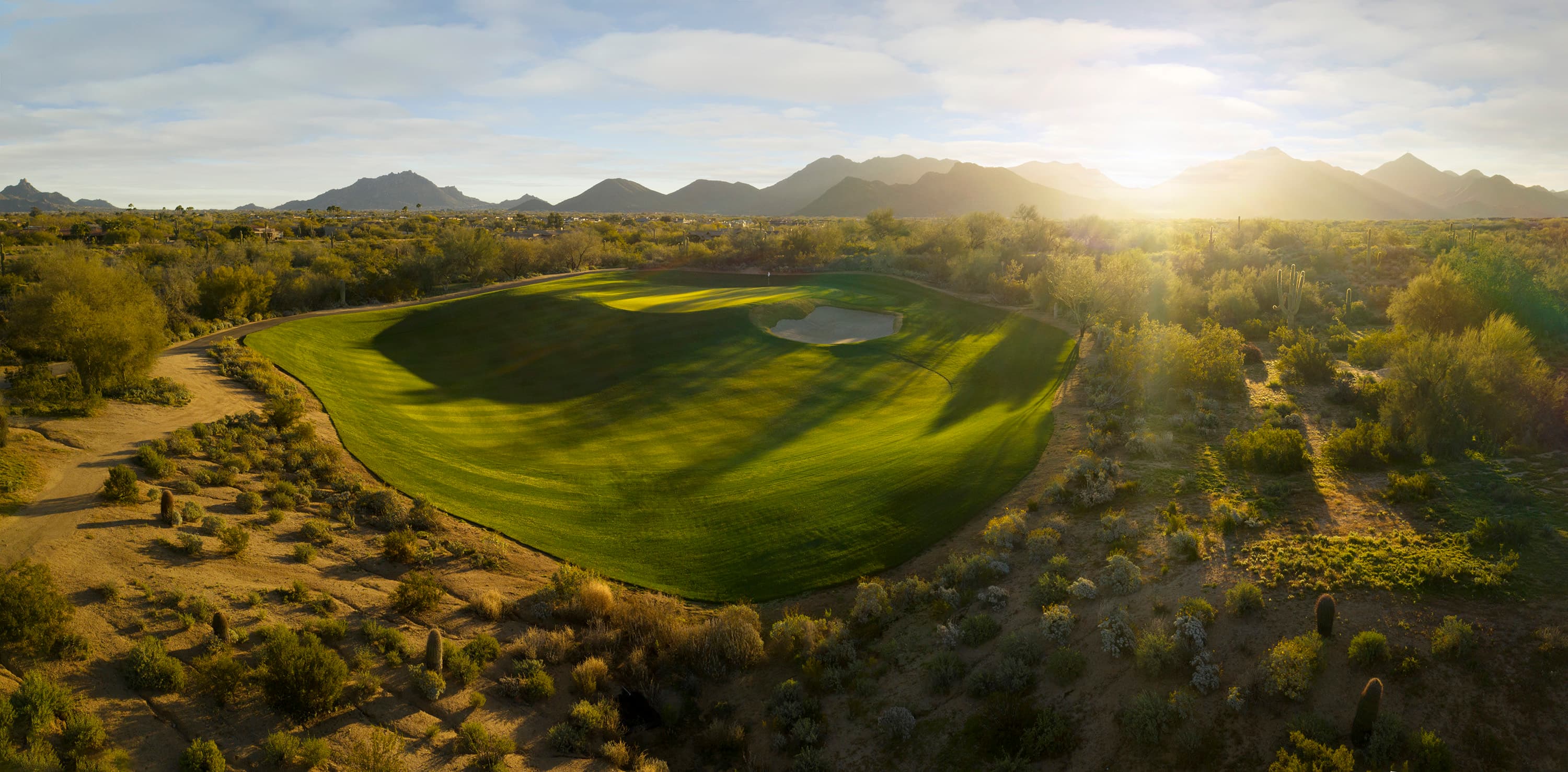
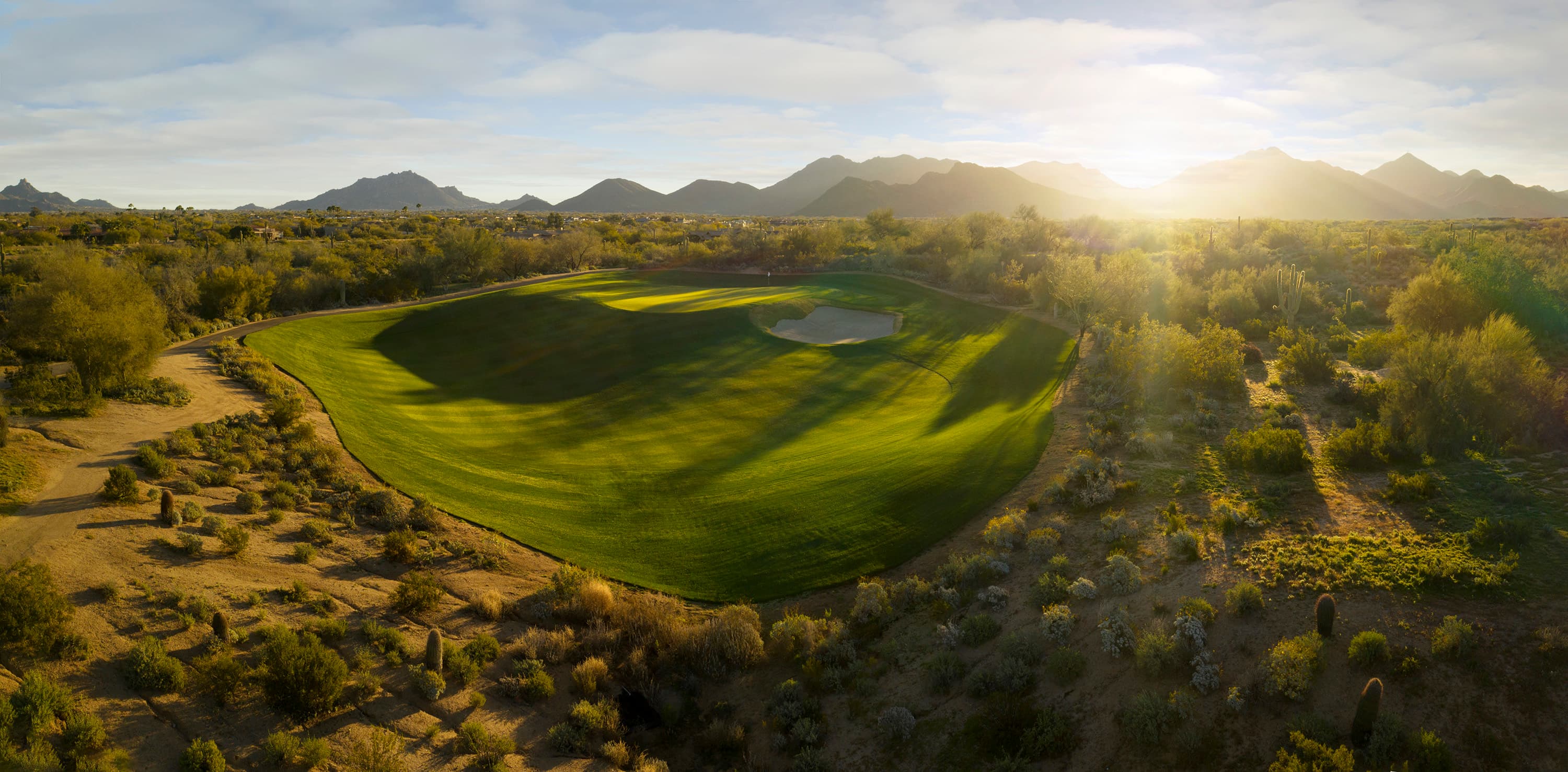
There is a particular quality to early morning light in the Sonoran Desert. It arrives low and warm, turning the saguaros and boulder formations the colour of sandstone, and it makes a 6:30 AM tee time feel less like an obligation and more like a privilege. From October through April, Scottsdale has this light in abundance, along with afternoon temperatures that settle between 66 and 85 degrees Fahrenheit. Those conditions, more than any single course or resort, explain why this corridor running northeast from Phoenix has become the most popular winter golf destination in the United States.
The practical case is straightforward. Phoenix Sky Harbor International Airport receives direct flights from most major American cities. Old Town Scottsdale is a 20-minute drive northeast. More than 200 courses operate within a 45-minute radius, spanning every tier from municipal tracks to PGA Tour facilities. The resort infrastructure runs from five-star properties at the base of Camelback Mountain to well-located budget hotels in Old Town. The dining and nightlife scene, concentrated along Scottsdale Road and in the Old Town district, operates at a level that rivals the golf as a reason to visit. For groups travelling with non-golfers, that last point matters considerably.
The Desert Landscape
Understanding the terrain is essential because it shapes every course in the region. The Sonoran Desert is not the barren expanse many first-time visitors expect. It is a living landscape of saguaro cactus, palo verde trees, creosote, and native grasses, all of it framed by mountain ranges that define the horizon in every direction. The McDowell Mountains anchor the northeast, Pinnacle Peak rises to the north, Camelback Mountain sits south of Old Town, and the Superstition Mountains mark the eastern edge of the metro area.
Course architects have responded to this landscape in two fundamentally different ways. The desert target school, pioneered locally by Tom Weiskopf and Jay Morrish in the late 1980s, routes fairways through the native terrain with forced carries over desert scrub and arroyos. Miss the fairway and the ball is gone, consumed by the landscape that makes the course so visually striking. Troon North's Monument and Pinnacle courses, along with We-Ko-Pa's Saguaro and Cholla, represent this philosophy at its most refined. The alternative approach imports a different environment entirely. Raven Golf Club lines its fairways with more than 6,000 Georgia pines, creating a Carolina-style experience five miles from Sky Harbor Airport. Papago Golf Course, a city-owned municipal layout, plays across green, irrigated parkland at the base of the distinctive red sandstone Papago Buttes. Both approaches produce excellent golf. The desert target courses simply look like nowhere else in the country.
Course Depth
The course inventory operates across four tiers, and the best trips sample from at least two.
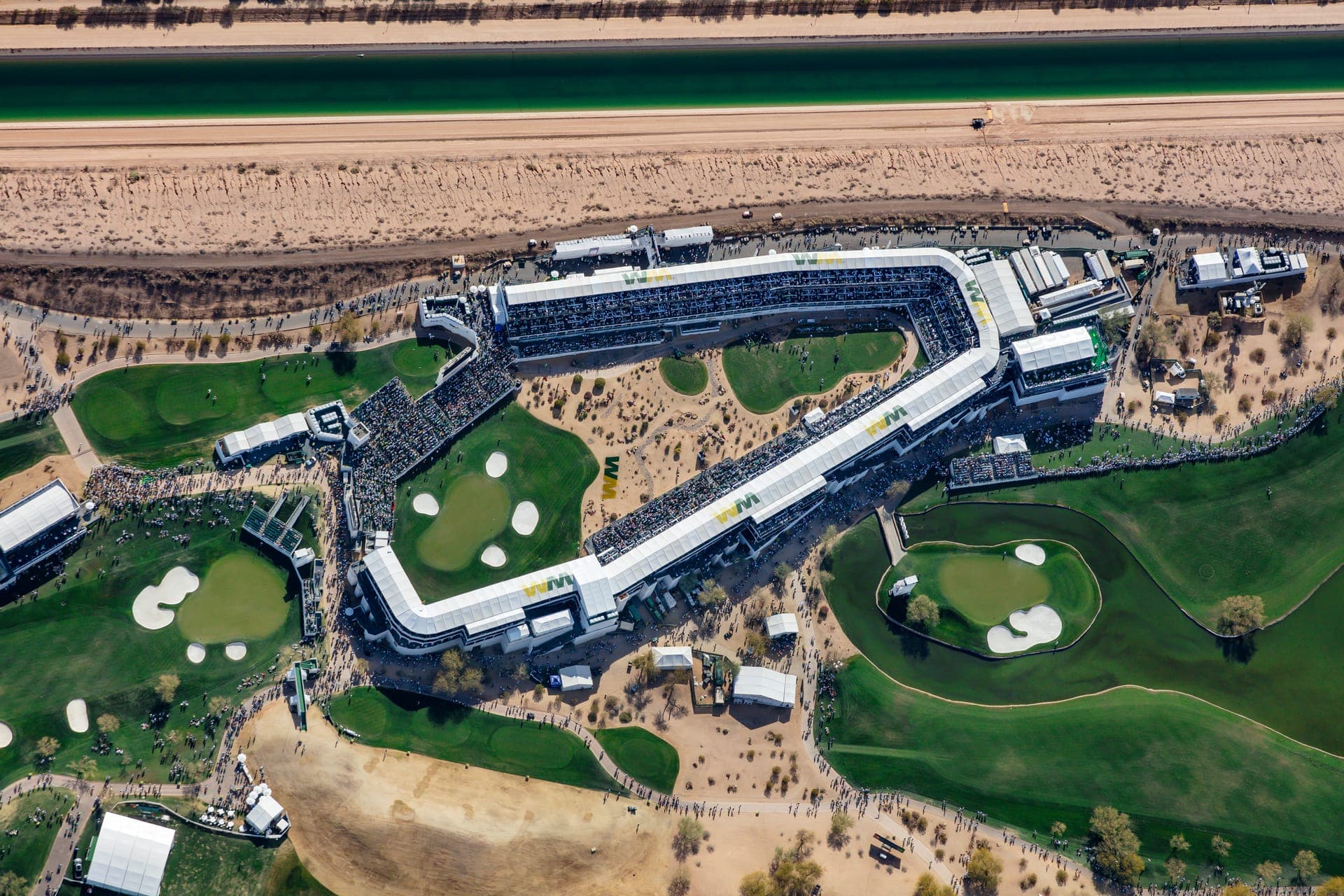
At the top, three courses command the highest green fees and deliver experiences that justify the cost. TPC Scottsdale's Stadium Course, home of the WM Phoenix Open since 1987, is a Tom Weiskopf and Jay Morrish design where the par-3 16th is the centrepiece. During the tournament, 20,000 spectators fill a purpose-built colosseum around the hole. When visitors play it, the grandstands are empty and the desert is quiet. It is a strange and memorable contrast. The Stadium charges $436 to $550 in peak season, placing it firmly at the premium end of the Scottsdale market. We-Ko-Pa Golf Club, located on Fort McDowell Yavapai Nation land northeast of Scottsdale, offers two courses that rank among the finest public-access layouts in Arizona. The Saguaro Course, a Bill Coore and Ben Crenshaw design, has been ranked the number one course you can play in Arizona by Golfweek for 15 of the past 16 years. The Cholla Course, by Scott Miller, was named by Sports Illustrated as one of the ten best new public courses in the world upon its 2001 opening. Both charge $219 to $309 in peak season, which represents strong value relative to their national ranking.
The premium tier fills the next level with courses that consistently appear in state and regional rankings. Troon North Golf Club operates two Tom Weiskopf courses at the base of Pinnacle Peak. The Monument Course, a British links-inspired layout with firm greens and four par 5s exceeding 500 yards, charges $300 to $500 through dynamic pricing. The Pinnacle Course, a desert target design set among steep arroyos and saguaro forests, runs $255 to $325. Grayhawk Golf Club's Raptor Course, a Tom Fazio design that hosted the NCAA Division I Championships, charges roughly $475 in peak season. Its sibling Talon Course, designed by David Graham and Gary Panks, sits around $250. Quintero Golf Club, 45 minutes northwest in Peoria, offers dramatic elevation changes across a 7,249-yard Rees Jones layout for $262 to $385. Ak-Chin Southern Dunes, a links-style design by Brian Curley, Lee Schmidt, and Fred Couples on the Ak-Chin Indian Reservation, charges approximately $275.
The mid-range tier is where Scottsdale reveals its depth. TPC Scottsdale's Champions Course, the par-71 complement to the Stadium, plays 7,235 yards for roughly $234. Papago Golf Club, a William F. Bell design renovated in 2008 at a cost of $5.8 million, offers 7,380 yards of city-owned municipal golf for $100 to $140. It is, pound for pound, one of the best deals in the market. Talking Stick Golf Club runs two Coore-Crenshaw designs on the Salt River Pima-Maricopa Indian Community: the O'odham Course, a flat links-style layout with views of the McDowell Mountains and Pinnacle Peak, and the Piipaash Course, a more traditional tree-lined design with raised greens. Boulders South, a Jay Morrish design that plays through and around the massive granite formations that give the resort its name, charges $150 to $250. There is no other course in the area that looks anything like it. Lookout Mountain Golf Club, set on a hillside at the Hilton Phoenix Tapatio Cliffs, earned Golf Digest's Four Star Award for nine consecutive years and charges $87 to $168. Raven Golf Club, the Carolina-style layout lined with Georgia pines, runs $55 to $229 and sits five miles from the airport, which makes it a logical first or last round.
The hidden value tier rounds out the inventory. Ocotillo Golf Club in Chandler operates 27 holes of Ted Robinson design with water features on most holes, a Golf Digest 4.5-star rating, and complimentary replay and range balls for $80 to $120. Arizona Grand Golf Course, a short par-71 at Arizona Grand Resort near South Mountain Park, offers lush semitropical landscaping and a front nine with water features for $155 to $225.
Where to Stay
The accommodation landscape mirrors the course inventory in range and quality. At the luxury end, The Phoenician occupies 250 acres at the base of Camelback Mountain and holds AAA Five Diamond status. Nightly rates run $400 to $800. Fairmont Scottsdale Princess, adjacent to TPC Scottsdale, operates a 44,000-square-foot spa and six pools across its 750 rooms. Rates run $350 to $700 and include the logistical advantage of being steps from the Stadium and Champions courses. We-Ko-Pa Casino Resort, rebranded from its earlier name, places guests directly at the two We-Ko-Pa courses with no driving required. JW Marriott Camelback Inn offers pueblo-style casitas at $300 to $600 per night.
The upscale tier provides strong alternatives. Grand Hyatt Scottsdale Resort, following a $115 million renovation, operates 10 pools and 19 spa treatment rooms at $250 to $450. Hotel Valley Ho, a mid-century modern landmark in Old Town, puts guests within walking distance of Scottsdale's best restaurants for $200 to $400. Boulders Resort and Spa offers direct access to Boulders South and a 33,000-square-foot spa at $250 to $500. Talking Stick Resort, with its on-site casino, two championship courses, and seven restaurants, runs $180 to $300.
The mid-range and value segments serve golfers who prefer to allocate more of their budget to green fees. Properties from The McCormick Scottsdale at $150 to $250 to Motel 6 at $60 to $113 provide clean, functional bases across the Old Town corridor. The value-tier properties, clustered along Camelback Road and Scottsdale Road, offer the practical advantage of central location without the resort premium.
Beyond the Course
Scottsdale's dining scene is considerably better than its reputation suggests. The restaurants along Marshall Way and Stetson Drive in Old Town range from inventive Southwestern to straightforward steak, and the quality at the top end justifies a reservation. This is not a city that survives on resort buffets.
The desert itself is the primary non-golf attraction. The McDowell Sonoran Preserve, the largest urban preserve in the country, offers more than 225 miles of trails accessible from 11 trailheads. Taliesin West, Frank Lloyd Wright's winter home and studio, operates daily tours through the architect's desert masterwork. Old Town Scottsdale's gallery district hosts a Thursday evening ArtWalk that draws a serious crowd.
For full-day excursions, the Grand Canyon sits roughly three hours north, and Sedona is two hours through some of the most visually dramatic landscape in the Southwest. Multiple operators run guided tours that handle the logistics.
The spa culture is genuine and extensive. Several resort spas draw from the desert setting: treatments involving local botanicals, outdoor relaxation areas with mountain views, and the kind of quiet that is difficult to find in a city. For travelling companions who do not golf, the combination of spa, hiking, Old Town galleries, and the dining scene makes Scottsdale one of the few golf destinations where the non-golfer's trip is not a consolation prize.
The Seasonal Reality
October through April is the season. January and February are the peak months, with the highest green fees and the best weather: highs in the upper 60s and low 70s, clear skies, negligible rain. March brings warmer afternoons and spring training baseball across the Cactus League. November and April are shoulder months where green fees drop, the courses are less crowded, and the desert light is, if anything, even better.
May through September is a different proposition entirely. June through August highs average 104 to 106 degrees Fahrenheit. Afternoon rounds become physically inadvisable. The courses respond with dramatic discounts, sometimes 50 to 70 percent below peak rates, and early morning tee times become the only practical option. A summer trip has its own logic for golfers who tolerate heat: start at dawn, be off the course by noon, spend the afternoon in a pool. But the destination was built for winter, and that is when it operates at its best.
Who It Serves
Scottsdale scales from a $1,500 budget weekend to a $5,000 luxury trip without losing its character at either end. The value golfer playing Papago, Raven, and the Talking Stick courses from a mid-range hotel is having a legitimate Scottsdale experience. The golfer at the Fairmont playing TPC Stadium and Troon North Monument is having a different version of the same experience. Both are well served. The destination's depth ensures that the quality does not drop when the budget does, which is rarer than it should be among major golf destinations.
Three days is enough to experience the best of it. Four is better. Two is a mistake.