Scottsdale: Course History & Design Story
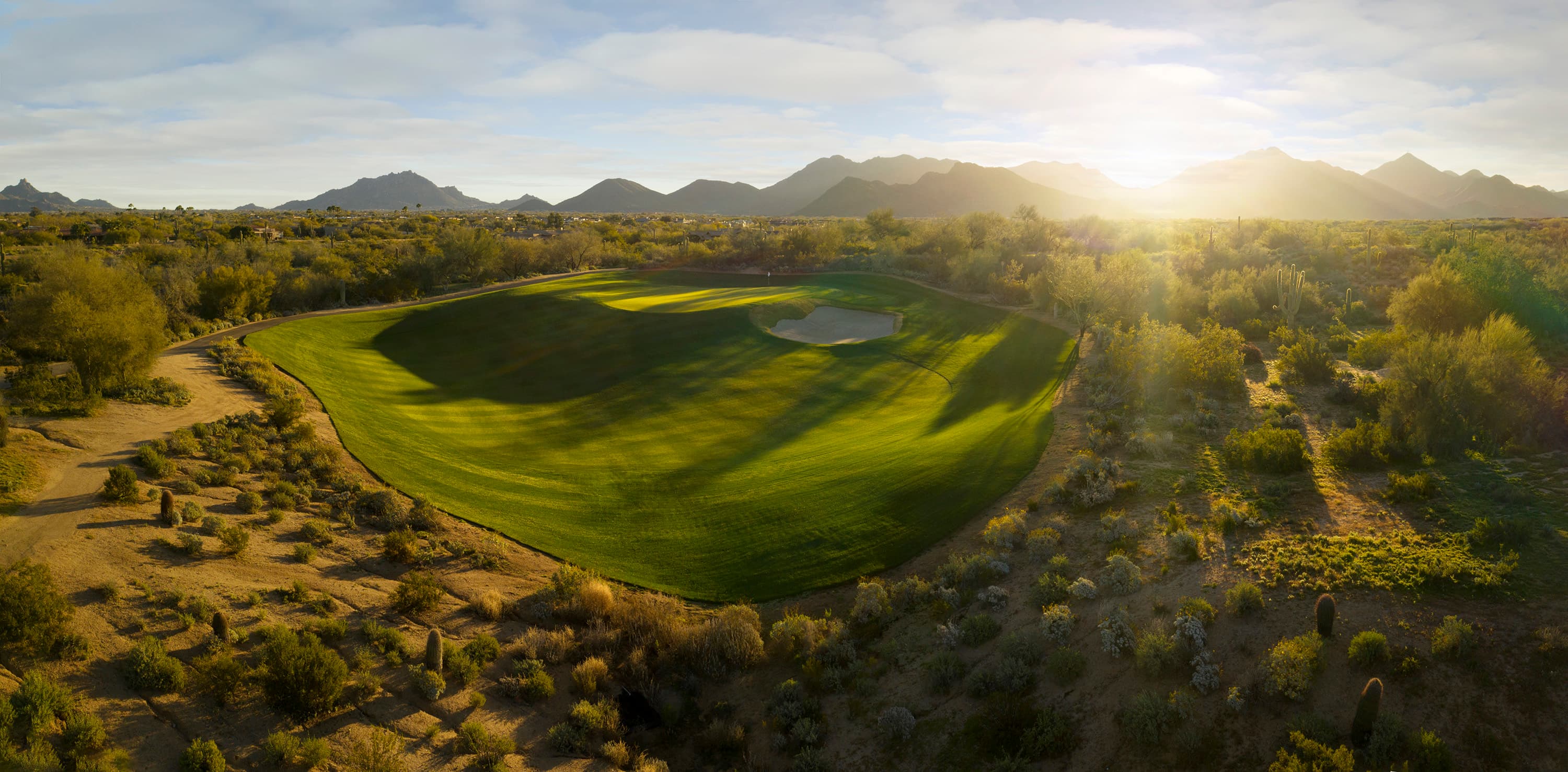
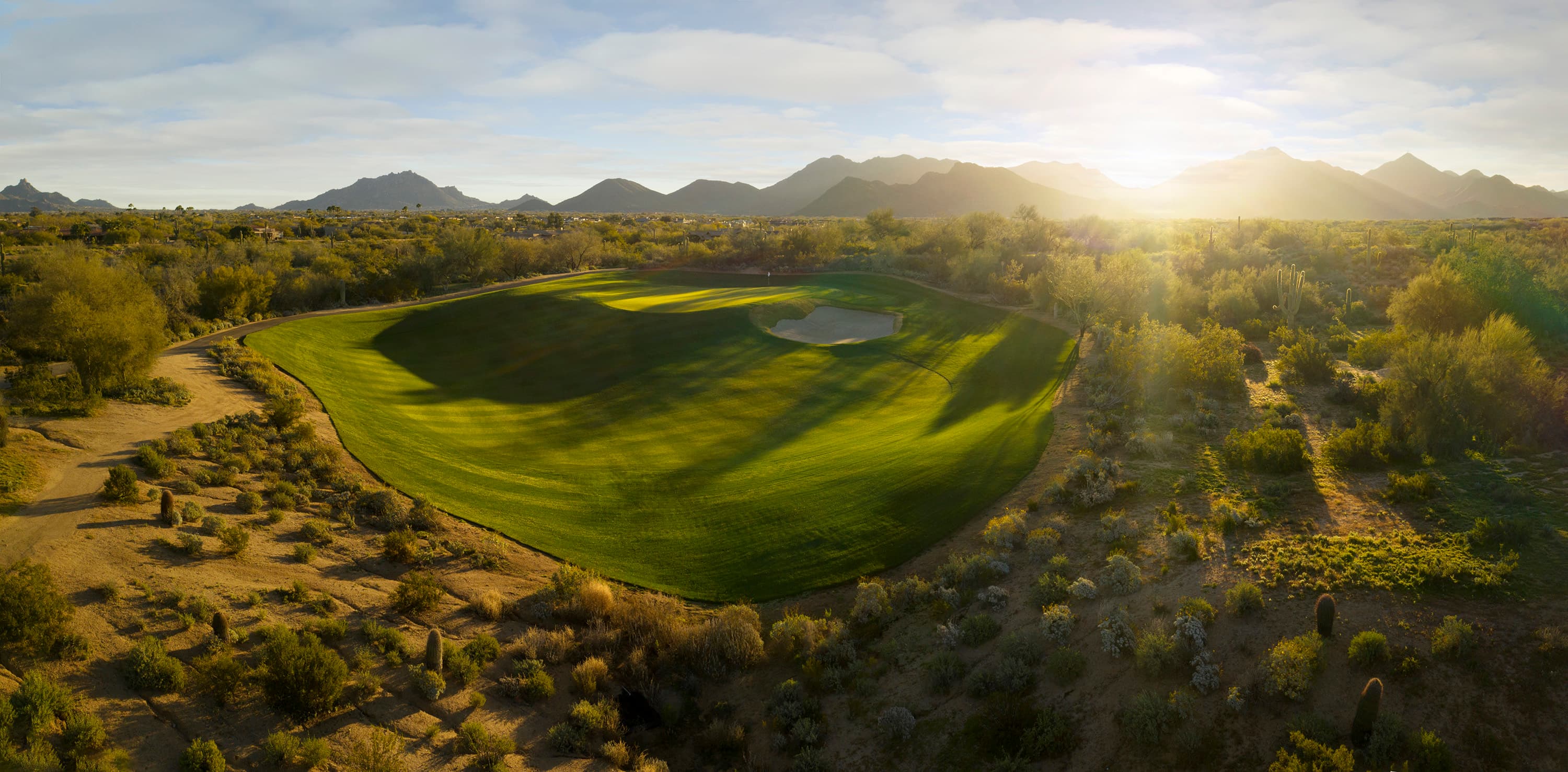
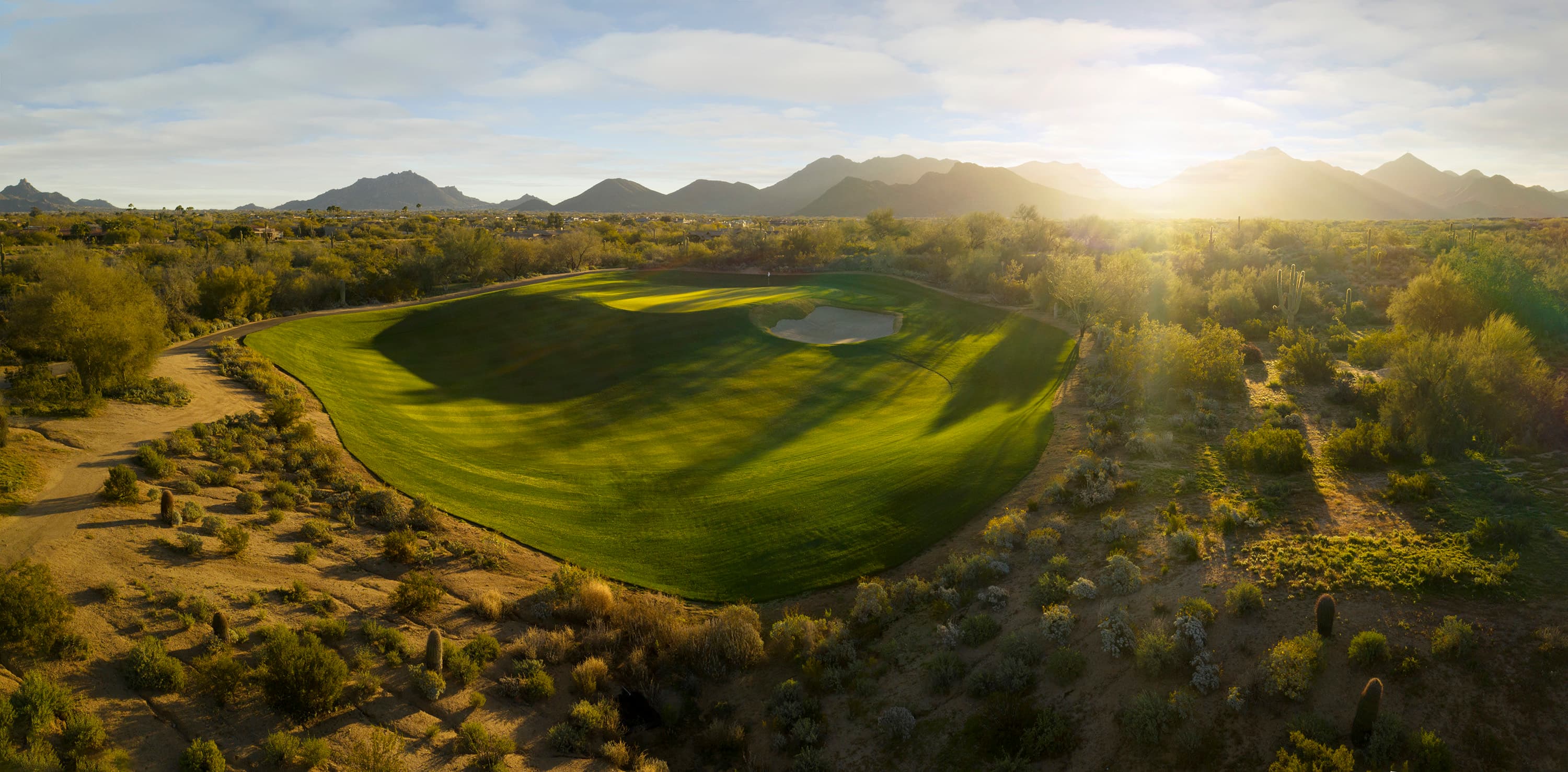
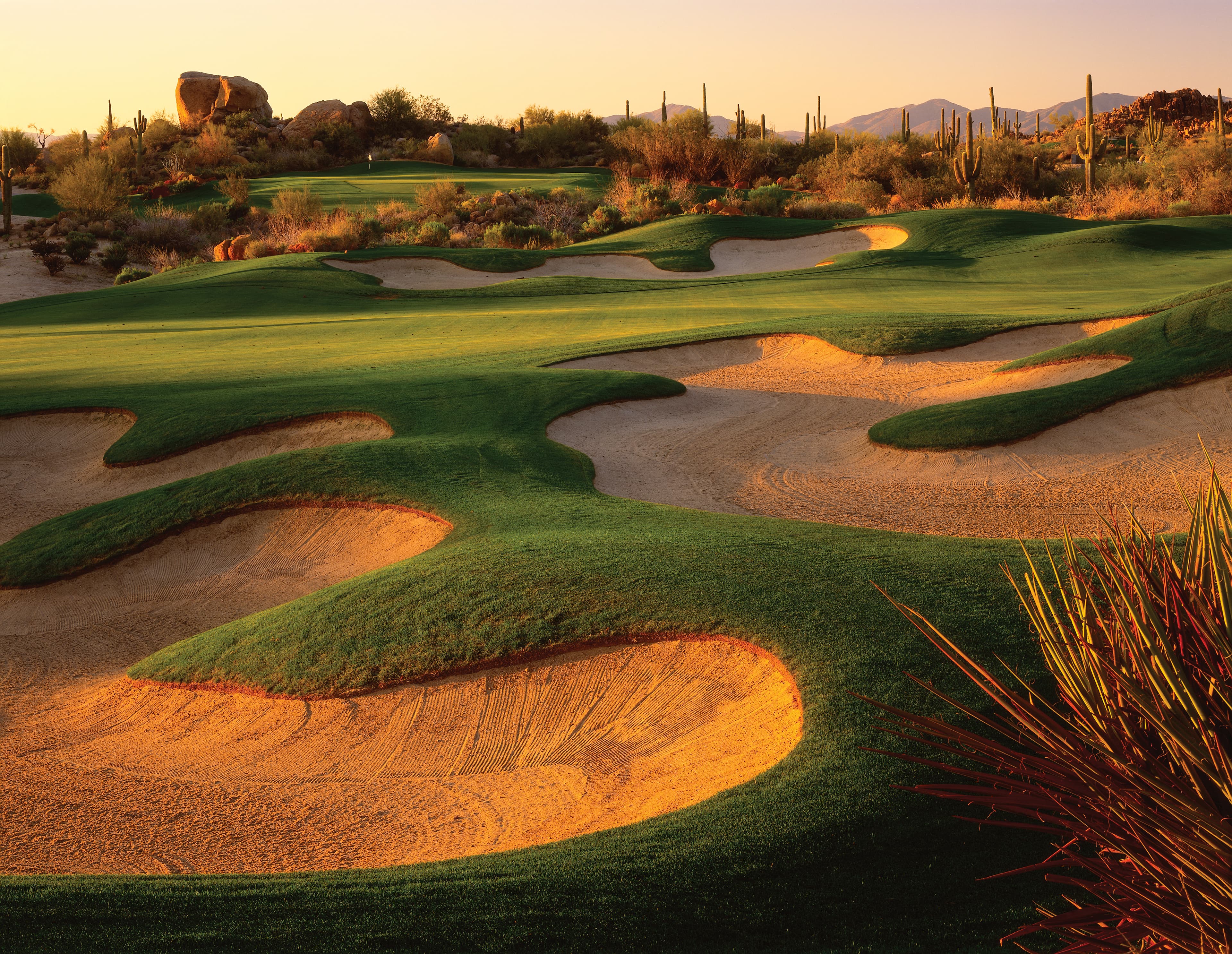
Desert golf is a relatively recent invention. For most of the twentieth century, course design in the American Southwest followed the same model used everywhere else: clear the land, plant grass, add irrigation, and create a green landscape where none existed naturally. The Sonoran Desert around Scottsdale and Phoenix presented an extreme version of this challenge, with summer temperatures exceeding 110 degrees, annual rainfall under eight inches, and terrain populated by saguaro cactus, creosote bush, and rock formations that predated human settlement by millions of years. The early courses ignored all of it, importing the lush aesthetic of the East and Midwest at considerable expense. The courses that later defined the destination did the opposite.
Where to stay in Scottsdale
Planning the trip? Compare live prices across every nearby hotel and rental in one search.
Prices and availability from Booking.com, Expedia and others via Stay22. GolfTrailsHQ may earn a commission at no additional cost to you.
The Conventional Era
Golf in the Phoenix metropolitan area dates to the 1930s, when resort properties began offering courses as amenities for winter visitors escaping colder climates. The Arizona Biltmore, Phoenix Country Club, and several municipal layouts established the basic proposition: reliable sunshine from October through April, paired with green, irrigated turf that provided familiar playing conditions. These courses made no architectural argument specific to the desert. They could have existed in Florida or Southern California with only minor adjustments.
The Wigwam Resort in Litchfield Park, west of Phoenix, added three courses between 1965 and 1972, designed by Robert Trent Jones Sr. and later Robert Trent Jones Jr. The Gold Course (1965) introduced Jones Sr.'s characteristic large greens and expansive bunkering to the Valley, offering a resort golf experience scaled for the growing tourist market. These were competent, attractive courses that served their commercial purpose without challenging prevailing assumptions about how golf should interact with desert terrain.
The Desert Golf Revolution
The transformation began in the mid-1980s, when architects started treating the Sonoran Desert not as an obstacle to overcome but as a feature to preserve. Jack Nicklaus was among the first major designers to adopt this approach in the Valley, though his interpretation leaned toward the dramatic rather than the naturalistic. His Desert Highlands course in North Scottsdale (1983) threaded fairways through boulder-strewn terrain and left native desert in place as both visual backdrop and strategic hazard. The concept was commercially successful, and it accelerated development across the northern reaches of Scottsdale and into the foothills above Carefree.
Tom Weiskopf, a former touring professional whose second career in design would prove more durable than many anticipated, became the architect most closely associated with Scottsdale's identity. His work at Troon North, beginning with the Monument Course in 1990 and followed by the Pinnacle Course in 1996, established the template that dozens of subsequent desert courses would attempt to replicate. Weiskopf's design philosophy at Troon North was rooted in restraint. The fairways follow the natural contours of the terrain. The desert is visually present on every hole but rarely forces a carry that an average player cannot manage from appropriate tees. The Monument Course's signature par-3 third hole plays to a green framed by a massive rock pinnacle that gives the course its informal identity, a natural feature that Weiskopf had the good sense to build around rather than compete with.
The Pinnacle Course is the less photographed but arguably more complete test of golf. Its routing moves through elevation changes with a rhythm that rewards accurate iron play, and its greens accept well-struck approaches while deflecting casual ones.
Together, the two courses at Troon North represent the strongest argument that desert golf, as a genre, can produce architecture of lasting significance.
TPC Scottsdale and the Stadium Course
The Tournament Players Club of Scottsdale, designed by Tom Weiskopf and Jay Morrish and opened in 1987, occupies a different position in the city's golf identity. The 16th hole, a par 3 enclosed by temporary grandstands that seat approximately 20,000 spectators, is the loudest and most theatrical setting in professional golf. The atmosphere during tournament week has more in common with a professional football game than with a traditional golf event.
The Stadium Course was built to host what is now the WM Phoenix Open, the best-attended event on the PGA Tour, regularly drawing crowds exceeding 200,000 for the week.
As a design, the Stadium Course is functional rather than inspired. It moves through flat, manufactured terrain with none of the natural drama that characterizes Troon North or the better private clubs in the area. Its importance to Scottsdale's golf identity is entirely contextual: the WM Phoenix Open is the event that brings the widest national attention to the destination, and the course serves that purpose effectively.
The Private Club Layer
Tip
These private courses influenced public expectations. The conditioning standards, the integration of desert landscaping, and the service culture that private clubs established became the baseline against which public and resort courses were measured.
Grayhawk and the Modern Era
Grayhawk Golf Club, with two courses designed by Tom Fazio (Raptor, 1994) and Phil Mickelson/Gary Stephenson (Talon, 1995), represents the mature version of Scottsdale's public golf offering. The Raptor Course, which hosts the NCAA Division I Men's and Women's Golf Championships, provides tournament-caliber architecture at public-access green fees. The course rewards controlled shot-shaping and precise distance management, qualities that explain why collegiate golf's governing body selected it as a permanent championship venue.
The Scottsdale best courses now number in the dozens, spanning the full range from daily-fee to ultra-private. The architectural evolution from imported Eastern aesthetics to indigenous desert design took roughly fifty years, and the courses produced during that transition, particularly from the late 1980s through the early 2000s, represent the destination's strongest period. The Scottsdale complete guide details the practical considerations of navigating a golf market this deep, including the seasonal pricing swings that make October through April premium months and summer rounds available at a fraction of peak-season rates.