The destination
The 17th hole at TPC Sawgrass is the most photographed par 3 in golf. The island green, roughly 137 yards of carry over water to a target that accepts approximately 120,000 balls per year from the surrounding lagoon, has become so embedded in the sport's visual vocabulary that it risks reducing this destination to a single image. That would be a mistake. The stretch of Northeast Florida coastline from Amelia Island south to St. Augustine holds six courses across three distinct hubs, enough variety for a serious multi-day trip, anchored by the oldest European-established settlement in the United States.
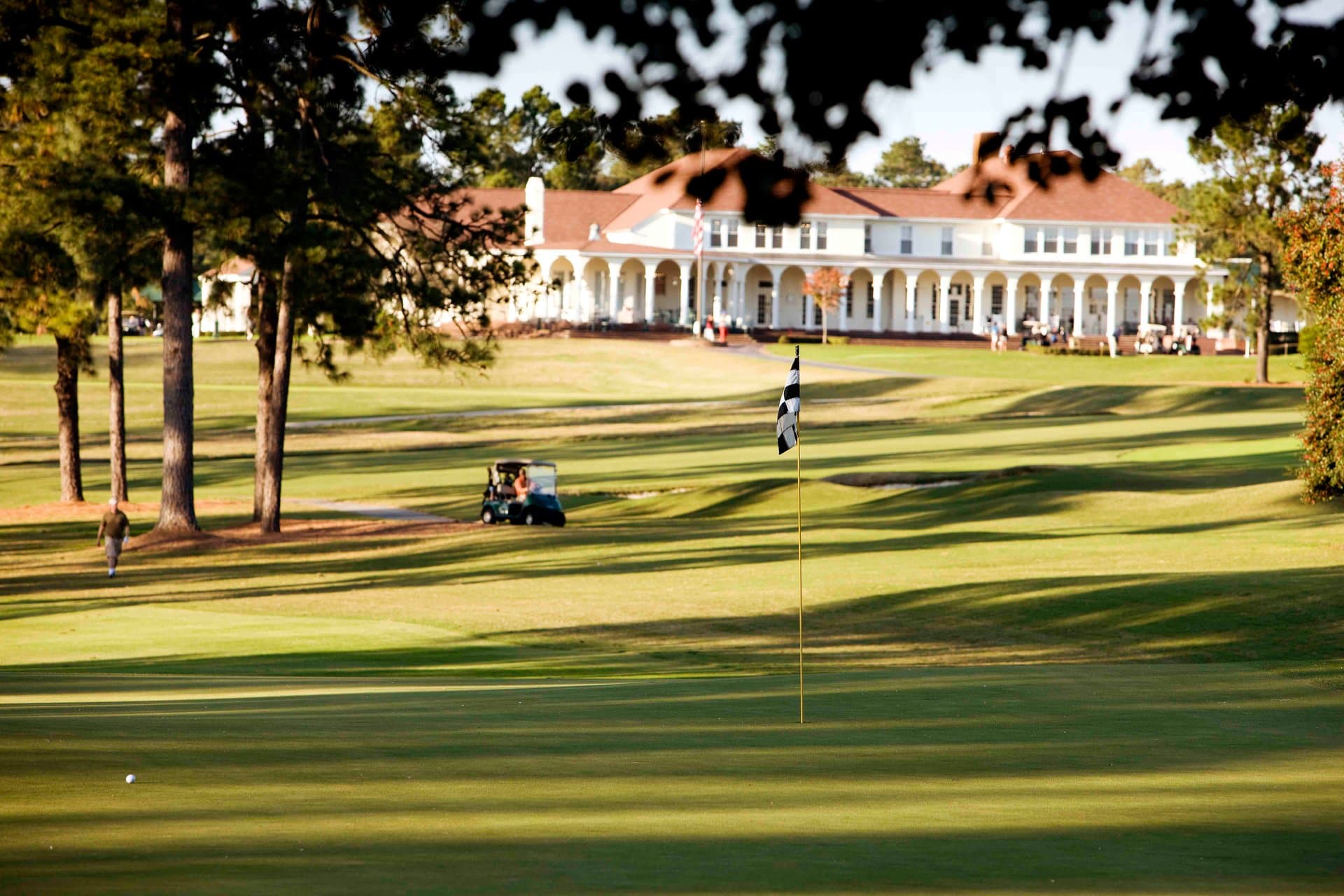
Ponte Vedra Beach sits 34 miles southeast of Jacksonville, a quiet Atlantic-side community that developed around two properties: the Ponte Vedra Inn and Club, established in the 1920s, and TPC Sawgrass, which arrived in 1980 when Pete Dye and Alice Dye built the Stadium Course. The PGA Tour subsequently established its headquarters here, and the area has operated as the administrative center of American professional golf ever since. Conditioning standards, pace management, and service expectations are shaped by the fact that Tour players live here, practice here, and notice when things slip.
Where to stay in Sawgrass and Ponte Vedra Beach, Florida
Live prices from Booking.com, Expedia and more — every nearby hotel and rental in one search.
Prices and availability from Booking.com, Expedia and others via Stay22. GolfTrailsHQ may earn a commission at no additional cost to you.
The courses
TPC Sawgrass Stadium Course is the anchor. Pete Dye designed it in 1980 as a purpose-built tournament venue, pioneering the spectator mounding that became standard for modern championship layouts. THE PLAYERS Championship has been held here since 1982. The course plays 7,352 yards with a slope of 155, among the highest of any resort-accessible course in the country. Green fees of $550 to $750 reflect both the pedigree and the season. The course is open to the public through the Sawgrass Marriott, which makes it more accessible than its reputation suggests.
Dye's Valley Course, the second layout at TPC Sawgrass, occupies the same property at a different register. Originally built by Pete Dye and Jerry Pate in 1987 and substantially redesigned by Bobby Weed in 2014, it plays 6,864 yards with a slope of 138. The terrain rolls more than the Stadium, the greens are larger, and green fees of $225 to $325 make it a reasonable complement rather than a budget afterthought.
Forty-five minutes north, Amelia Island offers a second resort hub with a different character. Long Point, a Tom Fazio design from 1986, routes through salt marshes, centuries-old oaks, and oceanfront dunes. Access runs through the Omni Amelia Island Resort, and green fees of $150 to $200 make it the strongest design-per-dollar proposition in the destination. Oak Marsh, Pete Dye's 1972 layout on the same island, completed a Beau Welling renovation in 2025 that preserved Dye's original routing while modernizing turf and infrastructure. At $100 to $155 it provides an accessible resort round with legitimate architectural interest.
Thirty minutes south of Ponte Vedra, World Golf Village in St. Augustine holds two public courses that represent genuine value. King and Bear, the only course co-designed by Arnold Palmer and Jack Nicklaus, opened in 2000 at 7,279 yards with a slope of 141. Slammer and Squire, designed by Bobby Weed with Sam Snead and Gene Sarazen as consultants, opened in 1998. Green fees at both range from $80 to $200.
When to go
March through May and October through early December are the prime windows, with low humidity, manageable temperatures, and courses in their best condition. Summer brings heat and afternoon thunderstorms but green fees ease meaningfully, and dawn rounds work for golfers who tolerate the conditions. Peak rates align with THE PLAYERS Championship in March, so book early or shift the trip a few weeks either way.
Beyond golf
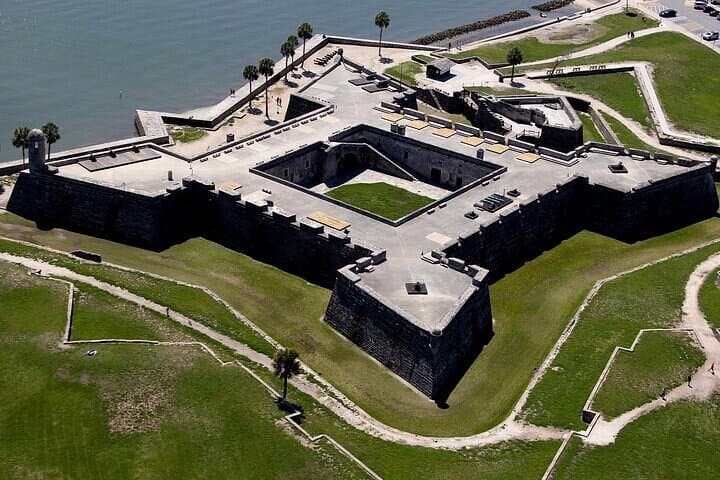
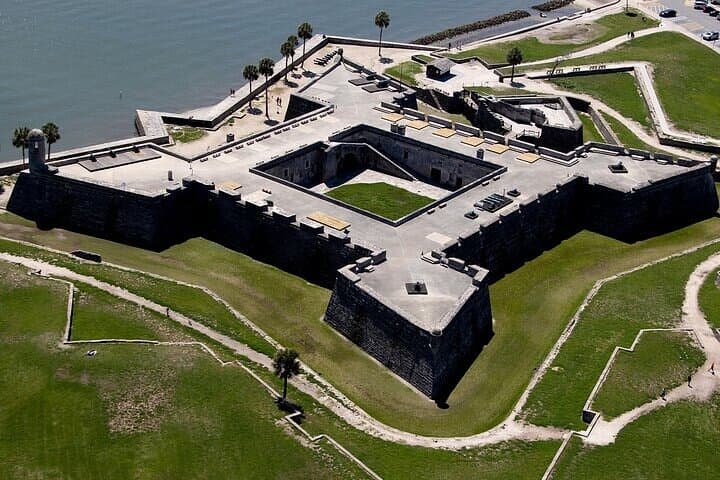
St. Augustine, 35 miles south of Ponte Vedra, is the destination's strongest non-golf asset. Founded in 1565 by Spanish explorers, it holds the Castillo de San Marcos, Flagler College, and St. George Street in a compact walkable district that rewards a full day. Amelia Island's Victorian downtown in Fernandina Beach, with Fort Clinch State Park and 13 miles of uncrowded beach, provides a quieter alternative to the north.
Getting there
Jacksonville International Airport (JAX) is the gateway, with strong direct service from East Coast and Midwest hubs. Ponte Vedra is roughly 35 miles south of the airport, a 40-to-45-minute drive. A rental car is not optional. This destination spans roughly 70 miles from Amelia Island in the north to St. Augustine in the south. Groups focused on TPC should anchor at the Marriott or in Ponte Vedra. Groups splitting time between TPC and Amelia Island may find Jacksonville Beach a practical midpoint.
The golfer who pairs the Stadium with a Fazio design on Amelia Island and a Palmer-Nicklaus collaboration at World Golf Village, and who spends an afternoon in the oldest city in the country, will have a trip worth remembering beyond any single hole.