Palm Springs, California
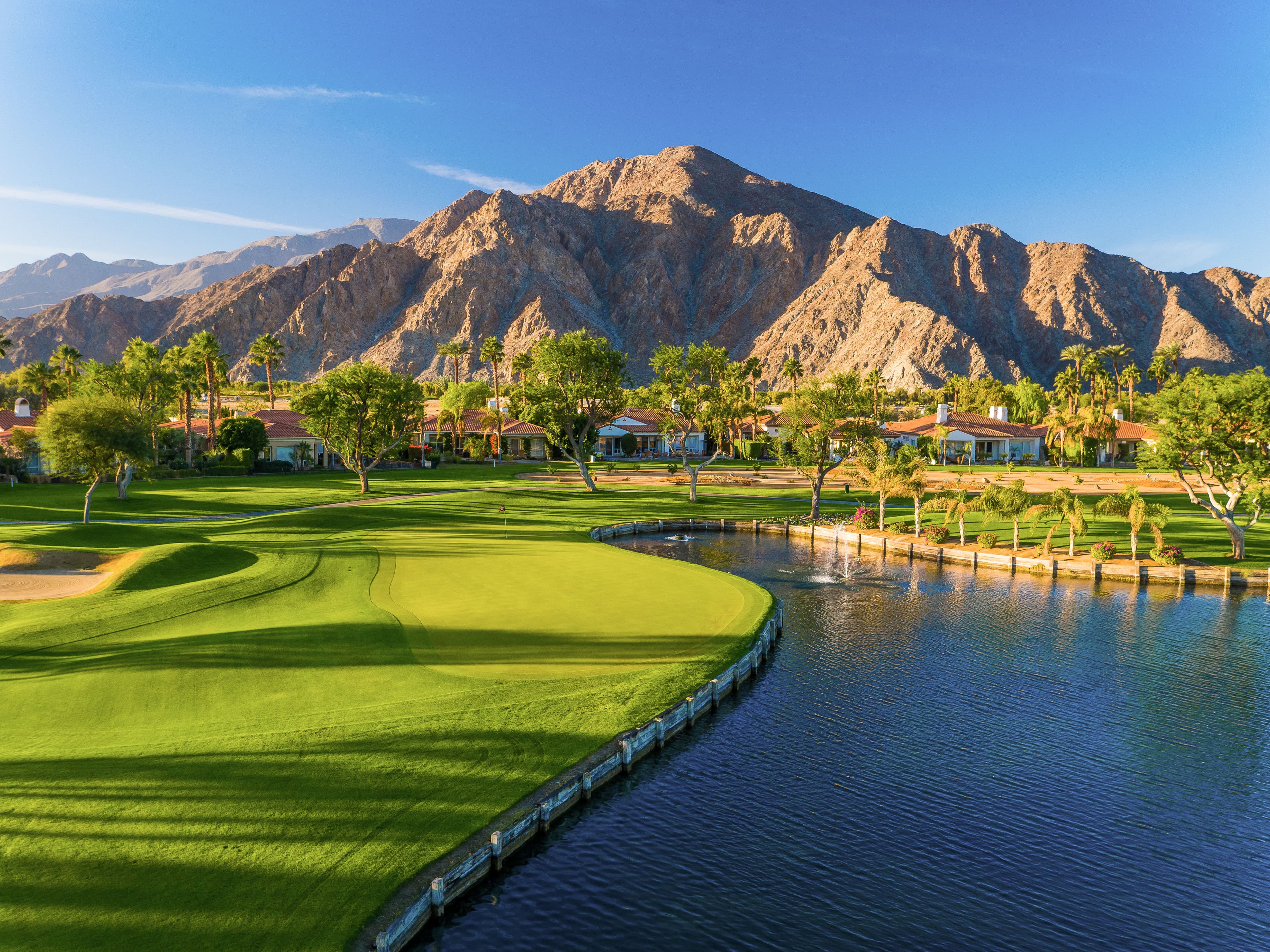
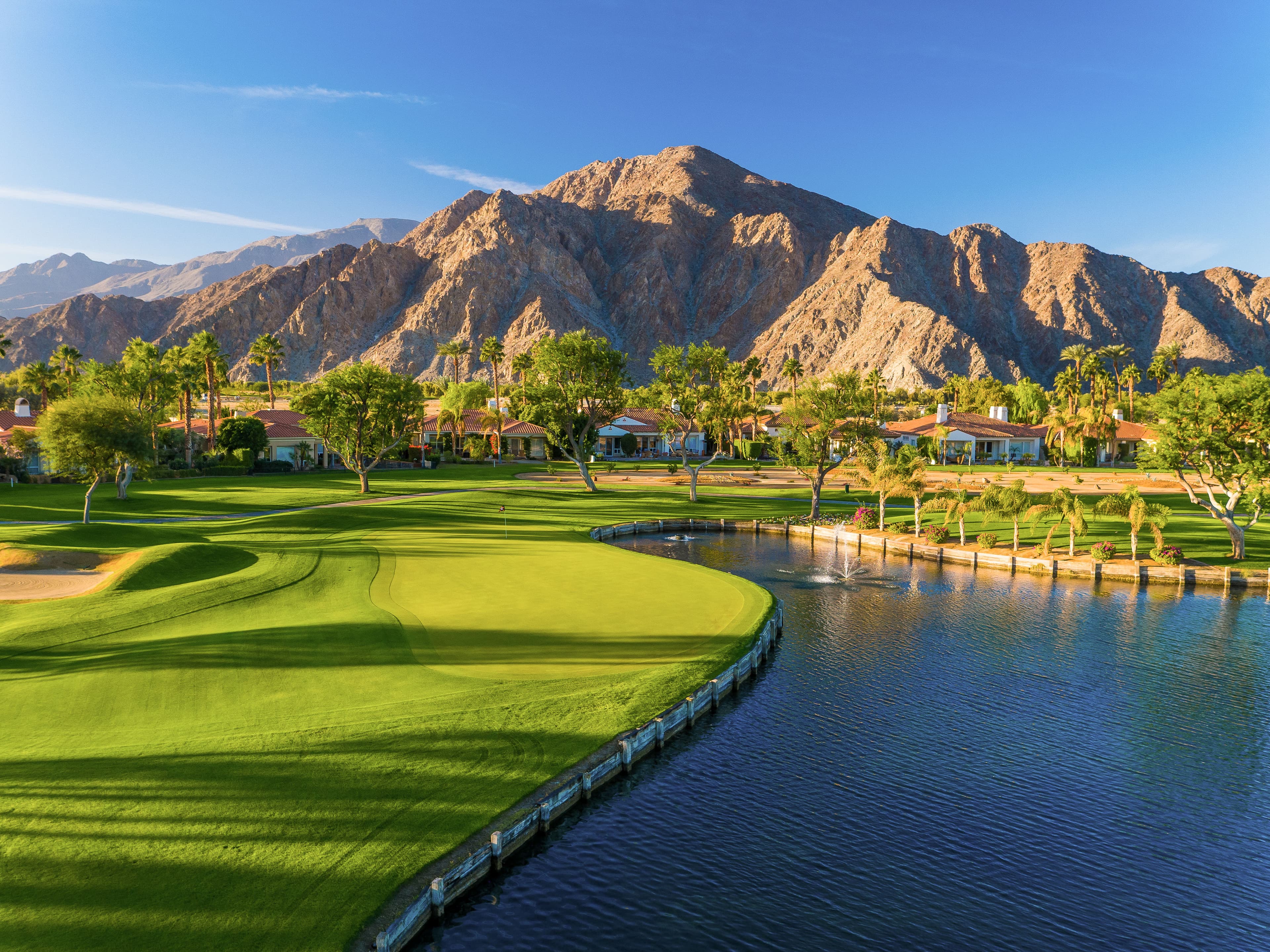
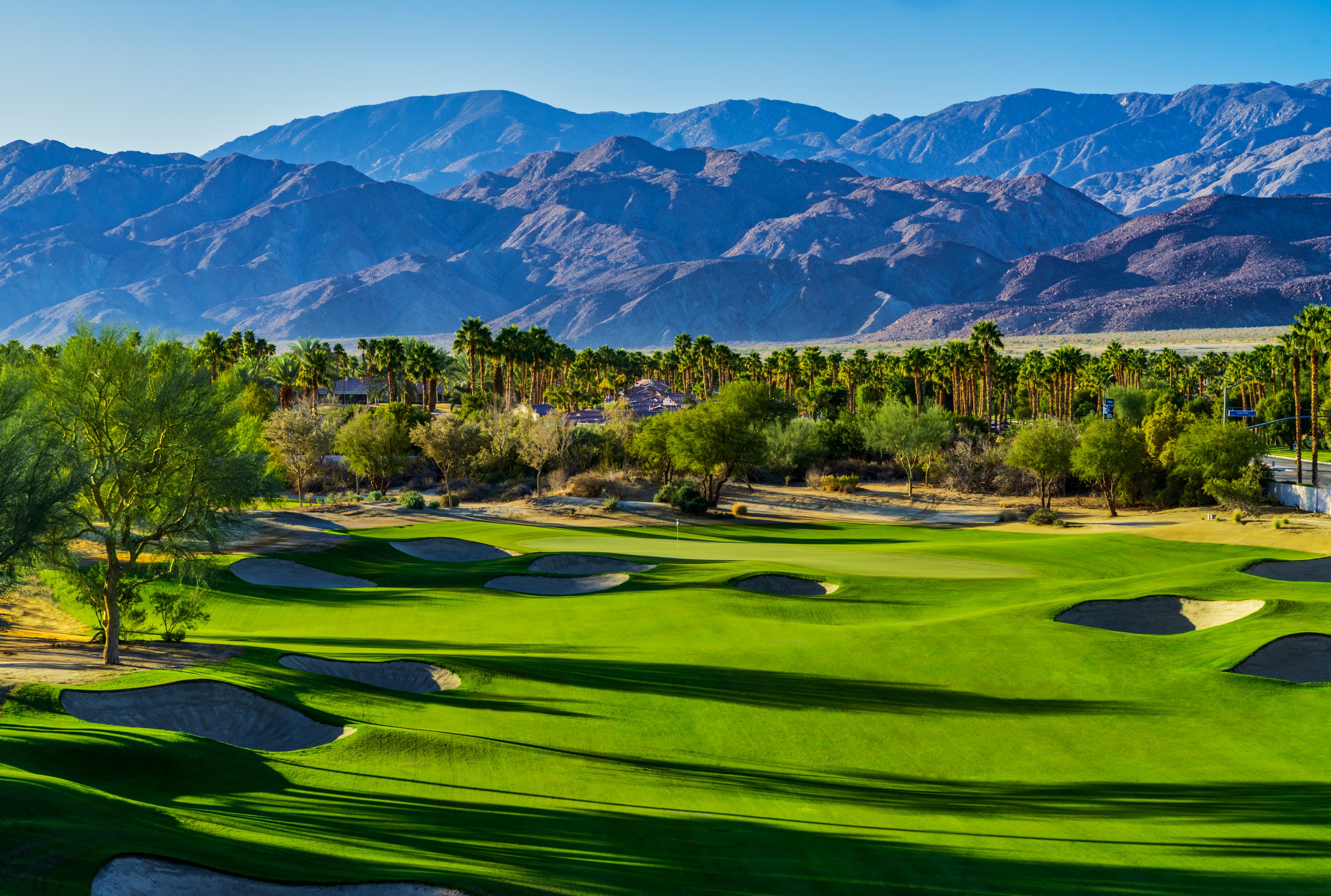
The Coachella Valley runs roughly 40 miles from Palm Springs at its western edge to Indio at its eastern boundary, with Cathedral City, Rancho Mirage, Palm Desert, Indian Wells, and La Quinta filling the space between. More than 100 golf courses occupy this corridor. The concentration is difficult to overstate: from almost any hotel in the valley, a dozen courses sit within a 20-minute drive. The San Jacinto and Santa Rosa mountain ranges frame the valley on two sides, rising abruptly from the desert floor to elevations above 10,000 feet. Every course plays against this backdrop. On a clear January morning, when the peaks carry snow and the fairways are lit by low-angle desert light, the visual effect is singular.
Golf arrived here in the 1950s alongside the Hollywood money that built the first private clubs and resort communities. By the 1980s and 1990s, the valley had matured into the winter golf destination for Southern California and much of the western United States. PGA West opened its Pete Dye Stadium Course in 1986 and immediately established the Coachella Valley as a place where serious architecture existed alongside the resort courses. The American Express, a PGA Tour event, rotates among valley courses each January. Snowbirds from the Pacific Northwest and western Canada arrive by November and stay through April, filling condominiums and tee sheets for six consecutive months.
The Course Landscape
The publicly accessible courses in the Coachella Valley separate into distinct tiers defined more by design ambition and pedigree than by geography.
PGA West's Stadium Course, Pete Dye's 1986 design in La Quinta, anchors the top of the card. The course consistently appears on lists of America's most difficult public-access layouts, and the claim is substantiated by a slope rating of 150 and a design philosophy that treats every hole as a problem to be solved rather than a fairway to be played down. The 17th, an island-green par 3 that Dye named "Alcatraz," has been photographed and discussed since the course opened. Green fees during peak season run $200 to $264. Immediately next door, PGA West's Jack Nicklaus Tournament Course offers a different test at a higher price point ($289 to $366 peak), with its own pair of island greens and a routing that has hosted PGA Tour Qualifying School finals.
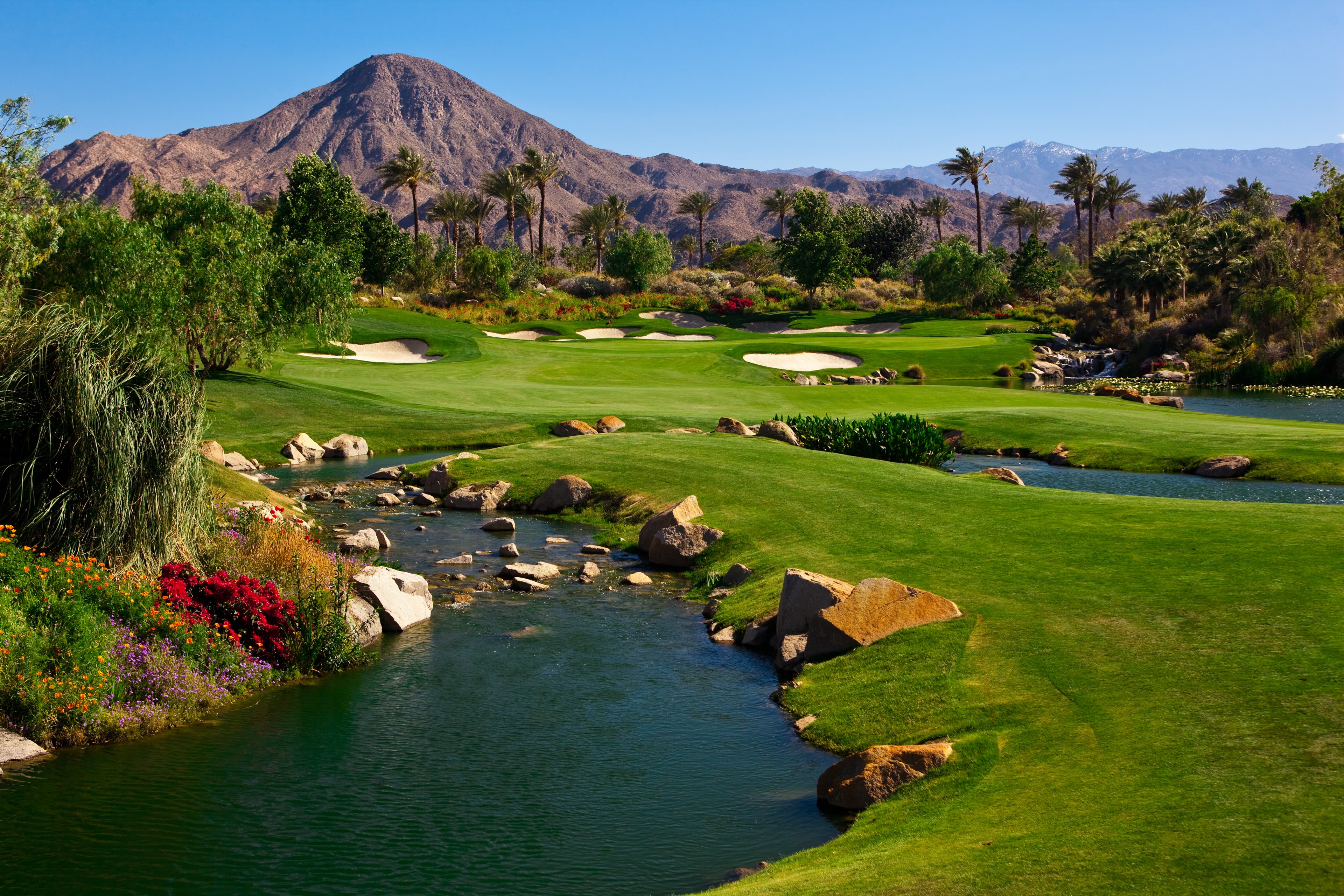
Indian Wells Golf Resort operates two courses designed in the mid-2000s that represent the modern end of the valley's public offerings. John Fought's Players Course, at 7,376 yards, draws from classic American course architecture in the tradition of Riviera and Winged Foot. Clive Clark's Celebrity Course takes a more dramatic approach with split-level lakes and waterfalls. Both play for $120 to $199 during peak months.
Arnold Palmer's influence on the valley is visible across multiple properties. The Classic Club in Palm Desert, a 2006 Palmer design and former Bob Hope Classic venue, stretches to 7,305 yards with Bermuda grass greens. SilverRock Resort in La Quinta, another Palmer design, opened in 2005 as a municipal course and hosted the Bob Hope Classic during its early years. At 7,239 yards with five sets of tees, SilverRock offers genuine tournament-caliber golf at municipal pricing ($140 to $218 peak). The gap between SilverRock's design quality and its green fee is among the largest in the valley. This is a course that charges what a city-owned facility charges and delivers what a resort course promises.
Desert Willow Golf Resort in Palm Desert, also municipally owned, provides two courses by Michael Hurdzan and Dana Fry. Firecliff, the more demanding of the pair, uses desert washes and elevation changes to create a layout that regularly appears among the top public courses in California. Mountain View, the gentler sibling, plays at 6,913 yards with mountain views that live up to the name. Both opened in 1997 and have aged well, with conditioning standards that benefit from municipal investment in maintenance.
At the accessible end of the spectrum, Tahquitz Creek Golf Resort's Legend Course in Palm Springs provides a genuine golf experience at $45 to $65 during peak season. Originally a William F. Bell design from 1959, the course was renovated under Arnold Palmer Golf Management in 1996 with 40 added bunkers. Escena Golf Club, a Nicklaus Design layout in central Palm Springs, offers generous driving corridors and unobstructed sightlines across 7,173 yards, with peak green fees ranging from $80 to $204.
Where to Stay
The accommodation infrastructure reflects the valley's six-decade history as a resort destination. The properties that serve golfers best tend to cluster around Indian Wells, Palm Desert, and La Quinta, where the highest concentration of public courses is located.
La Quinta Resort and Club, a Curio Collection property by Hilton, is the golf-specific anchor. With 796 rooms spread across 620 casitas and 98 villas, plus 42 pools, seven restaurants, and five golf courses on the property, it operates as a self-contained golf resort in a way that few properties in the valley attempt. PGA West's courses are immediately accessible, and the nightly rate of $200 to $700 depending on season reflects both the scale and the location.
JW Marriott Desert Springs Resort and Spa in Palm Desert offers a different proposition: 884 rooms, 36 holes of on-site golf, a gondola waterway through the lobby, and the kind of large-scale resort infrastructure that handles groups efficiently. The Grand Hyatt Indian Wells (formerly Hyatt Regency) sits adjacent to Indian Wells Golf Resort and offers discounted green fees for guests, a practical advantage worth calculating against the room rate. Renaissance Esmeralda, also in Indian Wells, provides free bikes and proximity to the same courses without on-site golf of its own.
Omni Rancho Las Palmas in Rancho Mirage adds the Splashtopia waterpark and a 27-hole course to the family-oriented end of the market. For boutique sensibility at a smaller scale, ARRIVE Palm Springs operates 32 rooms in an adults-only format on North Palm Canyon Drive, with no front desk and a courtyard pool that prioritizes design over size.
Budget-conscious golfers find functional options at Homewood Suites and Embassy Suites in La Quinta ($110 to $280), Courtyard by Marriott Palm Desert ($90 to $250), and the Holiday Inn Express Palm Desert ($80 to $200). At the most accessible price point, Motel 6 in downtown Palm Springs runs $50 to $140 per night. The full accommodation spectrum, from $50 to $700, exists within a 30-minute driving radius, and every point on that spectrum puts a dozen courses within reach.
Beyond the Course
The Coachella Valley's non-golf offerings have a depth that distinguishes it from destinations where golf is the entire proposition. Joshua Tree National Park sits 45 minutes from downtown Palm Springs, and guided half-day tours ($89 to $150) cover the park's rock formations, Joshua tree groves, and desert ecology without requiring a full day's commitment. The Palm Springs Aerial Tramway lifts passengers 5,783 vertical feet from the desert floor to the alpine environment of Mt. San Jacinto State Park, where the temperature drops 30 to 40 degrees and hiking trails wind through pine forest. The contrast between the two ecosystems, experienced within a 10-minute tram ride, is the kind of thing that is difficult to believe until you step off the car at the top and realize you need a jacket.
The San Andreas Fault Jeep Tour departs from Palm Desert and spends three hours in open-air vehicles moving through the fault zone's canyons, covering desert oasis ecology and the history of the Cahuilla people. It is a more substantive excursion than the format suggests. The Living Desert Zoo and Gardens in Palm Desert focuses on desert wildlife and conservation, with species from mountain lions to giraffes across naturalistic habitats. Palm Springs Art Museum, in a walkable downtown location, emphasizes mid-century modern design and contemporary art, themes that connect to the city's broader architectural identity.
For evening activity, the Covered Wagon BBQ and Desert Tour combines a mule-drawn wagon ride through the Sonoran Desert with a chuckwagon dinner, live music, and stargazing. Its 4.9-star rating across 177 reviews suggests the execution exceeds what the format might promise on paper. El Paseo in Palm Desert, a mile-long boulevard with 230 shops and galleries, serves as the valley's upscale shopping corridor.
The Practical Case
Palm Springs International Airport (PSP) receives nonstop flights from more than 30 North American cities, with strong carrier diversity including Alaska, American, Delta, JetBlue, Southwest, and United. The airport sits in Palm Springs proper, 15 miles from Palm Desert and 25 miles from La Quinta, making the transfer to most golf-oriented accommodations a 20-to-30-minute drive. For the substantial share of visitors who drive, Los Angeles is 2 hours 15 minutes away, San Diego 2 hours 20 minutes, Las Vegas 4 hours 15 minutes, and Phoenix 4 hours.
A rental car is not optional. The valley's nine cities stretch across 30 miles along Highway 111 and Interstate 10, and courses, hotels, restaurants, and activities are distributed across that full distance. Peak-season rental rates run $70 to $100 per day, dropping to $30 to $50 in summer.
The season is defined by temperature. January through April delivers highs between 70 and 88 degrees Fahrenheit, clear skies, and course conditions at their peak. This is when green fees and hotel rates reach their annual highs, and when tee sheets fill earliest. October and November offer comparable playing conditions with lower prices and thinner crowds. June through September is the off-season: highs regularly exceed 100 degrees, and July averages 108. Green fees drop by half or more, and courses are playable only in the early morning. Some golfers build trips around those summer rates, teeing off at dawn and retreating to a pool by noon. It is a legitimate strategy for heat-tolerant players, and the savings are real.
Who It Serves
Palm Springs operates at a different register from Scottsdale, its closest competitor in the western winter-golf market. Where Scottsdale offers desert golf as spectacle, with saguaro cacti and dramatic Sonoran landscapes, the Coachella Valley offers it as infrastructure: an established, mature system of courses, hotels, and restaurants that has been serving the same purpose for decades. The courses here are not competing for attention with each other. They are simply present, available, and maintained to standards that reflect a market where returning visitors outnumber first-timers.
A group of four playing PGA West Stadium, Indian Wells Players, SilverRock, and Desert Willow Firecliff across four days, staying in a mid-range hotel and eating well, will spend $1,200 to $2,200 per person depending on season. The same group restricting itself to the value tier, with Tahquitz Creek, Escena, and Desert Willow Mountain View, can bring the total under $900. Both trips deliver golf against a mountain backdrop that no other American destination can replicate, because no other destination sits in a desert valley walled in on two sides by 10,000-foot peaks. The setting does not need superlatives. It does the work on its own.