Palm Springs, CA: Bucket List Golf Trip Itinerary (4-5 Days)
The Coachella Valley holds more than 100 golf courses within a thirty-mile corridor, which makes selectivity the defining challenge of any serious trip. This itinerary narrows the field to four rounds across the valley's most architecturally significant public-access layouts, sequenced to vary the experience from day to day and leave adequate time for the region's other strengths. The desert light, the mid-century design heritage, and the restaurant scene along Palm Canyon Drive and El Paseo all justify unhurried attention. For a broader look at the destination, the Palm Springs destination guide covers the full course inventory, seasonal pricing, and logistics.
Palm Springs International Airport sits ten minutes from downtown and rarely more than thirty minutes from any course on this itinerary. The compact geography of the valley, stretching southeast from Palm Springs through Cathedral City, Rancho Mirage, Palm Desert, Indian Wells, La Quinta, and Indio, means that a rental car handles every transit question without complexity. What follows is a four-day framework with an optional fifth day for those who can extend.
Where to stay in Palm Springs
Planning the trip? Compare live prices across every nearby hotel and rental in one search.
Prices and availability from Booking.com, Expedia and others via Stay22. GolfTrailsHQ may earn a commission at no additional cost to you.
Day 1: Arrival and Indian Wells Golf Resort (Players Course)
Fly into Palm Springs International on a morning flight and check into La Quinta Resort and Club by early afternoon. The property dates to 1926 and occupies 45 acres in the foothills of the Santa Rosa Mountains, positioned within fifteen minutes of every course on this itinerary. Its proximity to PGA West makes it the natural base for a trip weighted toward the valley's eastern end. For travelers who prefer a downtown Palm Springs address, boutique hotels along Palm Canyon Drive offer walkable dining and a different pace, though they add ten to fifteen minutes of drive time to most tee sheets.
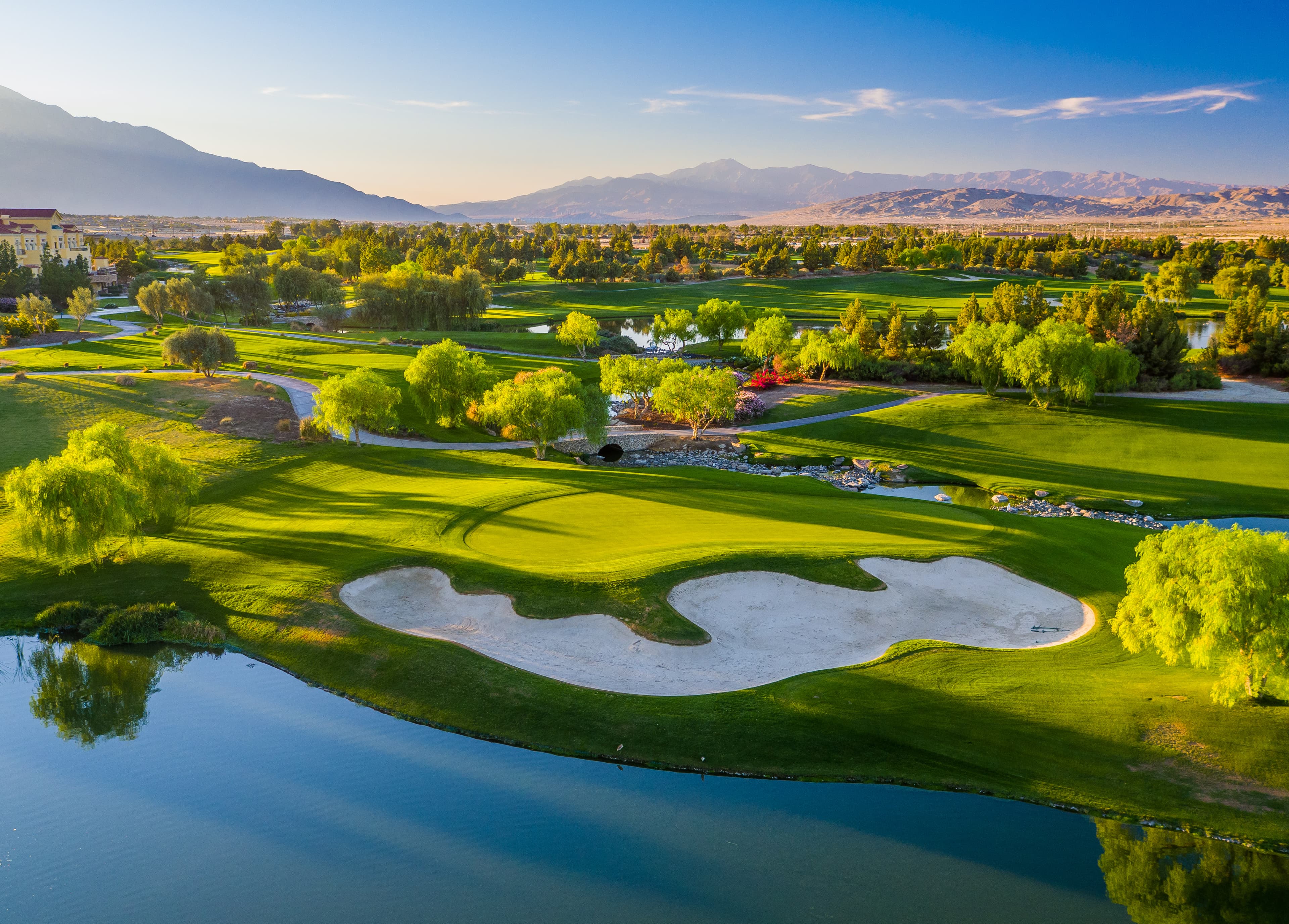
The Classic Club
Book a mid-afternoon time at Indian Wells Golf Resort, specifically the Players Course. The layout, redesigned by John Fought in 2007, runs through the shadow of the Eisenhower Medical Center with views toward the San Jacinto range. The Players Course favors strategic play over brute distance, with well-bunkered greens and enough elevation change to keep the terrain engaging across eighteen holes. Green fees typically range from $90 to $195 depending on season, making it a sound opening round that acclimates the group to desert turf conditions without punishing jet-lagged swings.
Dinner in downtown Palm Springs rewards exploration. The restaurant density along Palm Canyon Drive has deepened considerably in recent years, with options ranging from upscale Mediterranean to straightforward American fare. An early evening arrival downtown also permits a walk through the concentrated gallery of mid-century storefronts that define the town's visual identity.
Day 2: PGA West Stadium Course and an Afternoon Reset
The centerpiece of this itinerary arrives on day two. PGA West Stadium Course, Pete Dye's 1986 design in La Quinta, remains the most talked-about public course in the Coachella Valley for reasons that become apparent on the first tee. Dye built the course to host professional tournament golf, and the design reflects that ambition in its scale, its hazard placement, and its willingness to confront the player with genuine consequence. The par-3 seventeenth, a short iron to an island green surrounded by rock and sand, has ended more rounds than any other hole in the valley. Green fees in peak season range from $200 to $375.
PGA West demands concentration for four hours. The afternoon should offer the opposite. The Palm Springs Aerial Tramway, a ten-minute rotating gondola ride from the valley floor to the 8,516-foot summit of Mount San Jacinto, delivers a temperature drop of thirty degrees and access to alpine hiking trails that feel implausible given the morning's desert surroundings. Alternatively, the resort pool and spa at La Quinta provide a less vertical form of recovery. Both options serve the same purpose: arriving at dinner with energy rather than exhaustion.
Day 3: SilverRock Resort and Mid-Century Architecture
SilverRock Resort in La Quinta occupies the morning. Arnold Palmer's design here opened in 2005 on a dramatic site framed by the Santa Rosa Mountains, and the course hosted the Bob Hope Chrysler Classic for several years. The routing uses elevation shifts and arroyos with more subtlety than Dye's Stadium Course, rewarding course management and precise iron play into greens that hold well-struck shots. SilverRock's green fees range from $75 to $175, representing strong value relative to the architectural pedigree.
For groups less drawn to SilverRock, The Classic Club in Palm Desert offers a comparable alternative. Arnold Palmer and Brian Curley co-designed the layout, which hosted a PGA Tour event and maintains conditioning standards above its price point.
The afternoon belongs to the built environment. Palm Springs holds the densest concentration of mid-century modern architecture in the United States, and organized tours cover significant residential and commercial work by Richard Neutra, Albert Frey, Donald Wexler, and William Krisel. The Palm Springs Art Museum anchors the cultural corridor and houses a permanent collection that extends well beyond its modernism holdings. This is not filler. The architecture is a primary reason the valley attracts visitors who have no interest in golf, and it stands on its own terms.
Day 4: Desert Willow Firecliff and Farewell in La Quinta
Desert Willow Golf Resort in Palm Desert operates two courses from a single clubhouse. The Firecliff Course, designed by Michael Hurdzan and Dana Fry, is the stronger of the two and the right choice for the final competitive round of the trip. The layout threads through preserved desert wash areas that double as natural hazard zones, creating forced carries and framing corridors that make the course visually striking and tactically demanding. The greens are large but contoured, and the back nine builds to a finish that rewards aggressive play from players who still have something in reserve on day four. Green fees run $80 to $185.
For groups seeking a different character, Escena Golf Club on the eastern edge of Palm Springs proper offers a Nicklaus Design layout with wide corridors and a more forgiving profile.
The mountain backdrop from Escena is among the best in the valley.
Return to La Quinta for a farewell dinner. The El Paseo shopping and dining district in Palm Desert, sometimes called the Rodeo Drive of the desert, runs for a half-mile with restaurants that range from casual to occasion-worthy. It is a fitting final stop for a trip that balanced serious golf with the valley's broader identity.
Day 5 (Optional): Replay or Joshua Tree
Travelers with a late afternoon departure face a genuine choice. A replay of PGA West Stadium, armed with course knowledge from day two, often yields a better score and a different appreciation for Dye's routing. The morning light on the Stadium Course differs from the afternoon experience, and certain holes reveal new angles from tee boxes that looked straightforward forty-eight hours earlier.
The alternative is Joshua Tree National Park, a fifty-minute drive north from La Quinta into a landscape that bears no resemblance to the manicured valley floor. The park's western entrance leads to a concentrated loop of stops among the signature rock formations and Joshua tree groves. A three-hour visit provides enough time for a short hike and an extended drive through the park before returning to Palm Springs International for an afternoon flight.
Budget Overview
Tip
| Category | Estimated Range |
|---|---|
| Resort (3-4 nights) | $700-$1,400 |
| Green fees (4-5 rounds) | $450-$1,100 |
| Rental car (4-5 days) | $180-$300 |
| Dining | $350-$500 |
| Activities / extras | $100-$250 |
La Quinta Resort and several other valley properties offer stay-and-play packages during shoulder season that bundle green fees with room rates.
These packages represent the most reliable path to meaningful savings without sacrificing course quality.
When to Go
The prime season runs from November through April, when daily highs sit between the low 70s and mid-80s. January through March commands the highest green fees and the tightest availability, particularly around the annual PGA Tour stop in La Quinta. November and early December offer nearly identical playing conditions with noticeably softer pricing.
October and late April occupy a shoulder window where temperatures occasionally push into the low 90s but green fees drop by 20 to 40 percent. For groups comfortable with an early morning start, these shoulder months represent the best value-to-quality ratio on the calendar.
Summer rates collapse by 50 to 70 percent, but daily highs routinely exceed 110 degrees Fahrenheit. Courses shift to predawn tee times, and the experience changes fundamentally. The savings are real. The tradeoff is not trivial.
The verdict