The destination
Naples is where American golfers move when they stop working, and the visiting golfer benefits from standards they did nothing to establish. Collier County has the highest per-capita course density in the country, the result of a six-decade migration of wealthy retirees who built private clubs faster than anyone else could keep up. Most of those clubs sit behind firm gates. You drive past them on your way to something else.
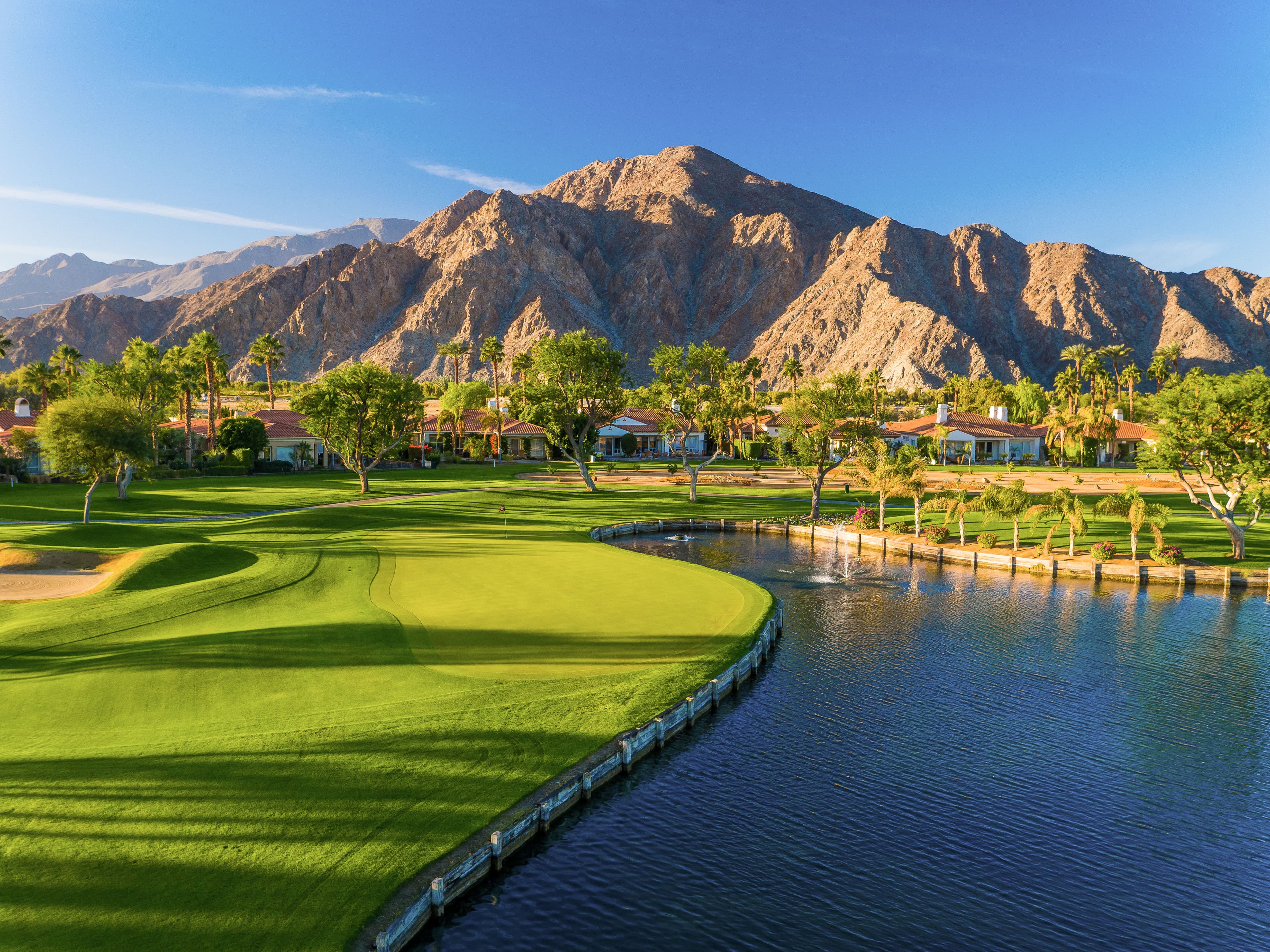
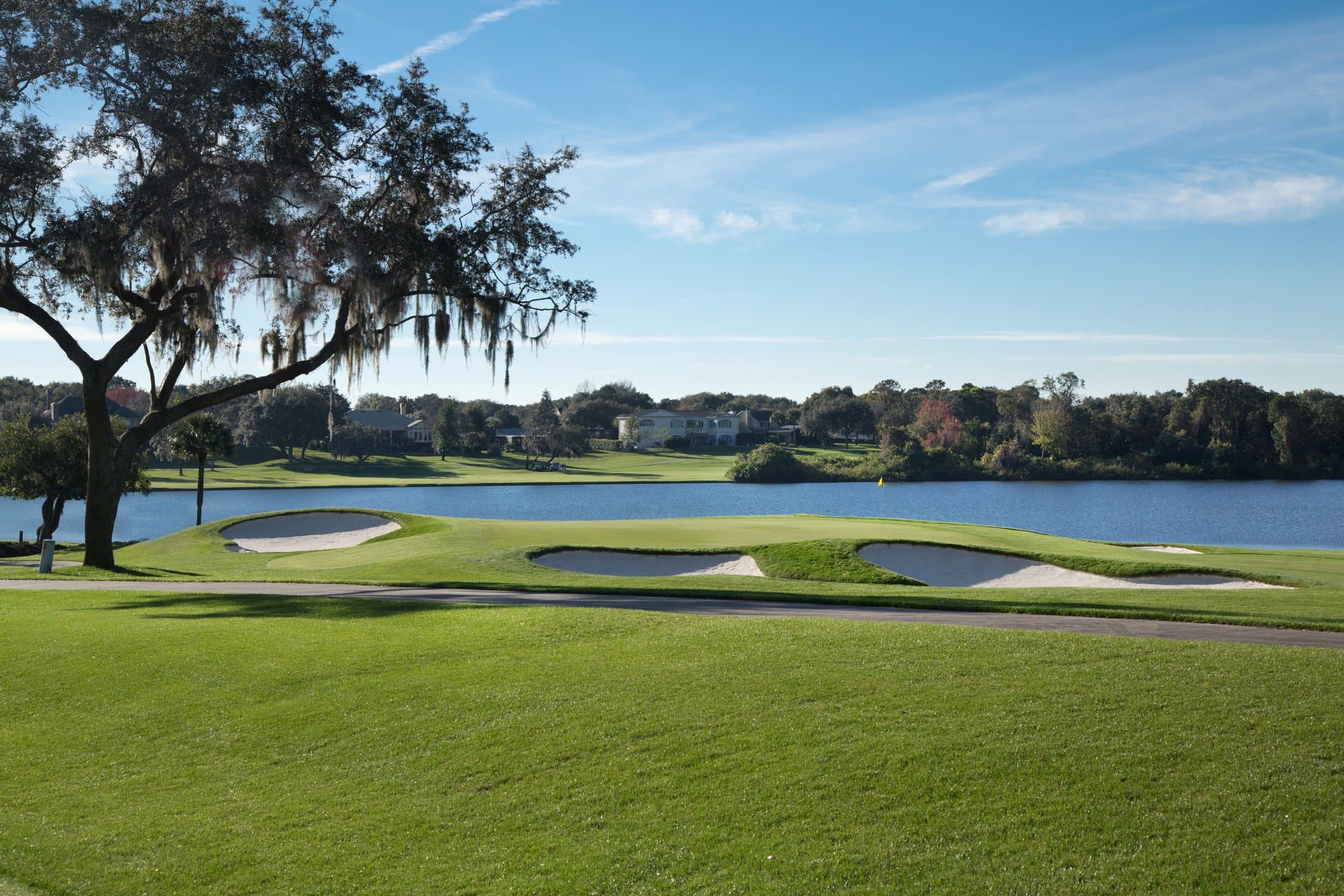
What sits on the other side of those gates is the story worth telling. Naples and the surrounding communities of Bonita Springs, Estero, and Marco Island support roughly a dozen courses that welcome daily-fee play, and the conditioning across them runs higher than most visitors expect. The private clubs set the maintenance bar for the entire region. The public-access courses compete for the same demographic of retirees who left clubs in Connecticut and refuse to tolerate ragged bunkers, so they meet the standard or they die.
Where to stay in Naples
Live prices from Booking.com, Expedia and more — every nearby hotel and rental in one search.
Prices and availability from Booking.com, Expedia and others via Stay22. GolfTrailsHQ may earn a commission at no additional cost to you.
The courses
Tiburon Golf Club anchors the public-access offering. Greg Norman designed both the Gold Course (1998) and the Black Course (2001) on the grounds of the Ritz-Carlton Golf Resort. The Gold hosts the PGA Tour's QBE Shootout and the LPGA's CME Group Tour Championship, and it plays at 7,288 yards with stacked sod-wall bunkers and no conventional rough. The Black runs through pine flatwoods with crushed coquina waste areas. Both use dynamic pricing from $99 in summer to $500 for a prime February tee time, and knowing where you fall on that range before you book changes the trip's economics entirely.
Saltleaf Golf Preserve, formerly Raptor Bay, reopened in November 2023 after a $20 million renovation under Troon. Raymond Floyd's original 2001 routing through 500 acres of the Estero Bay preserve remains intact, but the turf, bunkers, irrigation, and clubhouse are entirely new. Wading birds work the fairway margins. Alligators occupy the water hazards without apology. The golf is set inside a functioning ecosystem rather than draped over residential real estate, and the difference shows on every hole.
Lely Resort's two layouts represent the best per-dollar value in the market. Flamingo Island, a Robert Trent Jones Sr. design from 1989, brings water into play on twelve holes. Mustang, Lee Trevino's only Southwest Florida design, plays at 7,230 yards. Both run $150 to $200 in peak season and drop to $75 to $120 in summer, which puts them roughly $100 per round below Tiburon at comparable quality. Naples Grande Golf Club, a Rees Jones design through 200 acres of mangrove preserve, slots between the Lely courses and Tiburon at $160 to $250. Heritage Bay, a 27-hole Gordon Lewis and Jed Azinger layout that welcomes public play at $50 to $110, is the course that lets a four-day trip become a five-day trip without stretching the budget. The Rookery at Marco rounds out the rotation through the JW Marriott partnership, with peak rates of $200 to $349. Hammock Bay, the second Marco Island course, restricts play to JW Marriott guests and members from November through April, so plan accordingly.
When to go
The golf calendar splits cleanly. November through April is peak: afternoon highs from 74 to 83 degrees, manageable humidity, minimal rain, and prices at their annual maximum. February and March are the height of the season. May and October are shoulder months with green fee reductions of 20 to 40 percent and conditions that hold up. October is the strongest single window for value golfers. June through September brings daily afternoon thunderstorms and humidity that makes 90 feel like 100, but green fees collapse and dawn tee times work if you can be off the course by two.
Getting there
Southwest Florida International Airport (RSW) in Fort Myers is the gateway, with direct flights from most major US hubs and significant seasonal expansion from November onward. RSW sits 35 miles north of downtown Naples, a 35-to-45-minute drive south on I-75. Rental car is essential. The courses are distributed across a 30-mile corridor from Bonita Springs to Marco Island, no transit connects them, and Uber becomes unreliable for early tee times outside the city center.
For regional drivers, Naples is two hours west of Miami across Alligator Alley, 2.5 hours south of Tampa, and 3.5 hours from Orlando. Three to five nights is the natural shape of the trip. Group rounds by geography to avoid the daily north-south commute, and pair a Tiburon round with the Everglades excursion 40 minutes south for the kind of contrast that defines this part of the state.