The destination
Lake Tahoe is mountain golf at 6,225 feet, played across a season that runs late May through early October and not a day longer. North America's largest alpine lake straddles the California-Nevada border in the Sierra Nevada, the water famously clear, the golf famously brief. Five courses open across two distinct corridors during that compressed window: Edgewood Tahoe on the south shore, and a cluster of four layouts spread through the Truckee pines to the north. The brevity creates urgency without pretense. Tee times matter here because winter is always coming.
Altitude reshapes the game in useful ways. Ball flights carry roughly ten percent longer at this elevation, which flatters approach play and makes par-fives reachable in two for players who rarely attempt it at sea level. The thin air also means sharper temperature swings; morning rounds can start in the low fifties and finish in the low eighties. Layering is not optional, and sunscreen is not a suggestion at 6,000 feet.
Where to stay in Lake Tahoe, California / Nevada
Live prices from Booking.com, Expedia and more — every nearby hotel and rental in one search.
Prices and availability from Booking.com, Expedia and others via Stay22. GolfTrailsHQ may earn a commission at no additional cost to you.
The courses
The geography splits cleanly. Edgewood Tahoe occupies lakefront property on the south shore, its closing holes running along the water with the kind of backdrop that stops conversation mid-sentence. This is the marquee course, host to the American Century Championship celebrity tournament each July, and the one layout that justifies a premium green fee without qualification. George Fazio designed the original in 1968; Tom Fazio's 1985 redesign produced the layout that operates today.
Fifty minutes north, the Truckee corridor holds the other four courses within a ten-minute radius of each other. Old Greenwood brings Jack Nicklaus design credentials and elevation-adjusted yardage that plays honest. Coyote Moon threads through 250 acres of Sierra forest with no residential development in sight, which is a deliberate routing decision that the course rewards on every hole. Gray's Crossing, a Peter Jacobsen collaboration, follows the Truckee River through meadow and pine at the base of Northstar. Tahoe Donner, the most accessible of the group with rates starting at fifty dollars, delivers genuine mountain golf with recent renovations that brought conditioning above its green fee.
The split demands a decision. Stay south for Edgewood and the lake, or base in Truckee for volume and variety. The best trips do both.
When to go
July and August deliver the warmest weather and longest days but also the highest rates and tightest availability. June and September offer the best balance of value and conditions. Late May and early October bookend the season with lower rates and the risk of weather interruption. The American Century Championship in mid-July creates a blackout window at Edgewood worth noting in your planning. The compressed season concentrates conditioning, and July and August consistently deliver strong turf across all five layouts.
Getting there
Reno-Tahoe International (RNO) is the gateway, with a one-hour drive to Truckee and roughly 90 minutes to Edgewood on the south shore. Sacramento International (SMF) is the alternative, two and a half hours west. A rental car is required. The Truckee cluster allows two rounds a day without meaningful drive time, but reaching Edgewood on the south shore from a Truckee base requires the 50-minute crossing of the lake basin.
Who this suits
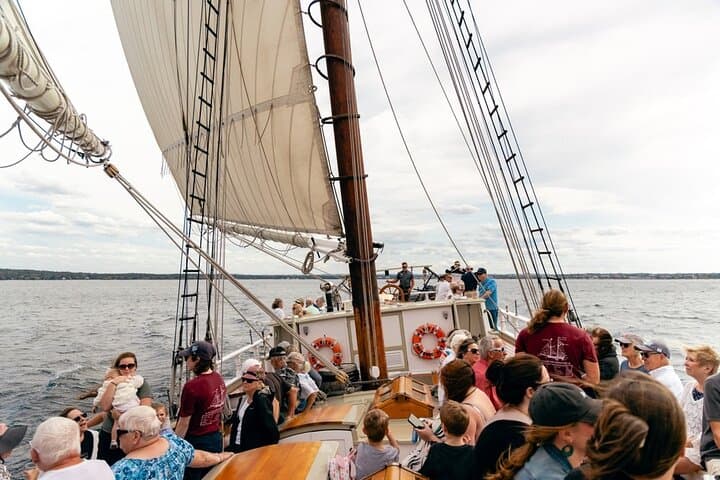
Lake Tahoe works for groups that want mountain golf without committing to a week. The short drive from Reno, the clustering of courses in Truckee, and the manageable number of layouts make it a natural three-to-five-day destination. It rewards the golfer who appreciates setting as much as shot values and finds satisfaction in a focused trip rather than an exhaustive tour. The lake itself is the primary off-course attraction, accessible for kayaking, paddleboarding, and cruises during the same compressed season. Emerald Bay, on the southwest shore, is among the most photographed landscapes in the Sierra Nevada. The Heavenly Gondola rises to 9,123 feet for panoramic views that contextualize the entire basin. Truckee's historic downtown, with craft breweries and independent restaurants, fills a free afternoon without manufactured entertainment.