Jack Nicklaus: The Courses That Reflect the Player
Jack Nicklaus has designed more than 400 golf courses worldwide, a number that exceeds his 18 major championships in ambition if not in cultural significance. The courses share a designer's perspective shaped by decades of competitive play at the highest level. Nicklaus played golf as a strategist. He planned his way around courses, identifying angles, calculating risks, and making decisions before stepping to the ball. His design work reflects that approach: Nicklaus courses tend to reward planning over athleticism, positioning over power, and the ability to work the ball into specific parts of the green over the ability to carry it past trouble.
This is not to say his courses are subtle. Nicklaus designs are often characterized by dramatic bunkering, elevated greens, significant water features, and enough visual intimidation to make the average golfer feel slightly outmatched. The accusation from his critics is that Nicklaus courses are designed for Nicklaus-caliber players and that they ask too much of the recreational golfer. There is some truth to this, particularly in his earlier work.
His later designs show greater sensitivity to playability at every level, and several of his accessible courses rank among the most enjoyable rounds available in their respective markets.
Harbour Town: The Early Collaboration
Nicklaus's first significant design involvement came at Harbour Town Golf Links on Hilton Head Island, where he consulted with Pete Dye on the 1969 design. The collaboration produced a course that reflected both designers' instincts: Dye's visual boldness and Nicklaus's strategic precision. The small greens, the tight tree-lined corridors, and the emphasis on shot-making over distance all bear Nicklaus's fingerprint. He has said that Harbour Town taught him what a golf course could be when the architecture values precision above power, a lesson visible in much of his subsequent work.
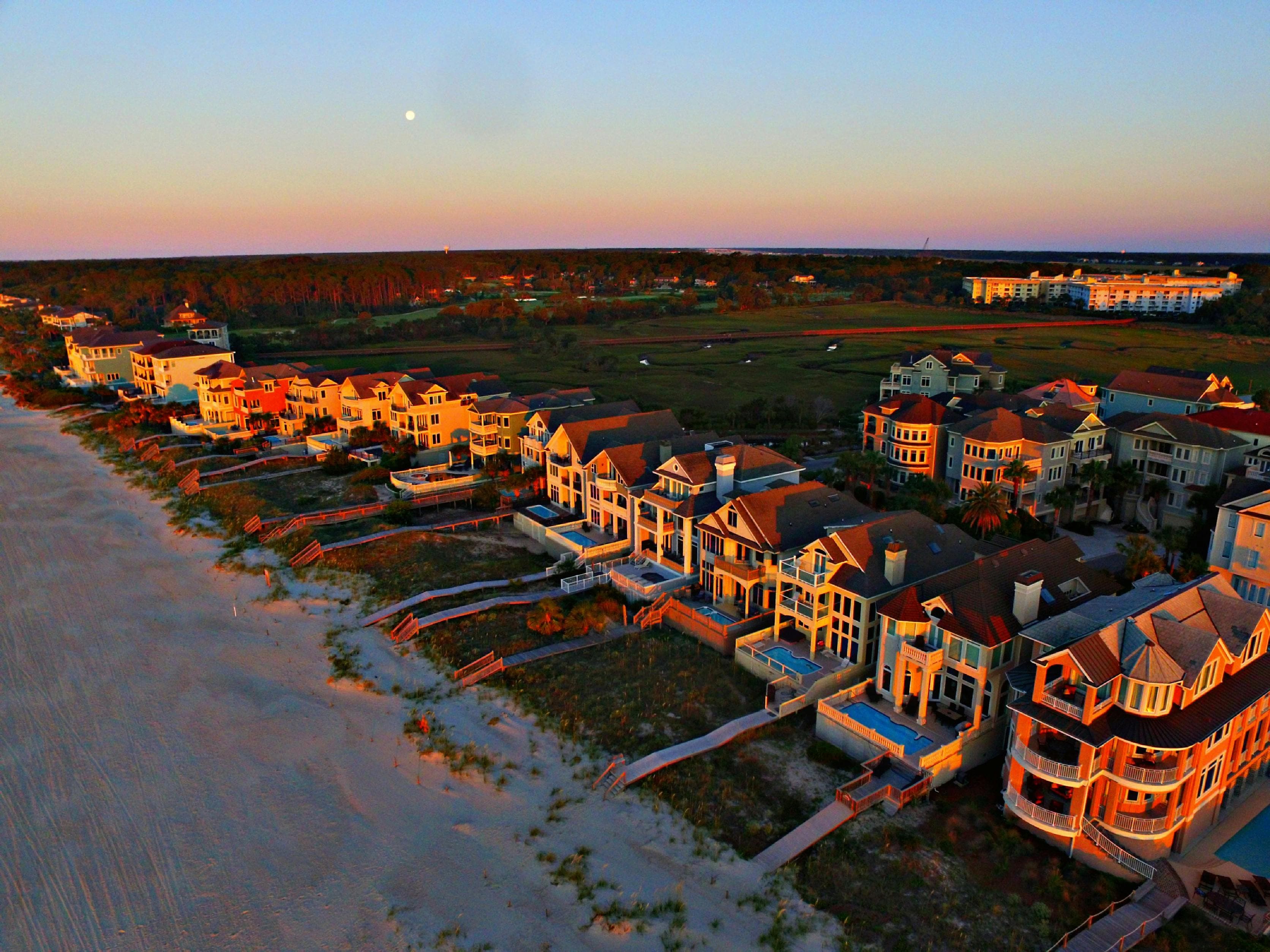
Harbour Town Golf Links
Villas of Grand Cypress
Villas of Grand Cypress
The New Course at Villas of Grand Cypress in Orlando is Nicklaus's tribute to the Old Course at St. Andrews. The design features double greens, shared fairways, and the kind of strategic width that characterizes Scottish links golf, all transplanted to Central Florida. The homage is genuine rather than superficial. Nicklaus studied the Old Course's principles of alternate lines of play, ground-game options, and greens that can be approached from multiple angles, then applied those principles to a flat Florida site.
Where most Florida courses channel golfers down narrow corridors between water hazards, Grand Cypress offers width, options, and the kind of strategic variety that rewards imagination. The double greens take practice to read, and the shared fairways create unusual angles that keep the course interesting on repeat visits.
The result is one of the most interesting courses in the Orlando market, and one that plays differently from virtually everything else in the area.
Reflection Bay, Las Vegas
Reflection Bay at Lake Las Vegas is Nicklaus working with dramatic terrain and water features in the Nevada desert. The course wraps around the man-made lake, with several holes playing along or across the water, and the desert mountains provide a backdrop that elevates the visual experience beyond what the design alone delivers.
The course is more playable than many Nicklaus designs. The fairways are generous by his standards, and the greens, while well-contoured, do not feature the extreme slopes that characterize some of his championship layouts. For visiting golfers in the Las Vegas market, Reflection Bay offers a Nicklaus experience without the punitive difficulty that can make his tournament courses exhausting for recreational players.
PGA West Nicklaus Tournament Course
At PGA West in La Quinta, the Nicklaus Tournament Course sits alongside Pete Dye's Stadium Course and offers a useful contrast in design philosophies. Where Dye's course is deliberately theatrical, with deep bunkers and forced carries designed to create visual drama, the Nicklaus course is more measured. The strategic challenges are there, but they are communicated through green contours and pin positions rather than through intimidation.
The course has hosted PGA Tour events and plays at a championship standard, but the forward tees make it accessible to golfers who want the quality of a tournament venue without the difficulty. The putting surfaces are the primary defense, with slopes and tiers that make pin position the most important variable on any given day.
Pawleys Plantation and the Resort Portfolio
Pawleys Plantation in Myrtle Beach is a Nicklaus design that incorporates the Lowcountry landscape of marshes, live oaks, and tidal creeks into a resort layout. The course is more affordable than the Grand Strand's premium options and offers the kind of scenic variety that keeps a round interesting even when the scorecard is uncooperative.
The Nicklaus resort portfolio also includes significant designs at Horseshoe Bay in the Texas Hill Country, where Summit Rock uses the dramatic limestone terrain to create elevation changes that are rare in his body of work, and at Reunion Resort in Orlando, where his course is one of three designer layouts on the same property.
The Nicklaus Signature
What distinguishes a Nicklaus course from the work of his contemporaries is the emphasis on approach shots. Many architects design backward from the green, but Nicklaus designs backward from the pin position. His greens are large enough to accept a variety of approach angles but contoured so that only one angle on any given day provides a realistic birdie opportunity. The tee shot, in a Nicklaus design, is primarily about positioning yourself for the correct approach line, and the strategic interest of each hole lies in identifying that line and committing to it.
This approach means that Nicklaus courses can feel repetitive on the scorecard, holes of similar yardage playing very differently because the green orientation and the location of hazards create distinct problems. It also means that his courses reward return visits. The golfer who has played a Nicklaus design once and noted the pin positions has meaningfully more information for the second round than someone playing blind. The architecture responds to intelligence and preparation, which is exactly what you would expect from a designer who won 18 majors through strategic thinking more than physical superiority.
The verdict