Hawaii: The Complete Golf Trip Guide
The case for a Hawaii golf trip is simple and rarely overstated. Two islands, Maui and the Big Island, hold a concentration of resort golf that plays across volcanic terrain, coastal bluffs, and lava fields unlike anything on the mainland. The courses are strong. The weather cooperates twelve months a year. And the setting, ocean visible from nearly every elevated tee box, does not require embellishment.
What complicates the proposition is cost. Hawaii is not a value destination by any measure. Green fees at the top courses run $200 to $400, accommodations in resort corridors start north of $300 per night, and the Pacific Ocean sits between the islands and every domestic airport. The golfer who travels here does so with the understanding that the premium is real and that the experience, at its best, justifies it.
The other complication is geography. Maui and the Big Island are separated by a 35-minute flight. Playing courses on both islands is possible but requires internal logistics that cut into playing time. Most groups choose one island and commit to it. The right choice depends on what kind of golf trip you want. Maui offers greater course volume and variety, with two distinct resort corridors operating simultaneously. The Big Island offers a more concentrated Kohala Coast experience with volcanic terrain that produces a visual character Maui cannot replicate. Neither island is the wrong choice.
Both reward a focused itinerary more than a split one.
Where to stay in Hawaii (Maui / Big Island)
Planning the trip? Compare live prices across every nearby hotel and rental in one search.
Prices and availability from Booking.com, Expedia and others via Stay22. GolfTrailsHQ may earn a commission at no additional cost to you.
The Courses
Maui
Kapalua Plantation Course, redesigned by Coore and Crenshaw and reopened in its current form, occupies the northwest tip of Maui where the West Maui Mountains slope toward the sea. The course hosts the PGA Tour's Sentry tournament each January, and the design takes full advantage of the elevation changes that make this stretch of Maui so visually dramatic. Fairways tilt and roll across ridgelines, greens are set into natural shelves on the hillside, and the routing moves both toward and away from the ocean in a rhythm that sustains interest across all eighteen holes. At $299 to $399 for resort guests and higher for outside play, the Plantation Course is Maui's headline act and charges accordingly.
Kapalua Bay Course provides the complementary experience on the same property. Shorter, tighter, and routed closer to the coastline, it rewards accuracy over power and offers a less physically demanding round for groups playing 36. The Bay Course is the older of the two and carries a quieter personality. Green fees run $200 to $279, placing it in the middle tier of Maui resort pricing.
Wailea Golf Club, on Maui's south shore, operates three courses that serve the resort corridor anchored by the Four Seasons and Grand Wailea. design that plays through native kiawe trees and volcanic outcroppings with consistent ocean views. The Emerald Course, also by Jones, takes a wider and more forgiving routing and functions well as the morning round before an afternoon on the Gold. The Blue Course is the oldest and most accessible, suitable for mid-handicap players who want a quality resort round without the severity of the Gold's slope. Green fees across the three courses range from $179 to $350, with resort guest discounts bringing the lower end into reach.
The Gold Course is the strongest of the three, a Robert Trent Jones Jr.
Big Island
Mauna Kea Golf Course, a Rees Jones redesign of the original Robert Trent Jones Sr. layout, occupies the Kohala Coast on the Big Island's dry western shore. The course is routed through lava fields and along coastal bluffs, and the contrast between the black volcanic rock and the maintained turf creates a visual signature unique to Big Island golf. The par-three third, which plays over an ocean inlet from an elevated tee, is one of the most photographed holes in Hawaii and earns the attention. Green fees run $225 to $375.
Mauna Lani, recently renovated, sits adjacent along the Kohala Coast and offers two courses that thread through ancient lava flows. The North Course is the stronger of the pair, with several holes that play directly along the shoreline. The South Course provides a slightly gentler alternative. Both courses benefit from the Kohala Coast's remarkably dry climate, which receives less than ten inches of rainfall annually despite the Big Island's reputation for diverse microclimates. Green fees range from $225 to $350.
Hapuna Golf Course, an Arnold Palmer and Ed Seay design above Hapuna Beach, offers the best value on the Kohala Coast at $125 to $195. The course plays at higher elevation than its neighbors, which produces wider views and slightly cooler conditions. It lacks the coastal drama of Mauna Kea but compensates with strategic variety and lower cost. The routing moves through open grassland and scattered kiawe trees, and the par-three twelfth, which plays downhill toward the ocean, is the standout moment. For groups playing multiple days on the Kohala Coast, Hapuna provides a welcome budgetary reprieve without a corresponding decline in course quality.
Hualalai Golf Course, a Jack Nicklaus design at the Four Seasons Resort Hualalai, deserves mention with a caveat. The course is restricted to resort guests and members, and the Four Seasons room rates that grant access start above $1,000 per night. For those who are staying at the property regardless, Hualalai is an excellent course routed through lava fields with ocean holes that rank among Hawaii's finest. For those who would need to book the hotel specifically for tee-time access, the math becomes difficult to justify relative to the public alternatives.
Where to Stay
Maui
The Kapalua area on West Maui places golfers closest to the Plantation and Bay courses. The Ritz-Carlton Kapalua, at $450 to $800 per night, is the flagship property and offers golf packages that reduce the effective per-round cost. Montage Kapalua Bay provides an alternative at similar pricing with a condominium format that works well for groups.
The Wailea resort corridor on South Maui serves golfers playing the three Wailea courses. The Four Seasons Maui at Wailea sets the ceiling at $800 to $1,500 per night. The Grand Wailea and Andaz Maui occupy the $400 to $700 range and provide strong options with golf partnerships. For groups focused on value, condominium rentals in the Wailea and Kihei areas run $200 to $400 per night and place the courses within a fifteen-minute drive.
Choosing between West Maui and South Maui comes down to course preference. Groups wanting to play Kapalua's Plantation Course multiple times should base in the west. Groups interested in the Wailea rotation should stay south. The drive between the two corridors takes approximately 45 minutes along the coastal highway, which is scenic but narrow and subject to congestion near Lahaina. Groups with the budget and inclination to split their stay, two nights in Kapalua and two in Wailea, can cover both corridors without excessive driving on playing days.
Big Island
The Kohala Coast resort corridor concentrates the Big Island's best golf within a fifteen-mile stretch. Mauna Lani Auberge Resort ($500 to $1,000) and the Westin Hapuna Beach ($300 to $600) provide the most convenient bases for playing Mauna Kea, Mauna Lani, and Hapuna. Condominium options at the Mauna Lani resort area run $200 to $400 and offer kitchen facilities that help offset the high cost of island dining.
Getting There
Kahului Airport (OGG) serves Maui with direct flights from Los Angeles, San Francisco, Seattle, Phoenix, and Dallas, with additional East Coast connections through hubs. Flight times from the West Coast run five to six hours; from the East Coast, expect ten to twelve hours with a connection or a direct red-eye from select cities. Kona International Airport (KOA) serves the Big Island's Kohala Coast with direct service from the same West Coast hubs, though with fewer frequencies. Both airports are modern, efficient, and small enough to avoid the terminal marathons of major mainland hubs.
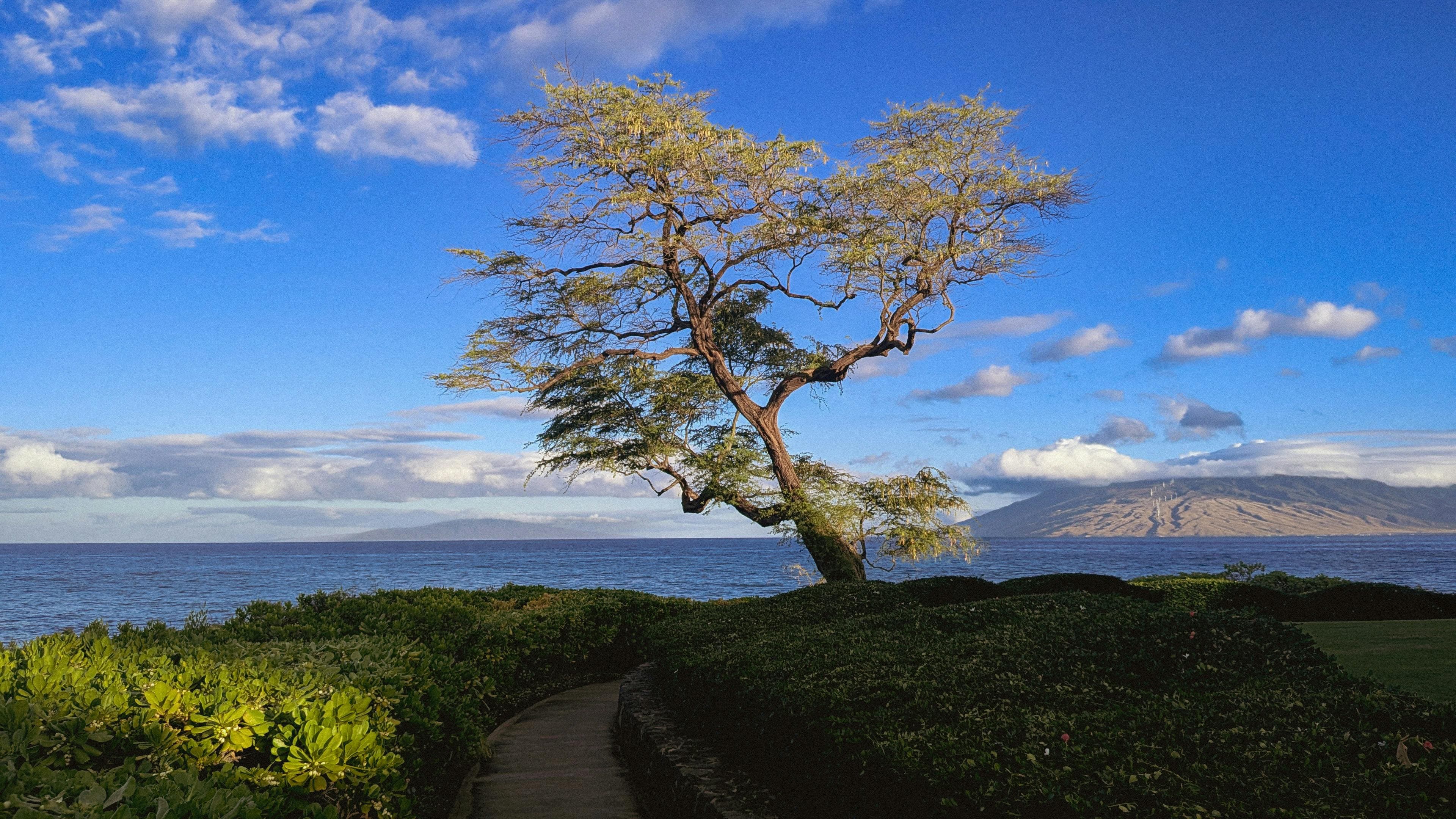
Mauna Kea Golf Course
Rental cars are essential on both islands. The drive from Kahului to Kapalua takes about an hour; Kahului to Wailea takes about 30 minutes. On the Big Island, Kona to the Kohala Coast resorts runs 25 to 40 minutes.
Groups wanting to play both islands should budget a half-day for the inter-island connection. Hawaiian Airlines and Southwest operate the Maui-Kona route with 35-minute flight times and reasonable fares, but the airport transfers on both ends consume the surrounding hours.
When to Visit
Hawaii's year-round playability is genuine. The Kohala Coast and Maui's leeward shores receive minimal rainfall, temperatures hold between 75 and 88 degrees across all twelve months, and course conditions remain consistent regardless of season.
Tip
Trade winds blow steadily from the northeast for most of the year, and they influence club selection on every exposed course. The wind is part of the playing experience, not an obstacle to be avoided. Afternoon conditions tend to be windier than morning, which makes early tee times preferable for scoring and pleasant for pace. Kona winds, which blow from the south and bring warmer, more humid conditions, occur periodically and can briefly disrupt the otherwise reliable pattern. These episodes rarely last more than a day or two and are the exception rather than the rule.
What It Costs
Hawaii golf is a premium proposition at every level.
A five-night Maui trip playing four rounds at top-tier courses runs $3,500 to $6,000 per person, depending on accommodation choice. That figure covers lodging, green fees ($200 to $400 per round), rental car, and meals. The Big Island runs 10 to 15 percent less on the accommodation side, with comparable green fees.
Mid-tier strategies exist. Staying in a vacation rental rather than a resort, playing one premium round and two mid-tier rounds, and cooking breakfasts in the room can bring a four-night trip closer to $2,500 per person. The Hapuna course on the Big Island and the Wailea Blue on Maui offer legitimate resort-quality golf below $200.
Dining on the islands adds up quickly. Resort restaurants run $60 to $120 per person for dinner. Casual options in nearby towns like Lahaina on Maui or Waikoloa on the Big Island bring that number to $25 to $50.
Cart fees are included at all courses mentioned. Walking is not offered or practical at most Hawaii resort courses due to routing, terrain, and climate. Groups should also budget for the incidentals that island travel generates: higher gas prices, resort parking fees at some properties, and the general premium that island economics place on goods and services. None of these are prohibitive, but they accumulate in ways that mainland travel does not prepare visitors for.
The best argument for a Hawaii golf trip is not any single course. It is the accumulation of elements that no mainland destination can replicate: volcanic geology that produces playing surfaces and visual backdrops found nowhere else, trade-wind conditions that transform familiar yardages into genuine puzzles, and a climate that never forces a rain date. The courses are strong, the setting is singular, and the distance from the mainland creates a psychological separation from routine that shorter trips cannot achieve. The cost is real. The experience, for the golfer willing to absorb it, is commensurate.