From First Round to Bucket List: A Golfer's Travel Progression
Golf travel follows a pattern. Not a rigid one, and not one that every golfer follows in the same sequence, but a pattern that is consistent enough to be recognizable. It begins locally, expands regionally, and eventually reaches the point where a tee time on the other side of the country feels like a reasonable thing to book on a Tuesday evening after three putts on the last hole ruined your round but somehow intensified your love for the game.
Here is how that progression typically unfolds, and the courses and destinations that suit each stage.
Stage One: The Home Course and Its Neighbors
Every golfer begins somewhere. A municipal course, a local semi-private, a friend's club as a guest. The first course you play regularly becomes the baseline against which all future courses are measured. The conditioning, the design, the pace of play, the halfway house, the practice green: these are the reference points that your brain stores automatically.
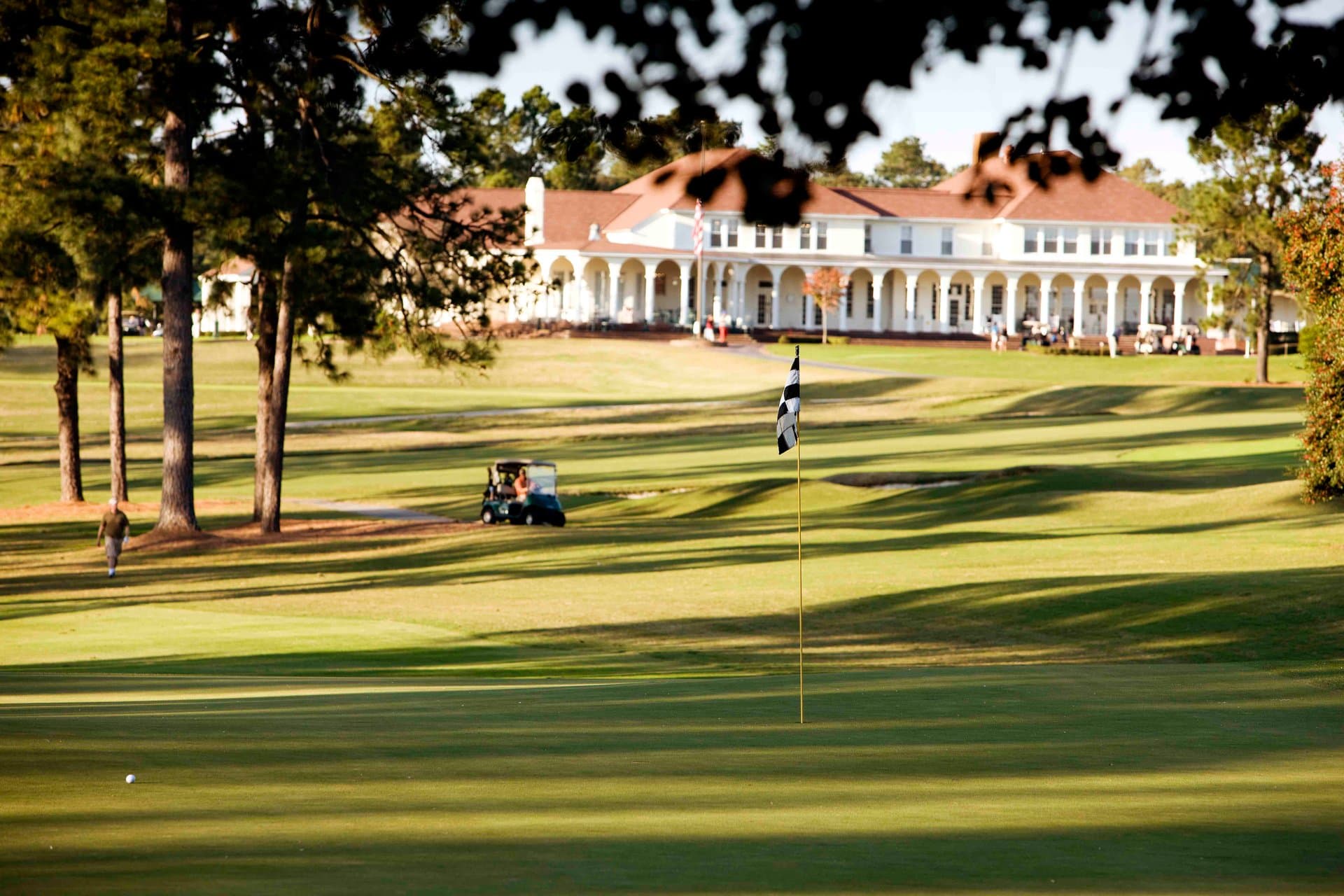
Pinehurst No. 2
At this stage, golf travel does not exist as a concept. Golf is a local activity, done within thirty minutes of home, scheduled around work and weather and the availability of playing partners. The greens you know are the greens that exist. The idea that a course in another state might feel fundamentally different, that the grass might be different, that the greens might break in ways you have never encountered, has not yet taken hold.
The shift happens the first time you play a course that is genuinely better than your home course. It might be a resort course on a family vacation, a cousin's club in another state, or a public course recommended by a friend. The round itself may not be memorable. The realization is: golf courses are not all the same. Some are significantly more interesting, more beautiful, more challenging, or more fun than others. This is the seed of golf travel.
Stage Two: The Regional Trip
The first dedicated golf trip is usually regional. A buddies' weekend at a resort within driving distance. Two or three rounds, a rental house or a resort room, and the discovery that golf away from home feels different from golf at home. The courses are unfamiliar, the stakes feel slightly higher because the green fees are higher, and the social experience, golf with friends for an extended period without the interruption of daily life, creates the template for every trip that follows.
For golfers in the Southeast, this first trip often lands at Myrtle Beach, where 90 courses within a short drive and green fees starting around $45 make the logistics frictionless. For golfers in the Midwest, it might be a Boyne Highlands or Shanty Creek weekend in northern Michigan, where resort packages keep the cost manageable. For golfers in the Southwest, Scottsdale in shoulder season, with green fees dropping by half and the desert still warm, is the natural entry point.
Explore our Myrtle Beach guide
The regional trip teaches you that golf travel is its own category of experience. The golf is better. The food is different. The conversation is uninterrupted. You return home having played courses that expanded your understanding of what the game can be, and you begin looking at a calendar for the next available long weekend.
Stage Three: The Destination Trip
The upgrade from regional to destination requires a flight. And once a flight is involved, the calculus changes. You begin thinking about where you want to go rather than where is convenient to drive, and the map of American golf opens up in a way that is slightly overwhelming and thoroughly exciting.
This is the stage where most golfers encounter their first genuinely great course. A round at Pinehurst No. 2, where Donald Ross's crowned greens reject anything that is not precisely placed. A day at TPC Scottsdale Stadium Course, where the empty colosseum on the 16th echoes with tournament history. A morning at Harbour Town, where the lighthouse behind the 18th green confirms that you have arrived at a course you have seen on television for years.
The destination trip also introduces the concept of course quality as a function of architecture rather than conditioning. A well-maintained home course can be architecturally dull. A great course can have rough edges and still deliver an experience that is categorically superior. The golfer who plays Tobacco Road in North Carolina for the first time, with its blind shots and severe elevation changes and slope rating of 150, understands this distinction immediately. Architecture is not decoration. It is the experience itself.
Stage Four: The Bucket List
The bucket list stage arrives when the golfer stops thinking about courses as places to play golf and starts thinking about them as places to visit. The distinction is subtle but important. A course to play is selected based on availability, price, and proximity. A course to visit is selected based on reputation, setting, and the belief that playing it will produce a memory worth keeping for decades.
The green fee of $695 is significant, and the experience, nine holes along the Pacific coast with U.S. Open history at every turn, justifies the cost. But the bucket list quickly expands beyond the obvious. Bandon Dunes, with its five walking-only courses on the Oregon coast, creates a pilgrimage experience that changes how the golfer thinks about the game. Sand Valley in Wisconsin, with its Midwest links terrain and designer-showcase resort, offers a similar transformation. Kiawah's Ocean Course, with all eighteen holes facing the Atlantic, delivers visual drama at a scale that other courses cannot match.
Pebble Beach is the most common first bucket-list course for American golfers.
At this stage, the golfer begins to plan trips around specific courses rather than specific destinations. The question is not "Where should we go?" but "What do I want to play?" The answer leads to places the golfer might never otherwise visit: Bandon, Oregon; Kohler, Wisconsin; Bowling Green, Florida; Ridgedale, Missouri. These are not tourist destinations. They are golf destinations, and the distinction is the point.
Stage Five: The Connoisseur
The final stage is not really a stage. It is a permanent state of curiosity. The connoisseur golfer has played the famous courses and found them excellent. Now the interest expands to the less famous courses that the famous ones are compared to. Lawsonia Links in Green Lake, Wisconsin, a 1930 William Langford design that costs $70 to $140 per round. Caledonia Golf and Fish Club in Pawleys Island, a Mike Strantz design where the complimentary fish chowder at the turn is as famous as any hole.
Circling Raven in Worley, Idaho, on Coeur d'Alene Tribal land, consistently ranked among the best public courses in the Northwest.
Tip
The Progression Is Not Linear
Some golfers skip directly from Stage One to Stage Four, booking Pebble Beach before they have played anything beyond their home course. Others spend decades in Stage Two, perfectly content with annual buddies' trips to familiar destinations. Neither approach is wrong. The progression is not a hierarchy. It is a description of how golf travel tends to deepen over time, how each stage builds on the one before it, and how the accumulation of courses played creates a richer understanding of the game.
The verdict