The destination
Big Cedar Lodge is the only resort in American golf where five courses, by five different designers of national stature, sit on the same 4,600-acre property and read as five distinct experiences rather than variations on a theme. Johnny Morris, who built Bass Pro Shops into the largest outdoor retail operation in the world, assembled the collection between 1996 and 2020. The designers read like a hall of fame ballot: Jack Nicklaus, Tom Fazio, Bill Coore and Ben Crenshaw, Gary Player, and Tiger Woods. Each course interprets the same Ozarks landscape, limestone ridgelines, hardwood forests, lake views, differently enough that you finish a four-day stay convinced you have just played five different destinations.
The scale matters because it determines the character of the place. The resort spans 4,600 acres on Table Rock Lake, ten miles south of Branson. The courses are routed through wilderness rather than housing, and the spaces between them are occupied by forest, lake, and the kind of quiet that suburban resort golf rarely achieves. The isolation is deliberate. Morris built the place to feel closer to a national park than a conventional resort.
Where to stay in Big Cedar Lodge, Missouri
Live prices from Booking.com, Expedia and more — every nearby hotel and rental in one search.
Prices and availability from Booking.com, Expedia and others via Stay22. GolfTrailsHQ may earn a commission at no additional cost to you.
The courses
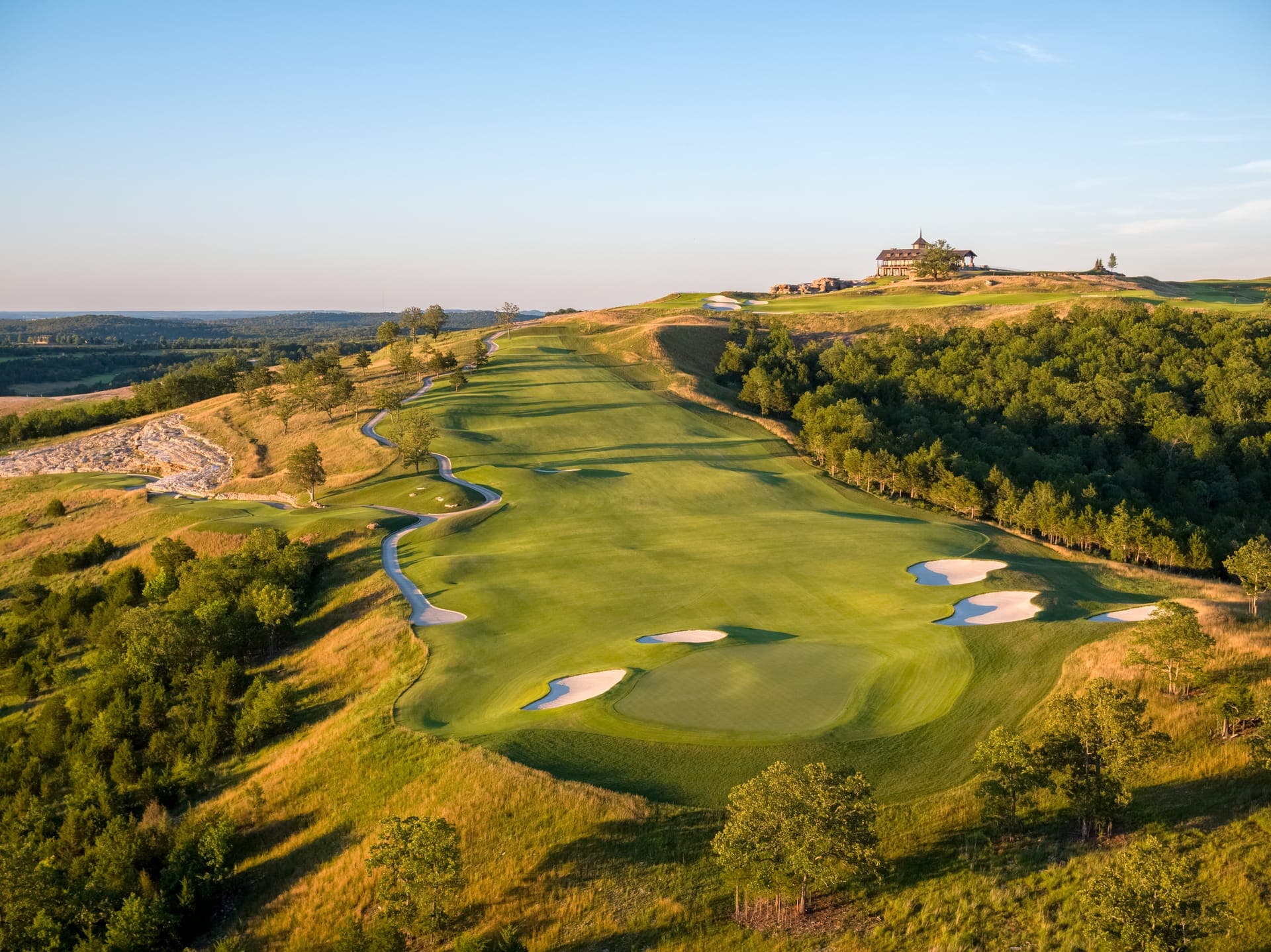
Payne's Valley is the headliner, Tiger Woods' first public-access design and the course that earned Golf Digest's Best New Public Course in 2021. The routing runs across Ozarks ridgelines with long views to Table Rock Lake. The 19th hole, a bonus par 3 called "The Big Rock" played to a green at the base of a limestone bluff, has become one of the most photographed holes in American golf. Walking only, with caddies available.
Ozarks National, the Coore and Crenshaw design that opened a year earlier in 2019, may be the more architecturally significant of the two. The routing crosses exposed ridgelines with panoramic views, and the 13th hole features a 400-foot wooden bridge that connects two sections of the course across a deep valley. Walking only. Playing Payne's Valley and Ozarks National on consecutive days is one of the strongest two-round stretches available at any American resort.
Top of the Rock, the 1996 Jack Nicklaus par-3 course, holds a distinction no other short course can claim: it is the only par-3 layout ever used by the PGA Tour, hosting the Legends of Golf event. The nine holes play through limestone cliffs above Table Rock Lake. Buffalo Ridge Springs, a Tom Fazio design originally opened as Branson Creek in 1999 and redesigned in 2014, offers a more traditional 18-hole resort experience, complete with a resident bison herd that roams alongside several fairways. Mountain Top, Gary Player's 13-hole par-3 walking course, routes through Ozarks rock formations at elevation. A sixth course, Cliffhangers, designed by Tiger Woods and Beau Welling, is expected to open in 2025 or 2026.
When to go
The golf season runs April through October. The shoulder months of April and October offer the best balance of weather and value: temperatures in the 60s and 70s, fall foliage in October, and green fee discounts of up to 39 percent below peak rates. Peak runs May through September, with July and August highs averaging 89 degrees. The resort operates year-round for non-golf activities, but courses are closed or limited from November through March.
Getting there
Big Cedar sits roughly 10 miles south of Branson and 50 miles south of Springfield-Branson National Airport (SGF), the most practical fly-in. The drive from Springfield is straightforward, mostly highway, and a rental car is essential to move between the courses on property and to reach Branson for evening dining or activity. The all-direct-booking model means staying on property is the practical and financial play; resort guest pricing creates a meaningful gap with non-guest rates.
Beyond the course
The non-golf programming is genuinely strong, which is unusual for a golf-first destination. Table Rock Lake, at 43,000 acres, supports boating, fishing, and water recreation through the season. Dogwood Canyon Nature Park, a separate 10,000-acre Bass Pro property nearby, runs guided tram rides through canyons, trout fishing, and horseback riding. The Lost Canyon Cave and Nature Trail at Top of the Rock offers a 2.5-mile electric cart tour through an ancient Ozarks cave system. Branson, 20 minutes north, adds Silver Dollar City, dinner shows, and a deeper restaurant and entertainment scene. A non-golfer spending four days here will not run out of things to do, which is a claim most golf-first destinations cannot honestly make. Three to five nights is the right window. A four-night stay with rounds on all five courses runs roughly $2,000 to $3,500 per person depending on season.