10 Best Desert Golf Courses in America
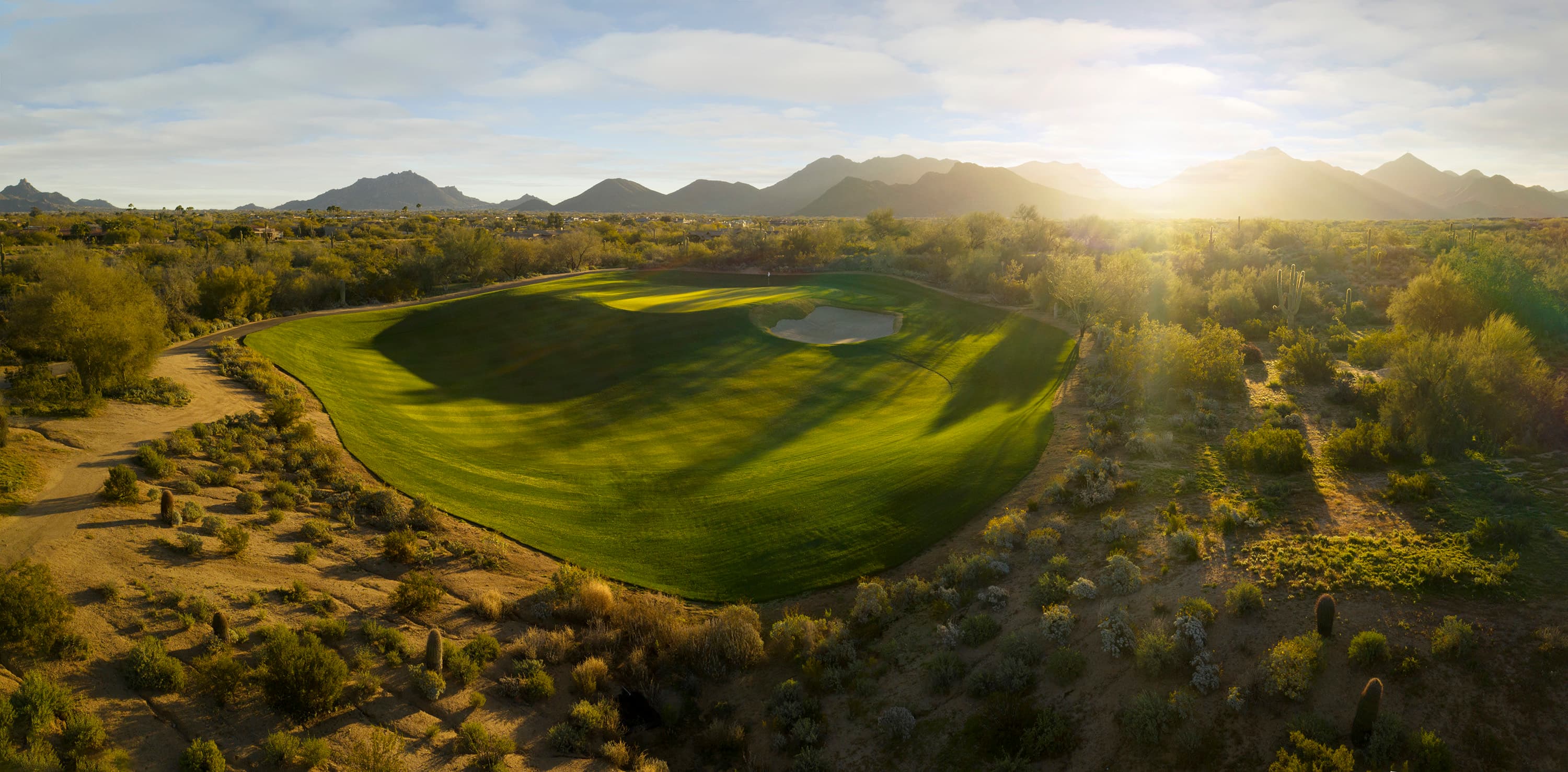
Desert golf occupies a unique position in the American game. The landscape is simultaneously beautiful and hostile: saguaro cacti, granite boulders, and purple mountains provide a visual experience that no other setting can match, while the desert scrub, arroyos, and sandy waste areas punish errant shots with a finality that parkland rough cannot approach. The ball that leaves the fairway in the desert is often gone, which sharpens the mind in ways that more forgiving settings do not.
The courses on this list use the desert as a design partner rather than a backdrop.
1. We-Ko-Pa (Saguaro Course), Fort McDowell, Arizona
Coore and Crenshaw designed the Saguaro Course on the Fort McDowell Yavapai Nation with a minimalism that lets the Sonoran Desert do the work. Wide fairways follow the natural terrain, mountain views extend in every direction, and the design trusts the golfer to find their own way rather than marking every hazard with a railroad tie. We-Ko-Pa Saguaro is desert golf at its most honest: the beauty is real, the challenge is fair, and the experience rewards attention.
2. Troon North (Monument Course), Scottsdale, Arizona
The granite boulders that frame several holes are 12 million years old, and their scale makes the golfer feel appropriately small. The carries over desert scrub from elevated tees test nerve, and the morning light on the granite creates a visual experience that justifies the green fee independent of the golf.
Tom Weiskopf routed the Monument Course through boulder-strewn terrain at the base of Pinnacle Peak, and the result is the most visually dramatic desert course in America.
3. Shadow Creek, Las Vegas, Nevada
Tom Fazio's manufactured oasis north of the Strip is the anti-desert desert course: 20,000 imported trees, artificial waterfalls, and a completely landscaped environment that erases the Mojave from view. Shadow Creek is included on this list not because it embraces the desert but because it demonstrates how far a designer can go in transforming it. The conditioning is immaculate, the solitude is genuine, and the contrast between the course and its surroundings is surreal.
4. TPC Scottsdale (Stadium Course), Scottsdale, Arizona
The home of the WM Phoenix Open uses the desert landscape as a frame for tournament golf. TPC Scottsdale during the tournament is chaos; TPC Scottsdale on a Tuesday morning is one of the finest desert golf experiences available.
The Weiskopf and Morrish design is strategic rather than scenic: the desert hazards are positioned to penalise specific misses, and the fairway corridors reward precise placement over raw distance.
5. PGA West (Stadium Course), La Quinta, California
Pete Dye's desert Stadium Course uses the Coachella Valley's stark landscape to amplify his characteristically bold design features. The island green on the par 3 17th, called "Alcatraz," sits in the middle of a desert waste area. The overall design is more punitive than most desert courses, with forced carries and railroad ties that add visual intimidation to the natural desert challenge. PGA West is desert golf at its most theatrical.
6. We-Ko-Pa (Cholla Course), Fort McDowell, Arizona
Scott Miller's Cholla Course occupies the same reservation as the Saguaro Course but plays with a different character: more elevation change, tighter corridors through the desert, and green complexes that are more severely contoured. The Cholla Course is the more challenging of the two We-Ko-Pa layouts and the more rewarding for the low handicapper. The mountain views are equally impressive, and the desert terrain is even more prominent in the design.
7. Quintero Golf Club, Peoria, Arizona
Rees Jones designed Quintero through a series of desert canyons northwest of Phoenix, and the routing uses the elevation changes more dramatically than any other desert course in Arizona. Several tee shots play across canyons with drops of 100 feet or more, and the desert floor far below adds a visual element that flat-terrain desert courses cannot match. Quintero is less well known than Troon North or TPC Scottsdale, which is part of its appeal: the tee times are more available and the pace of play is faster.
8. Cascata, Boulder City, Nevada
Rees Jones designed Cascata in a desert canyon south of Las Vegas, with a waterfall cascading 418 feet from the cliff face above the clubhouse. The course plays through the canyon with dramatic elevation changes and desert walls on both sides. The overall experience is more manufactured than the Arizona courses, but the canyon setting provides a contained, theatrical quality that is unique among desert courses.
9. Ak-Chin Southern Dunes, Maricopa, Arizona
Fred Couples and Brian Curley designed Southern Dunes on the Ak-Chin Indian Community south of Phoenix, and the course is a genuine surprise: links-style golf in the desert, with firm fairways, minimal rough, and sand dunes that feel transported from Scotland. The desert context adds a visual contrast to the links-style playing surfaces, and the green fees are significantly lower than comparable courses in Scottsdale.
10. Indian Wells (Players Course), Indian Wells, California
John Fought redesigned the Players Course at Indian Wells in 2007, and the result is a modern championship desert layout that hosts The American Express (PGA Tour) alongside the adjacent Stadium Course. The desert mountain views, the strategic bunkering, and the conditioning create a round that stands with the best in the Coachella Valley. The Players Course is desert golf for the golfer who wants a well-manicured experience without the extreme punishment of Pete Dye's PGA West.
The Desert Variable
The verdict