Bandon, Oregon
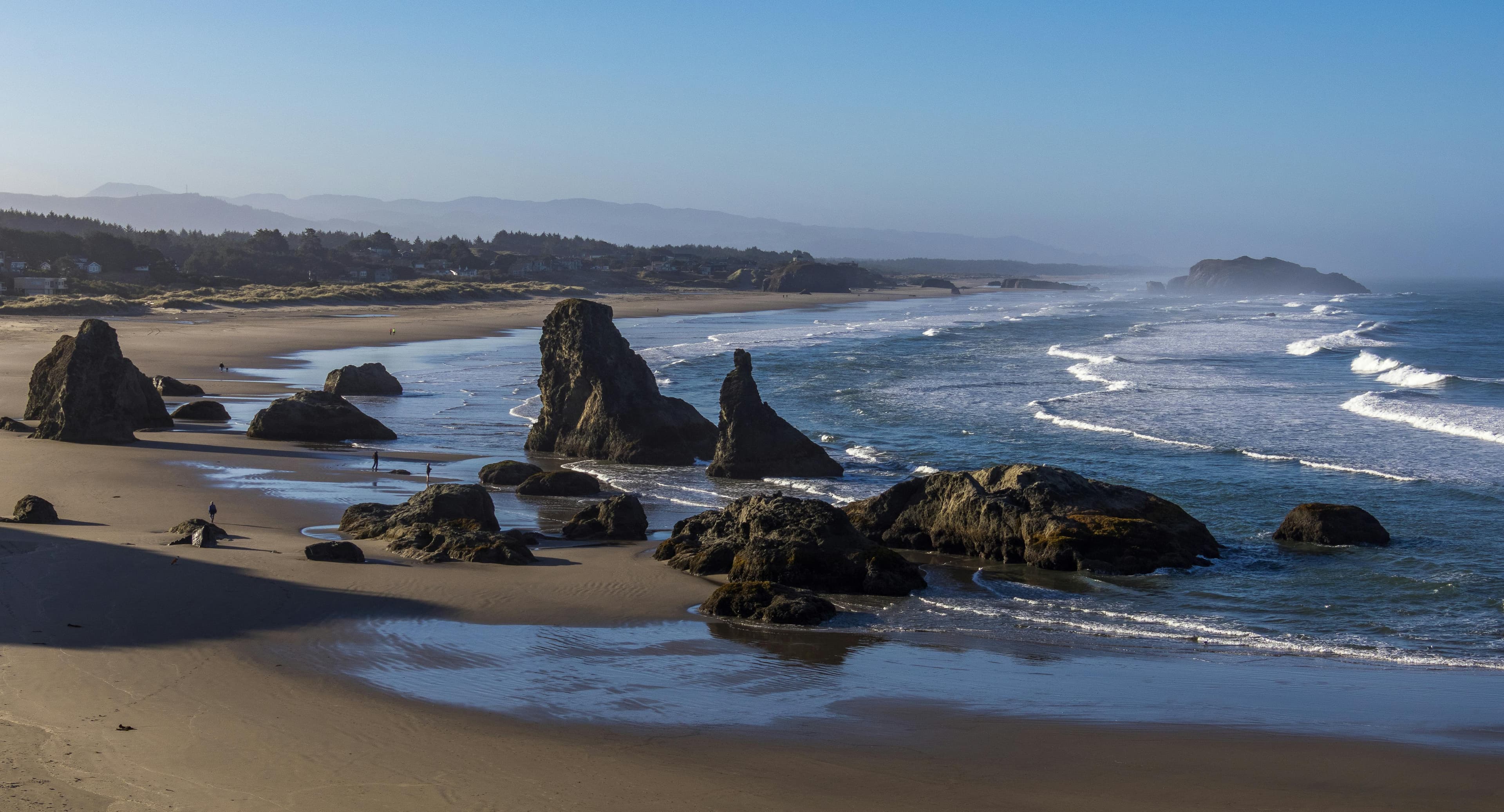
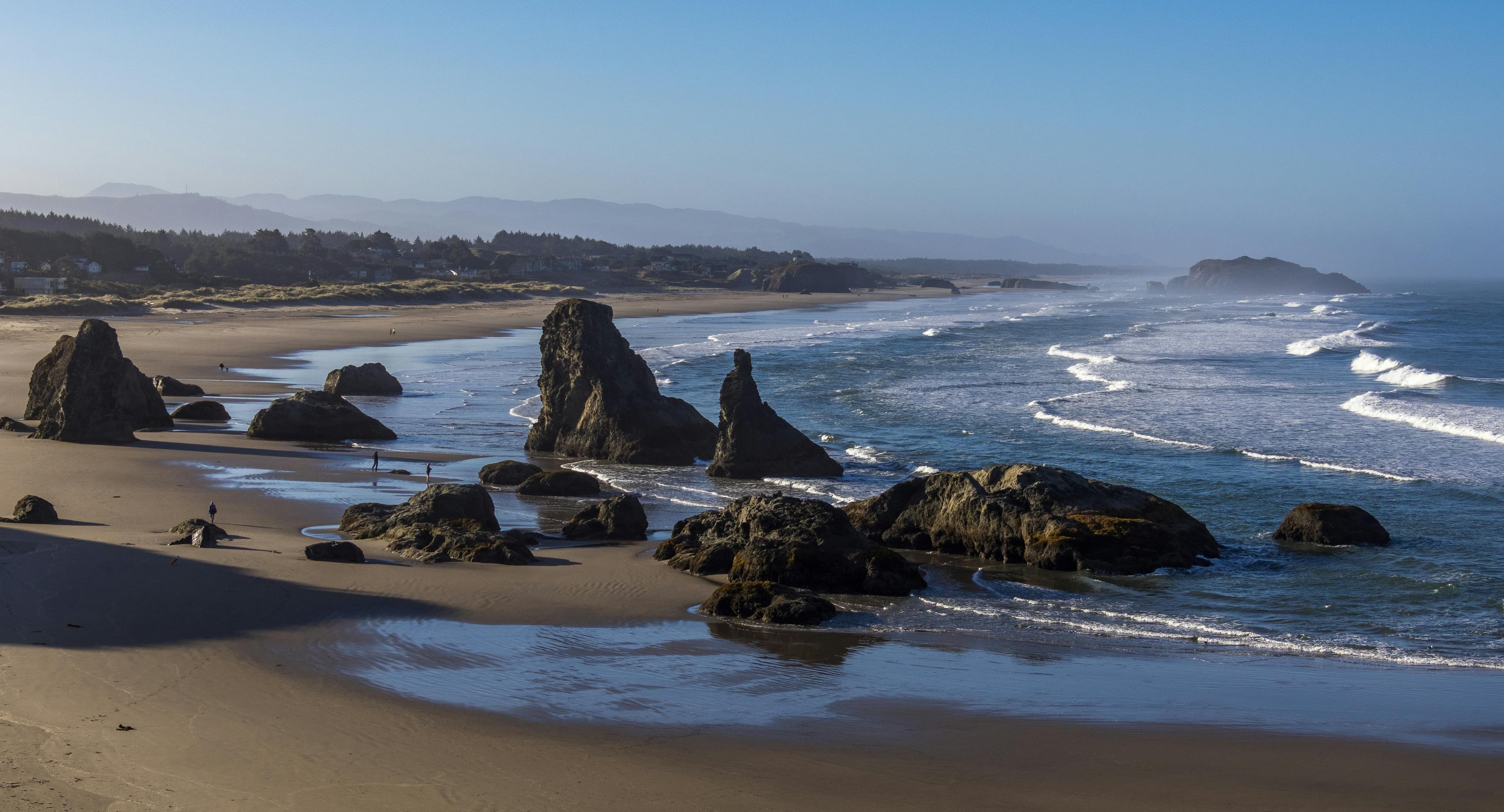
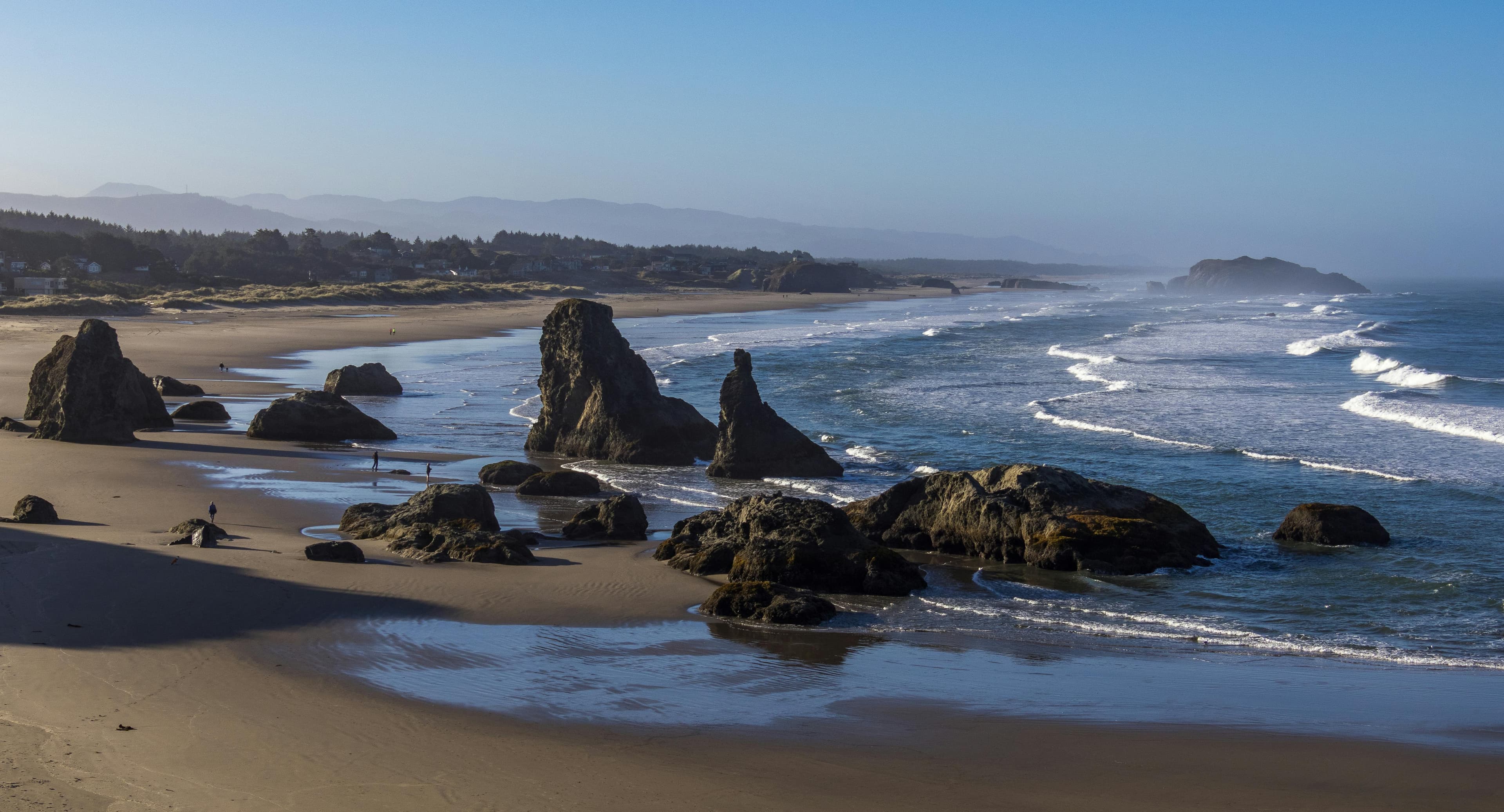
Bandon Dunes Golf Resort sits on a remote stretch of the southern Oregon coastline, roughly four hours south of Portland and two and a half hours west of Eugene by winding two-lane highway. There is no nearby city of consequence. The town of Bandon has a population of around 3,200. The nearest commercial airport, Southwest Oregon Regional in North Bend, receives a handful of United Express flights from San Francisco and seasonal service from Denver. Getting here requires intention.
That remoteness is not incidental to the experience. It is the experience. Mike Keiser, a Chicago greeting card magnate who had spent years studying the links courses of the British Isles, chose this location in the late 1990s precisely because it was inconvenient. The Oregon coast south of Coos Bay offered something almost nonexistent in American golf: exposed coastal land with sandy soil, firm turf, persistent wind, and no surrounding development. What Keiser built here, beginning with the original Bandon Dunes course in 1999, has become the closest thing to a links pilgrimage that exists in the United States.
The resort now comprises five full 18-hole courses, a 13-hole par-3 course, a 19-hole short course, and a 36-hole putting course. Every course is walking only. No carts. Caddies are available and widely used. The architecture spans four decades of modern design, from David McLay Kidd's inaugural effort to the Coore and Crenshaw team's most recent work. Five different design voices, five different expressions of the same coastal landscape, all within a property you can traverse on foot.
The Courses
The five 18-hole courses occupy distinct positions on the property and in the national conversation.
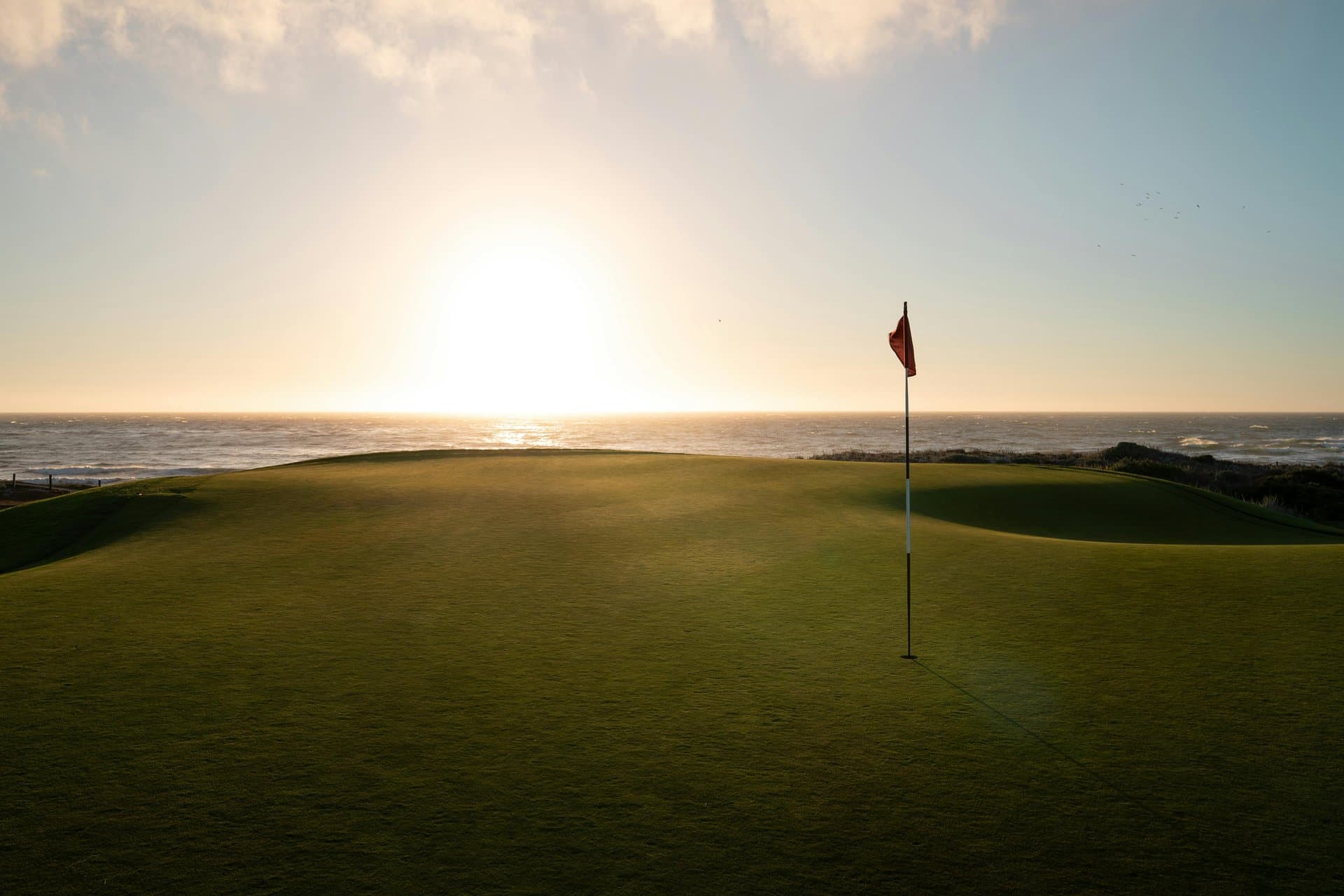
Pacific Dunes, Tom Doak's 2001 design, is the course most visitors rank first. It perches on the cliffs above the Pacific with 11 holes offering direct ocean views, and the routing moves through dune ridges and coastal scrub with an economy of earthmoving that lets the natural terrain dictate the golf. At 6,633 yards and par 71, it plays shorter than most championship-caliber courses, but the wind, the firm turf, and the precision demanded by Doak's green complexes make the scorecard irrelevant. Pacific Dunes consistently appears in the top ten of every major American course ranking.
Sheep Ranch, the newest 18-hole course, opened in 2020 to a Bill Coore and Ben Crenshaw design. It occupies an exposed headland north of the main campus where every hole carries an ocean view and there is not a single sand bunker on the property. The absence of bunkers is a deliberate choice: the wind, the natural ground contours, and the firm surfaces provide all the defense the course needs. At par 72 and 6,636 yards with a slope of just 121, Sheep Ranch reads as the most approachable of the five on paper. In a 20-knot crosswind, that approachability disappears.
Bandon Dunes, the original course that opened the resort in 1999, was designed by David McLay Kidd. It was Kidd's first solo commission, and it established the template for everything that followed: Scottish-style links on coastal bluffs, minimal artificial shaping, walking only. At 6,732 yards with a par of 72 and a slope of 145, it remains the most demanding course on the property by the numbers. Several holes run directly along the cliff edge, and the routing delivers the dramatic coastal exposure that put the resort on the map.
Old Macdonald, Tom Doak's second contribution to the resort (designed with Jim Urbina), opened in 2010 as an explicit tribute to Charles Blair Macdonald, the father of American golf course architecture. The course uses template holes drawn from Macdonald's original concepts: the Redan, the Biarritz, the Alps, the Eden, the Short, and others. The greens are enormous by any standard, some exceeding 10,000 square feet, and the bunkering is fierce. At 6,944 yards and par 71, Old Macdonald is the longest course on the property and rewards the golfer who understands the strategic intent behind each template.
Bandon Trails, designed by Bill Coore and Ben Crenshaw and opened in 2005, is the only course on the property that moves away from the ocean. The routing weaves through coastal forest, sand dunes, and open meadows, creating a sequence of environments that shifts with each hole. At 6,788 yards and par 71 with a slope of 130, it is the most varied topographical experience at the resort. Some visitors rank it lowest among the five because it lacks the constant ocean presence. Others consider the forest-to-dune transitions the most interesting design work on the property. Both positions are defensible.
Beyond the 18-Hole Courses
The resort's commitment to variety extends past the five main courses. Bandon Preserve, a 13-hole par-3 course designed by Bill Coore and Ben Crenshaw in 2012, sits on high ground between Pacific Dunes and Bandon Trails with ocean views from all holes. Holes range from 109 to 185 yards. Net proceeds benefit the Wild Rivers Coast Alliance and the Bandon Dunes Charitable Foundation.
Shorty's, the resort's newest addition, opened in May 2024 as a 19-hole walking course designed by Rod Whitman, Dave Axland, and Keith Cutten. All 19 holes are par 3s, ranging from 60 to 160 yards across 1,997 total yards. Like the Preserve, its proceeds support local charitable causes.
The Punchbowl, designed by Tom Doak and Jim Urbina in 2014, is a two-acre, 36-hole putting course adjacent to the Pacific Dunes first tee. Inspired by the Himalayas putting green at St. Andrews, it features volcano mounds and snaking contours across roughly 100,000 square feet. It is free for resort guests and has become a social gathering point, particularly in the late afternoon.
Where to Stay
Accommodation at Bandon operates differently from most golf destinations. The resort itself offers three lodging options on the property, and the nearest off-resort hotels sit in the town of Bandon, roughly ten to fifteen minutes away by car.
The Lodge is the original accommodation, with 17 single rooms and three four-bedroom suites. Rooms overlook the Bandon Dunes course, the coast, the dunes, or the surrounding forest. Nightly rates range from $100 to $300 for singles and $150 to $390 for doubles, varying by season. The Lodge provides immediate access to the resort's six restaurants and lounges, massage center, hot tub and sauna, and fitness facilities.
Chrome Lake Cottages offer 21 buildings in a secluded lakeside setting: double rooms downstairs and two-bedroom lofts upstairs. Rates range from $170 to $420 for doubles and $250 to $640 for lofts. The setting, tucked against Chrome Lake and the surrounding forest, provides more privacy than the Lodge while maintaining full access to resort amenities.
Grove Cottages are four-bedroom units with king beds, private baths, and shared living rooms, designed for groups. Per-night rates are not published individually because the cottages are structured for group bookings where the cost splits across four or more players.
Off-resort, the Best Western Inn at Face Rock sits about ten minutes from the resort and offers 84 rooms at $135 to $200 per night with amenities including breakfast, a heated pool, and private beach access. Bandon Inn, on Highway 101, provides 58 rooms at $106 to $170 with bluff-top views over Old Town and the ocean. Sunset Oceanfront Lodging, about fifteen minutes from the resort, has 69 units ranging from $80 for economy rooms to $372 for oceanfront units during peak season.
When to Visit
The resort is playable year-round, but the seasons differ substantially.
Peak season runs June through September. Highs reach 61 to 64 degrees Fahrenheit, rain is minimal (July averages 0.2 inches), and the courses are in prime condition. Fog is common, particularly in June and early July, and it can linger through mid-morning. Wind is a constant. Green fees for resort guests range from $295 to $370 per round, and tee times during these months should be booked six to twelve months in advance.
The shoulder months of April, May, and October offer what many repeat visitors consider the best value-to-playability ratio. Temperatures run 56 to 59 degrees, rain is possible but not dominant, and green fees drop to the $220 to $345 range. The courses are less crowded, and the lower sun angle in spring and fall gives the landscape a particular quality of light that the summer months cannot replicate.
Off-peak season, November through March, brings wet and windy conditions with highs of 51 to 54 degrees. Green fees fall to the $120 to $225 range, and winter packages become available. Playing Bandon in January requires a tolerance for weather that not all golfers possess, but those who come in the off-season often describe it as the most authentic links experience available in America. The courses were built for these conditions. The turf drains quickly, the wind adds strategic dimensions that disappear on calm summer mornings, and the solitude of a January round on Pacific Dunes is something the peak-season visitor will never know.
Who This Is For
Bandon is not for everyone, and the resort has never attempted to be. There is no beach club, no tennis complex, no spa, no swimming pool. There are no golf carts. The town of Bandon offers a charming Old Town with independent shops and a few good restaurants, but it is not a resort town in any conventional sense. The nearest significant city is over two hours away.
What Bandon offers instead is a concentration of world-class golf architecture in a setting that strips away everything except the walk, the wind, the landscape, and the game. Five courses ranked among the nation's finest, all within walking distance of each other, all on firm links turf that rewards ground-game creativity, all demanding that you carry your bag or hire a caddie and cover the ground on foot.
For the golfer who values design, who finds satisfaction in a well-executed bump-and-run, who does not mind pulling on a rain jacket mid-round, Bandon is the most compelling golf destination in America. The remoteness that makes it inconvenient to reach is the same remoteness that preserved the landscape. The walking-only policy that eliminates a portion of the potential market is the same policy that preserves the pace and character of the rounds. The trade-offs are the point. They always have been.