 Pin it
TPC Scottsdale — Champions Course
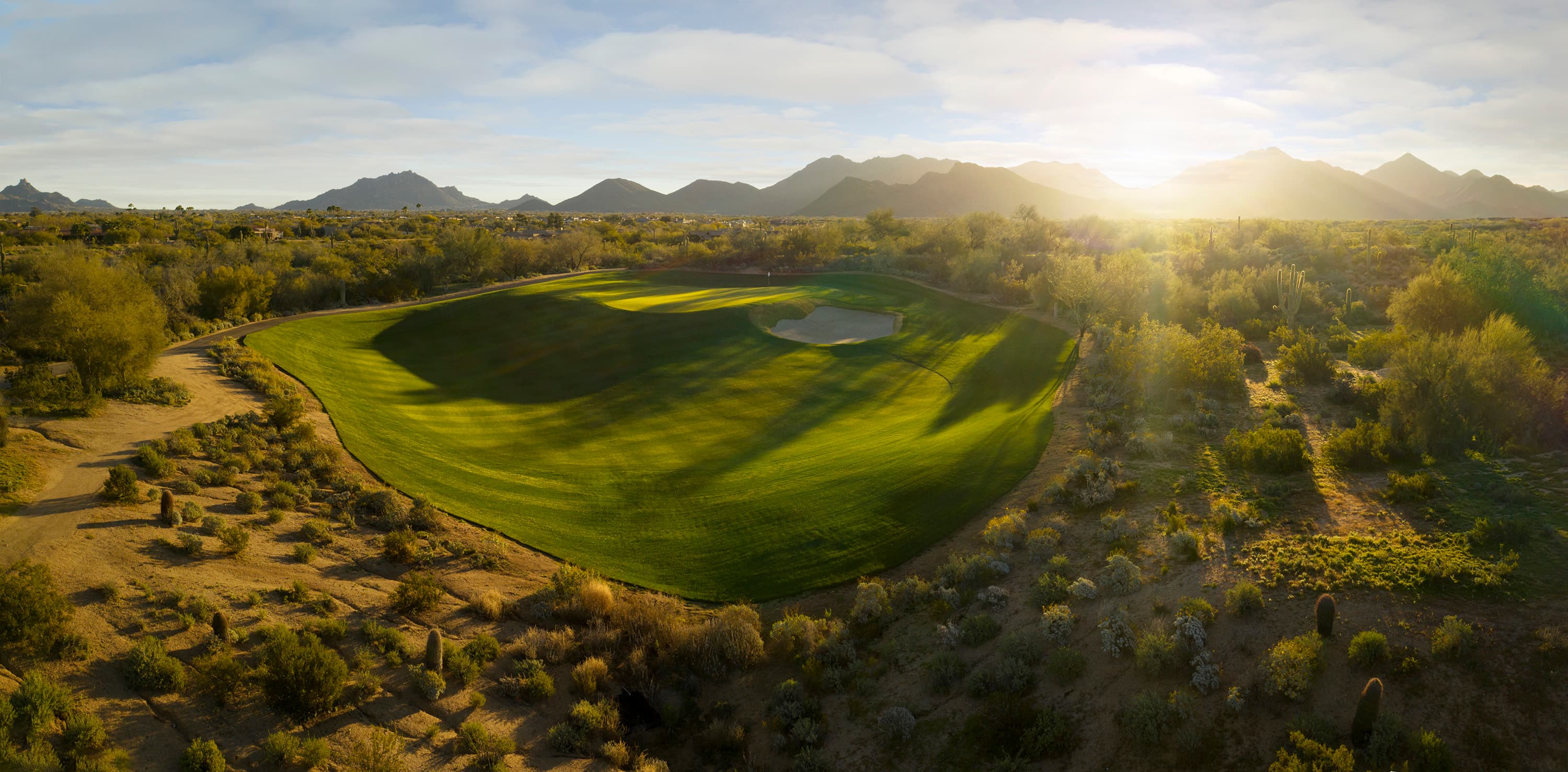
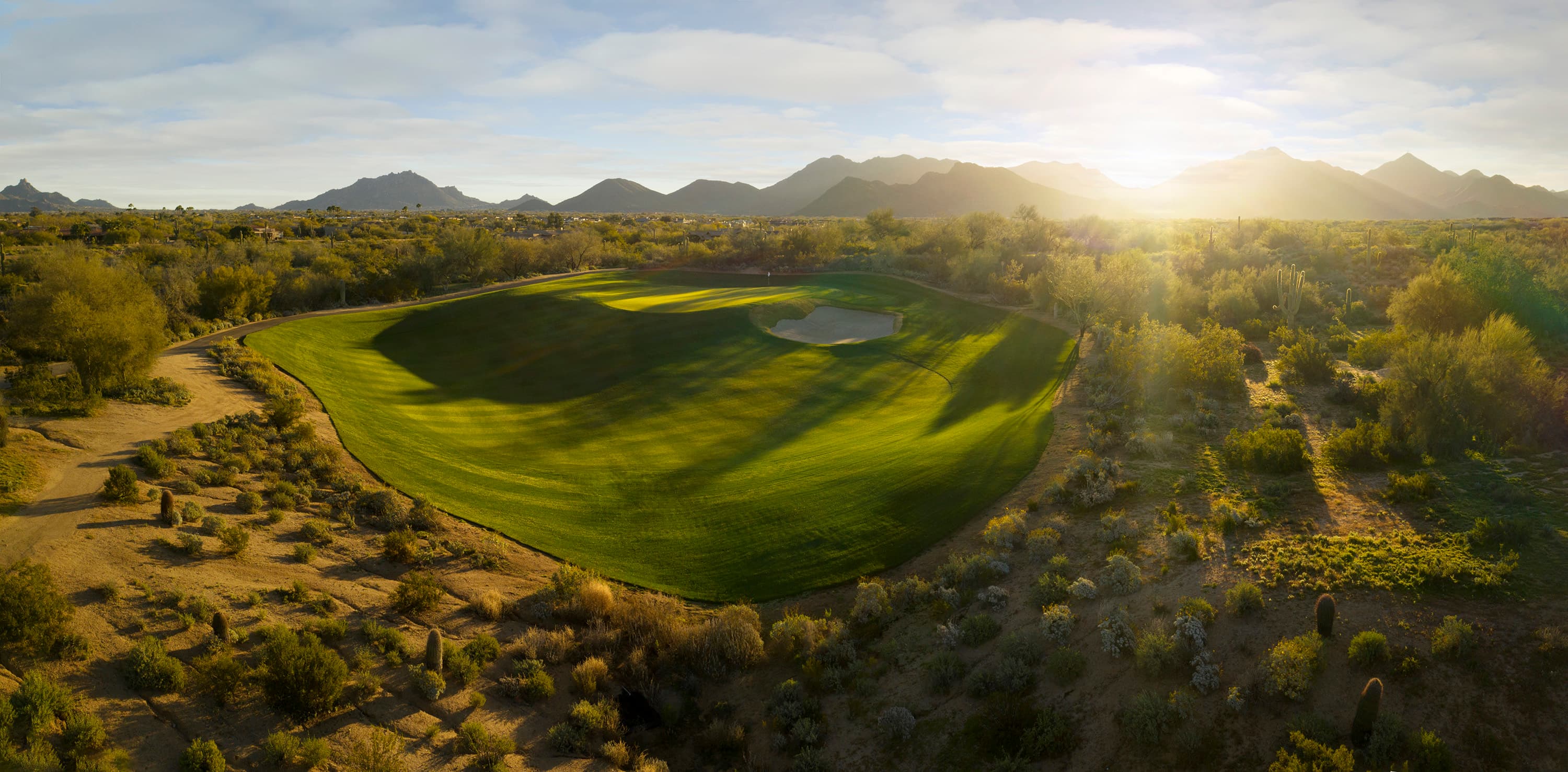
The quieter sibling at TPC Scottsdale. Same facility standards, less than half the green fee, and a par-71 layout that measures 7,235 yards.
Designed by Randy Heckenkemper (2007)
$100–$234
Booking via GolfNow
The Champions Course is the quieter sibling at TPC Scottsdale, sharing the same maintenance team, practice facilities, and clubhouse as the famous Stadium Course but operating at roughly half the green fee. Randy Heckenkemper designed the layout in 2007 at 7,235 yards with a slope of 140, and for golfers who want the TPC experience without the $500 peak-season ceiling next door, the Champions delivers a legitimate alternative.
What to expect
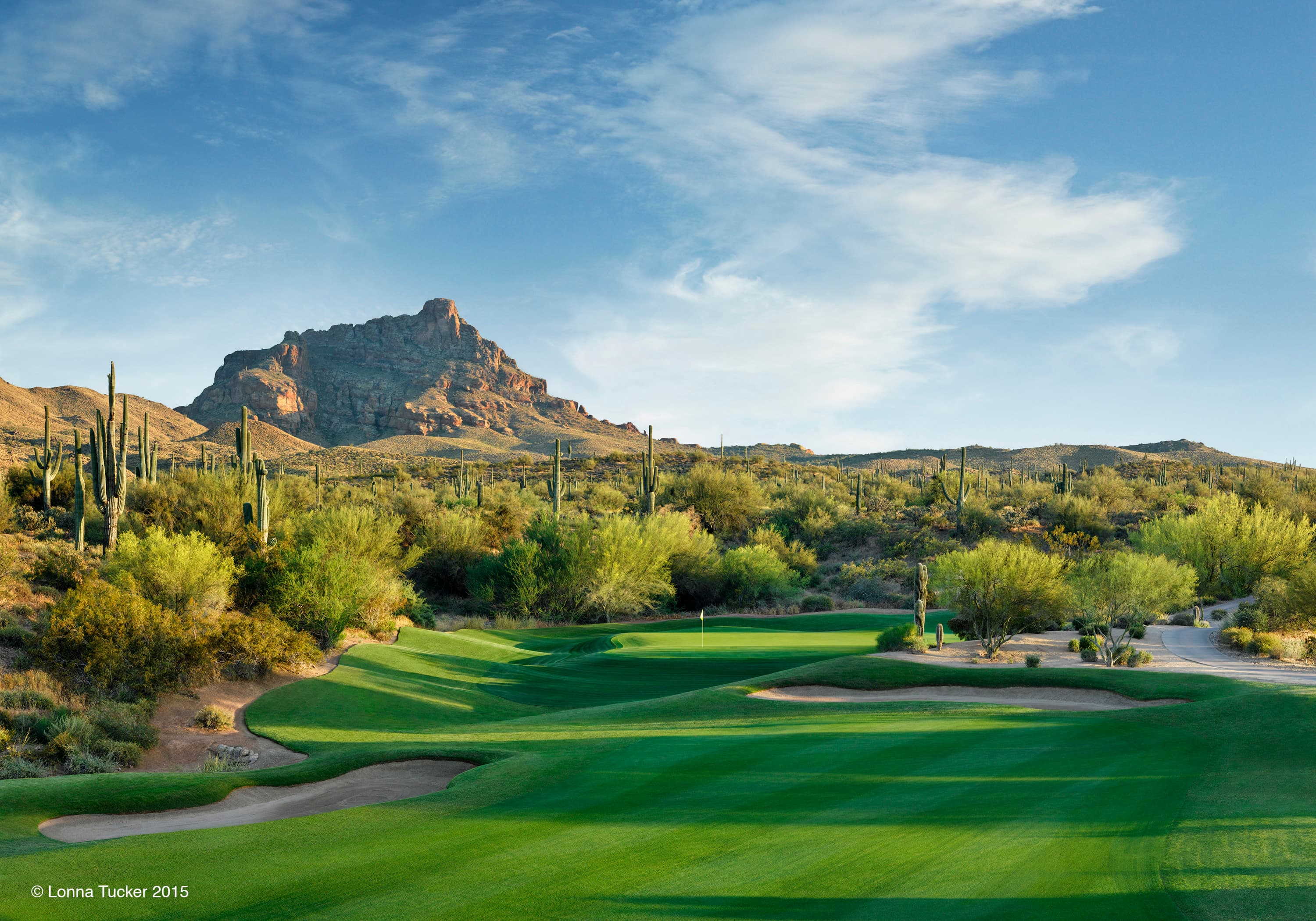
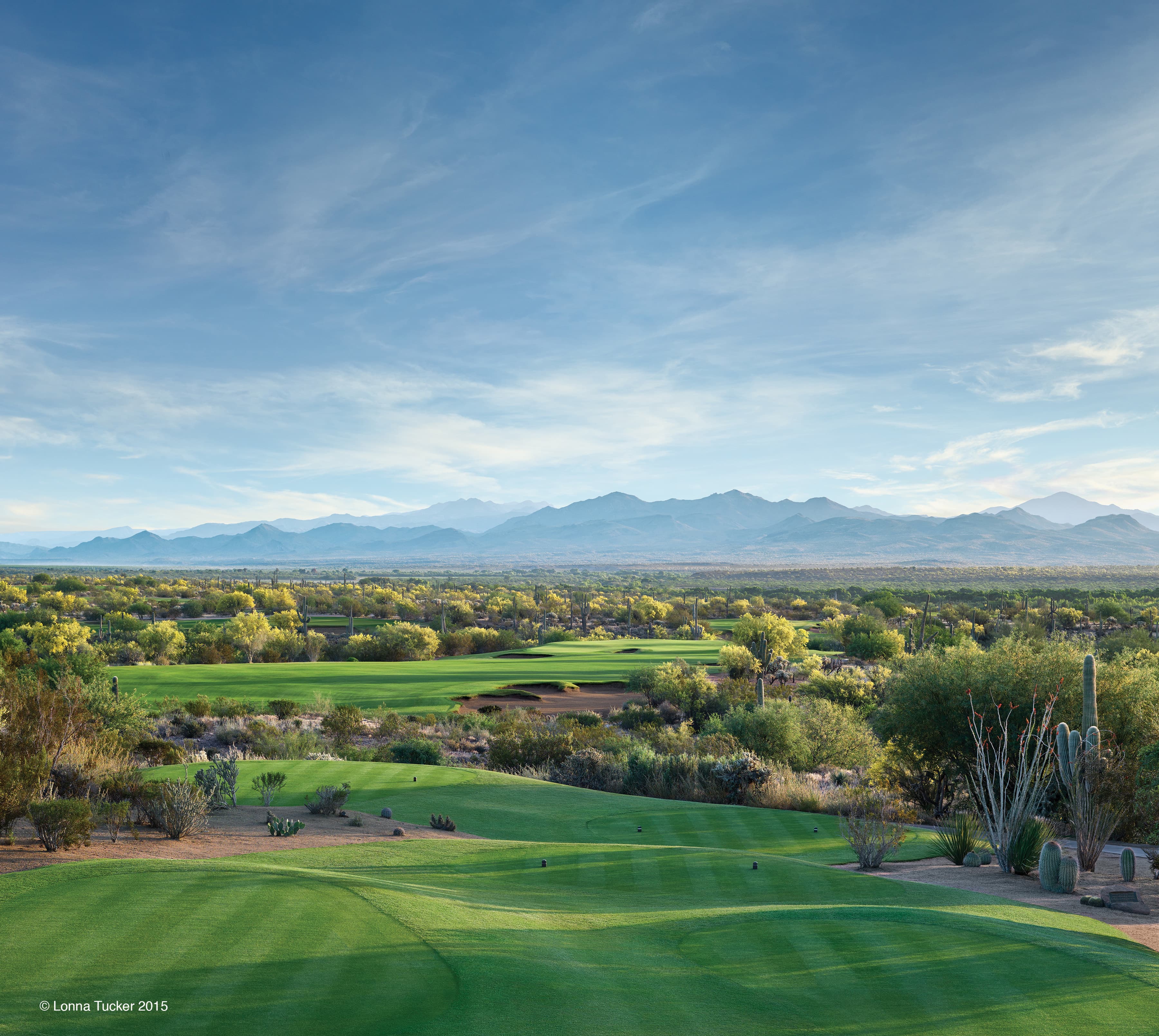
The design is straighter and more conventional than the Weiskopf-Morrish Stadium routing, with less dramatic desert integration and fewer holes where the landscape creates visual drama. This is a solid, well-conditioned golf course rather than a memorable one, and there is nothing wrong with that distinction. It provides a quality round at a price that leaves room in the budget for a premium tee time elsewhere on your trip.
Green complexes are well defended without being punitive. Fairway corridors are generous enough to accommodate the mid-handicapper without losing interest for the low-handicapper. The par 3s are the strongest stretch of the routing, with varied lengths and directional changes that test different clubs and shot shapes across the round.
By the numbers
- Par
- 71
- Yardage
- 7,235
Is it worth the green fee?
At approximately $234 in peak season, the Champions represents one of the better values among courses with a tournament pedigree and facility. The shared clubhouse with the Stadium means the post-round experience is identical regardless of which course you played. Off-peak rates of $100 to $150 bring the price into the same territory as several public municipal courses in the area, which makes the Champions a straightforward choice during shoulder and summer seasons.
Booking and trip fit
Tee times are available through the booking link on this page. The ideal use of the Champions is as a second-day complement to a Stadium round. Playing both over consecutive days provides a full TPC experience at a combined cost often less than a peak-season Stadium round paired with a premium course elsewhere.
The Champions doesn't try to compete with the Stadium's personality, and it is better for the honesty. Pair with TPC Scottsdale Stadium for the full TPC weekend, or slot in alongside Troon North Pinnacle and We-Ko-Pa Saguaro for a Scottsdale rotation that mixes desert styles.
Where to Stay
Accommodations near TPC Scottsdale — Champions Course

Hotel
Best Western Plus Sundial
Scottsdale, Arizona
A 54-room property on Camelback Road where the nightly savings translate directly into additional rounds at better courses.
From $80/nightPapago ~5 mi; multiple within 10 mi
ExpediaCheck availability

Resort
Boulders Resort & Spa Scottsdale
Scottsdale, Arizona
Desert resort set among ancient granite formations with on-site golf at Boulders South and a 33,000-square-foot spa.
From $250/nightOn-site golf
ExpediaCheck availability

Hotel
Courtyard by Marriott Scottsdale Old Town
Scottsdale, Arizona
Central Old Town location with walkable dining and galleries, five miles from Papago and within 30 minutes of every featured course.
From $130/nightPapago ~5 mi; Old Town location central to many
ExpediaCheck availability

Hotel
Fairmont Scottsdale Princess
Scottsdale, Arizona
Adjacent to TPC Scottsdale with a 44,000-square-foot spa and Five Diamond service. The most practical luxury base for tournament-course golf.
From $350/nightTPC Scottsdale Stadium (~0.5 mi, adjacent)
ExpediaCheck availability
Compare all stays near TPC Scottsdale — Champions Course
Live prices from Booking.com, Expedia and more — every nearby hotel and rental in one search.
Prices and availability from Booking.com, Expedia and others via Stay22. GolfTrailsHQ may earn a commission at no additional cost to you.
Other Courses Nearby
Premium
Ak-Chin Southern Dunes Golf Club
Scottsdale, Arizona
Links-style golf on 320 acres of Ak-Chin Indian Reservation in Maricopa. An annual U.S. Open qualifying site that plays nothing like the desert courses nearby.
$75–$275PublicBrian Curley, Lee Schmidt & Fred Couples (2002)
GolfNowBook tee time
Hidden Value
Arizona Grand Golf Course
Scottsdale, Arizona
A short, scenic par-71 at Arizona Grand Resort with lush semitropical landscaping and South Mountain Park as a backdrop.
$75–$225ResortForrest Richardson (1987)
GolfNowBook tee time
Mid-Range
Boulders Golf Club — South Course
Scottsdale, Arizona
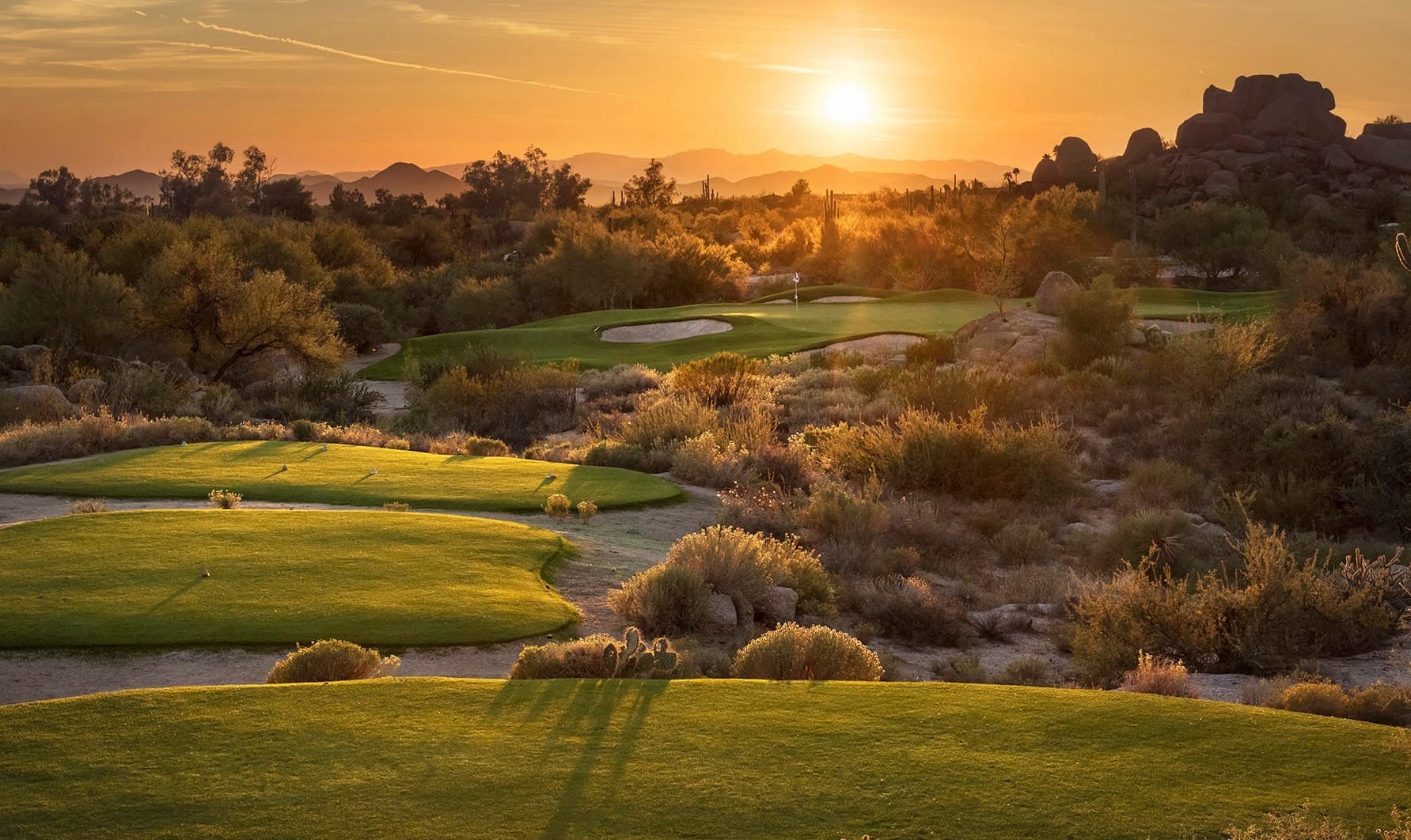
Jay Morrish's desert design among iconic granite boulder formations. No other course in the area looks anything like it.
$75–$250ResortJay Morrish (1983)
GolfNowBook tee time
Premium
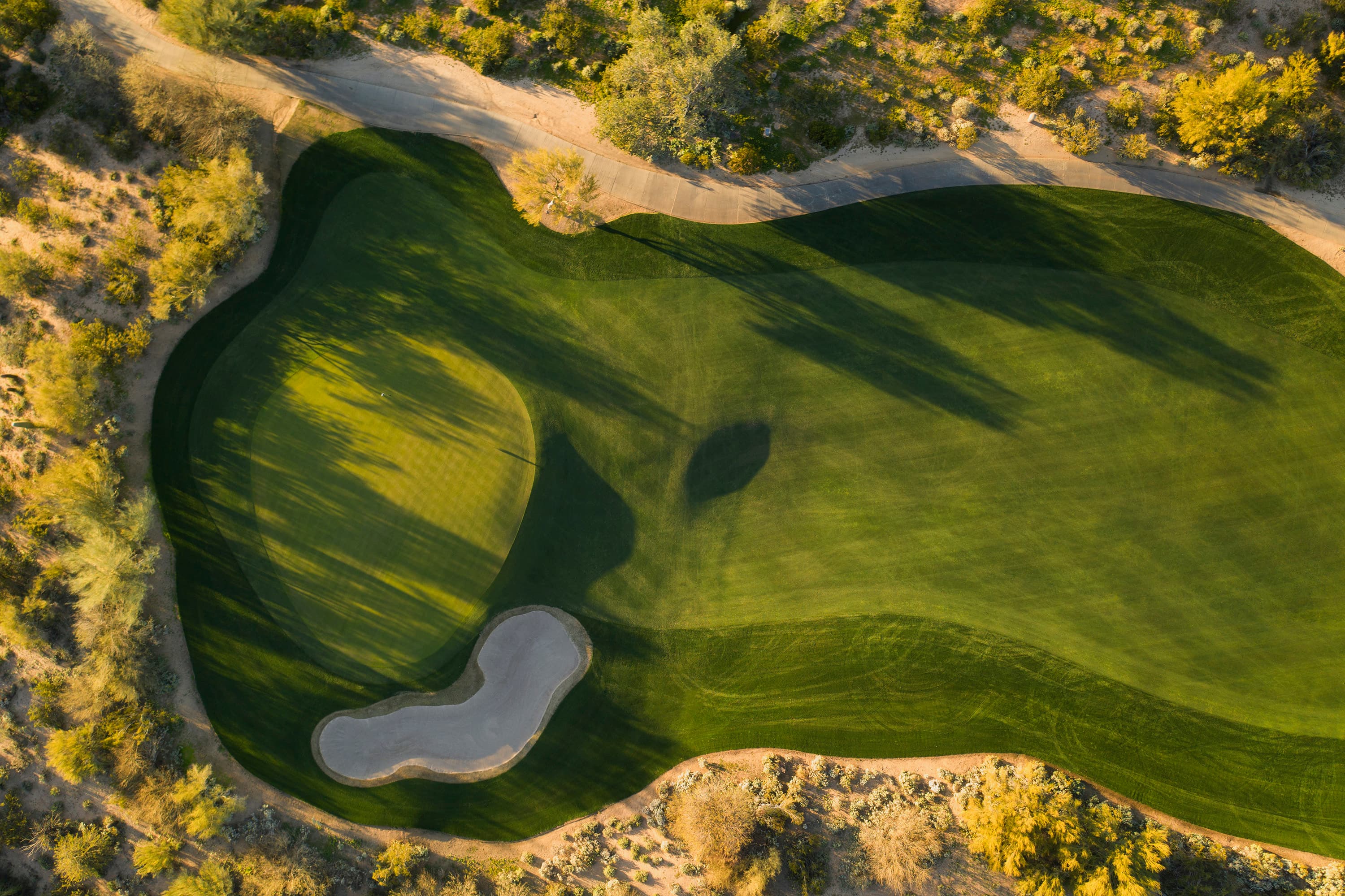
Grayhawk Golf Club — Raptor Course
Scottsdale, Arizona
Tom Fazio's Arizona contribution and former NCAA Division I Championship host. Consistently ranked among the top daily-fee courses in the state.
$100–$475PublicTom Fazio (1995)
PartnerBook tee time
Premium
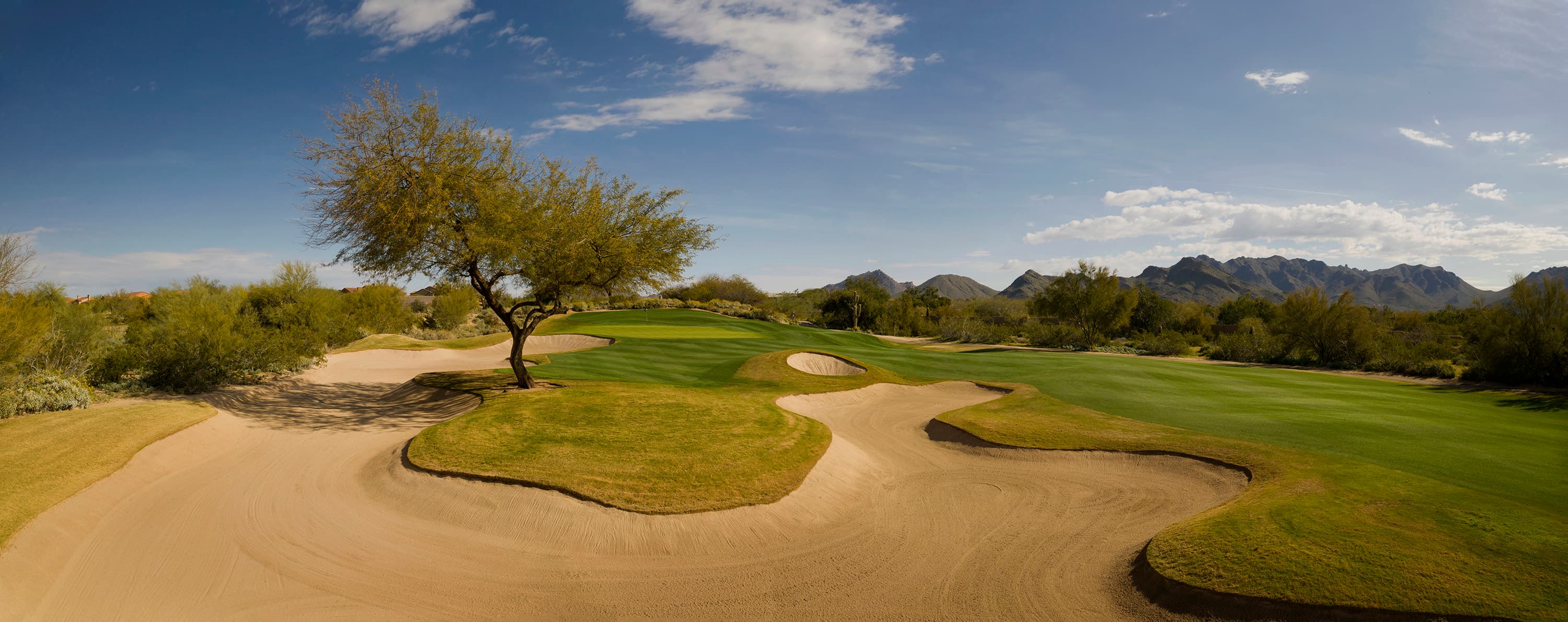
Grayhawk Golf Club — Talon Course
Scottsdale, Arizona
Golf Magazine ranked it among the Top 10 You Can Play in the U.S. Bent grass greens and a slope of 149 provide a test that does not suffer by comparison with the Raptor.
$100–$250PublicDavid Graham & Gary Panks (1994)
GolfNowBook tee time
Mid-Range
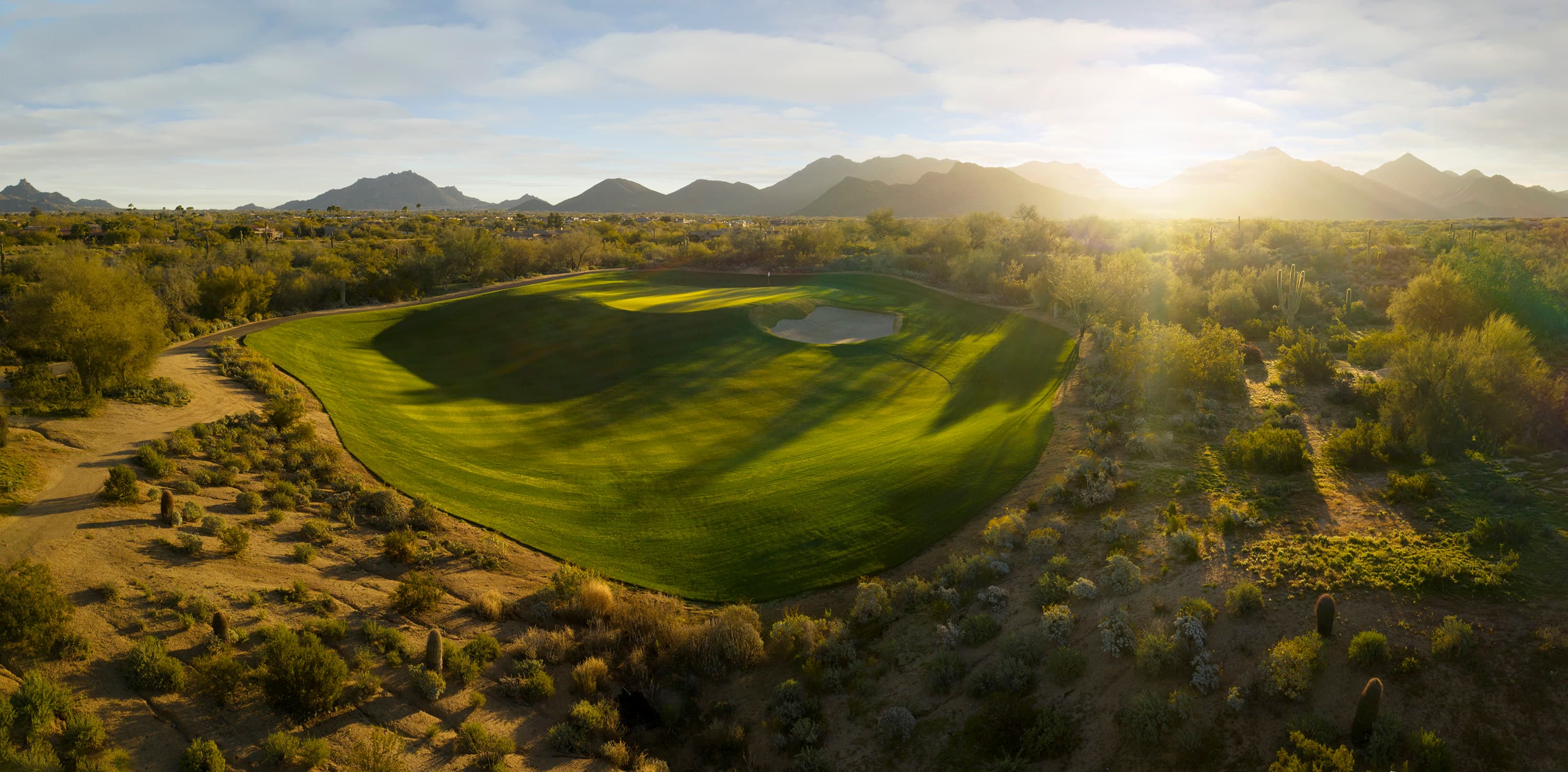
Lookout Mountain Golf Club
Scottsdale, Arizona
Golf Digest Four Star Award for nine consecutive years. A hillside design at Hilton Phoenix Tapatio Cliffs with elevation changes that earn the name.
$50–$168ResortBill Johnston & Forrest Richardson (1989)
GolfNowBook tee time
Hidden Value
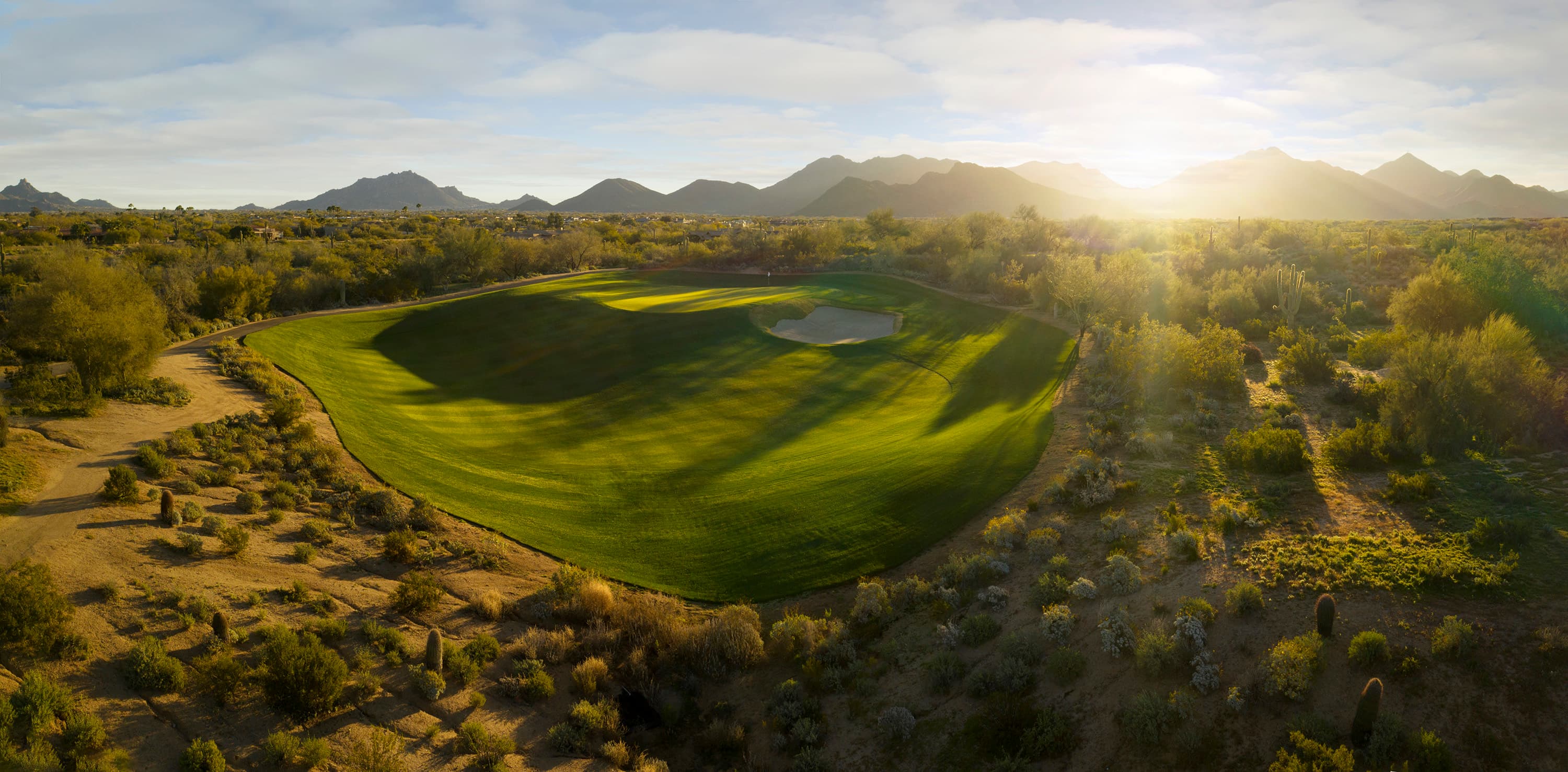
Ocotillo Golf Club
Scottsdale, Arizona
Twenty-seven holes of Ted Robinson design in Chandler with water features on most holes, a Golf Digest 4.5-star rating, and complimentary replay and range balls.
$40–$120PublicTed Robinson (1986)
GolfNowBook tee time
Mid-Range
Papago Golf Club
Scottsdale, Arizona
A City of Phoenix municipal course that plays 7,380 yards with Papago Buttes as a backdrop. Renovated in 2008 at a cost of $5.8 million.
$50–$140PublicWilliam F. Bell (1963; renovated 2008)
GolfNowBook tee time
Premium
Quintero Golf Club
Scottsdale, Arizona
Dramatic elevation changes on 7,249 yards of Rees Jones desert design, 45 minutes northwest of Scottsdale in Peoria.
$105–$385PublicRees Jones with Steve Weisser (2000)
GolfNowBook tee time
Mid-Range
Raven Golf Club — Phoenix
Scottsdale, Arizona
A Carolina-style layout with 6,000+ imported Georgia pines, five miles from Sky Harbor Airport. Scottsdale desert golf, this is not.
$55–$229PublicDavid Graham & Gary Panks (1995)
GolfNowBook tee time
Mid-Range
Talking Stick Golf Club — O'odham Course
Scottsdale, Arizona
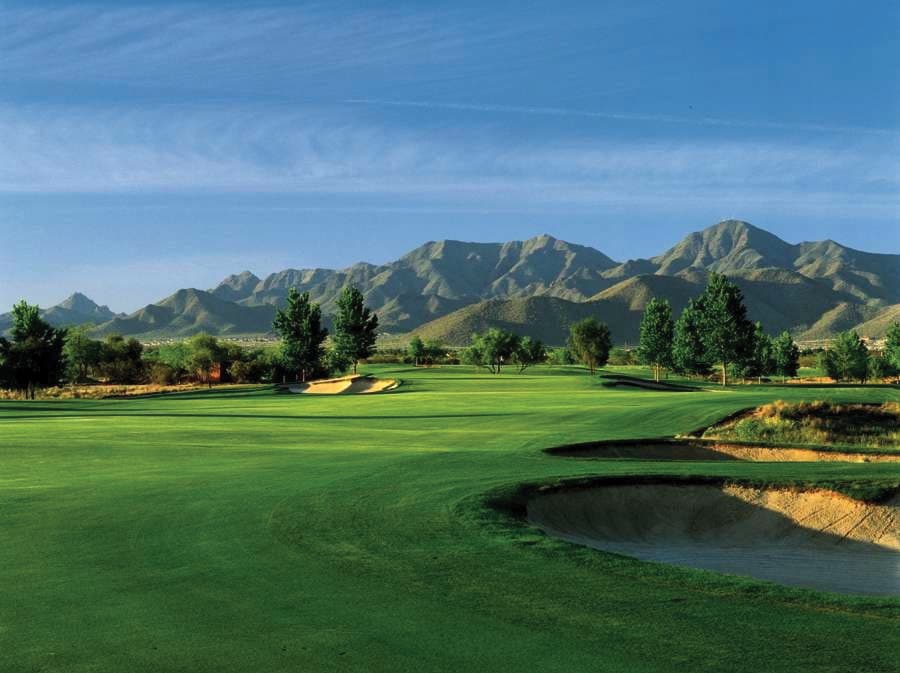
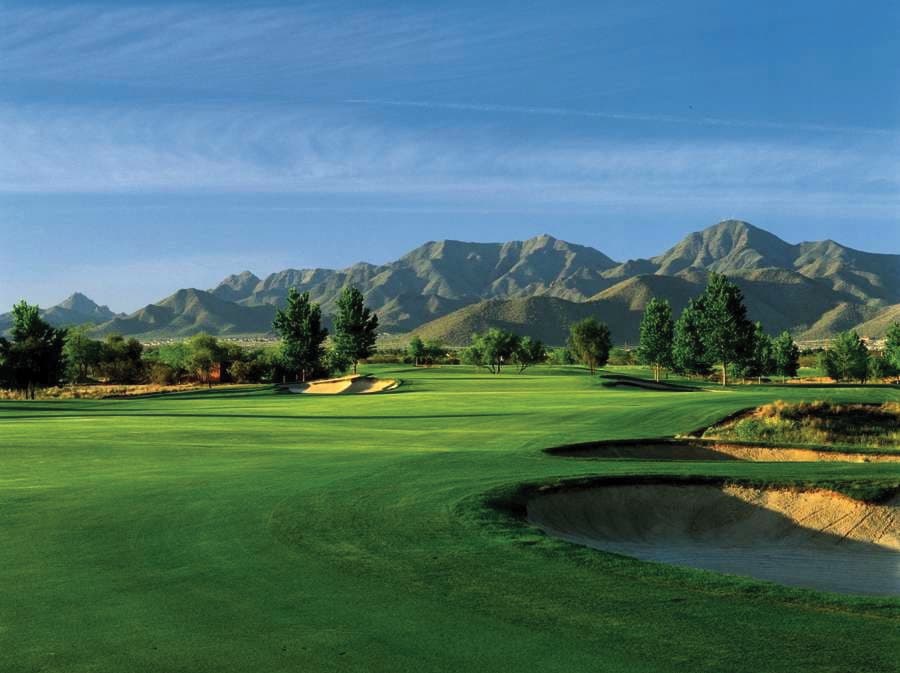
Flat, links-style Coore-Crenshaw design with views of the McDowell Mountains and Pinnacle Peak. Consistently top-5 in Arizona by Golfweek.
$75–$150PublicBill Coore & Ben Crenshaw (1997)
GolfNowBook tee time
Mid-Range
Talking Stick Golf Club — Piipaash Course
Scottsdale, Arizona
The more traditional counterpart to the O'odham. Tree-lined fairways, raised greens, and a Coore-Crenshaw design that rewards accuracy.
$75–$250PublicBill Coore & Ben Crenshaw (1997)
GolfNowBook tee time
Bucket List
TPC Scottsdale — Stadium Course
Scottsdale, Arizona
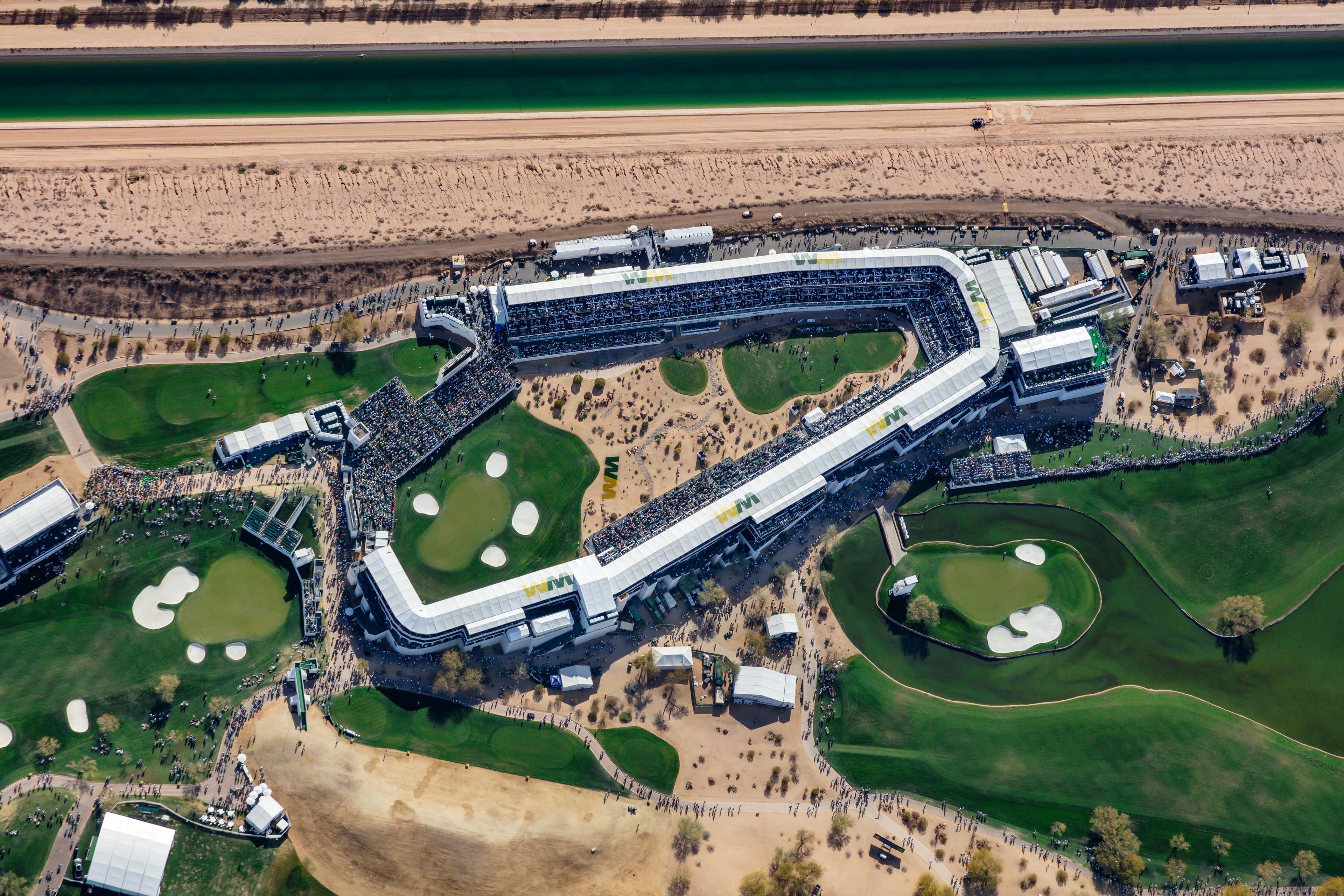
Home of the loudest tournament in professional golf and a par-3 16th that seats 20,000. The rest of the course rewards strategy over power.
$150–$550PublicTom Weiskopf & Jay Morrish (1986)
GolfNowBook tee time
Premium
Troon North Golf Club — Monument Course
Scottsdale, Arizona
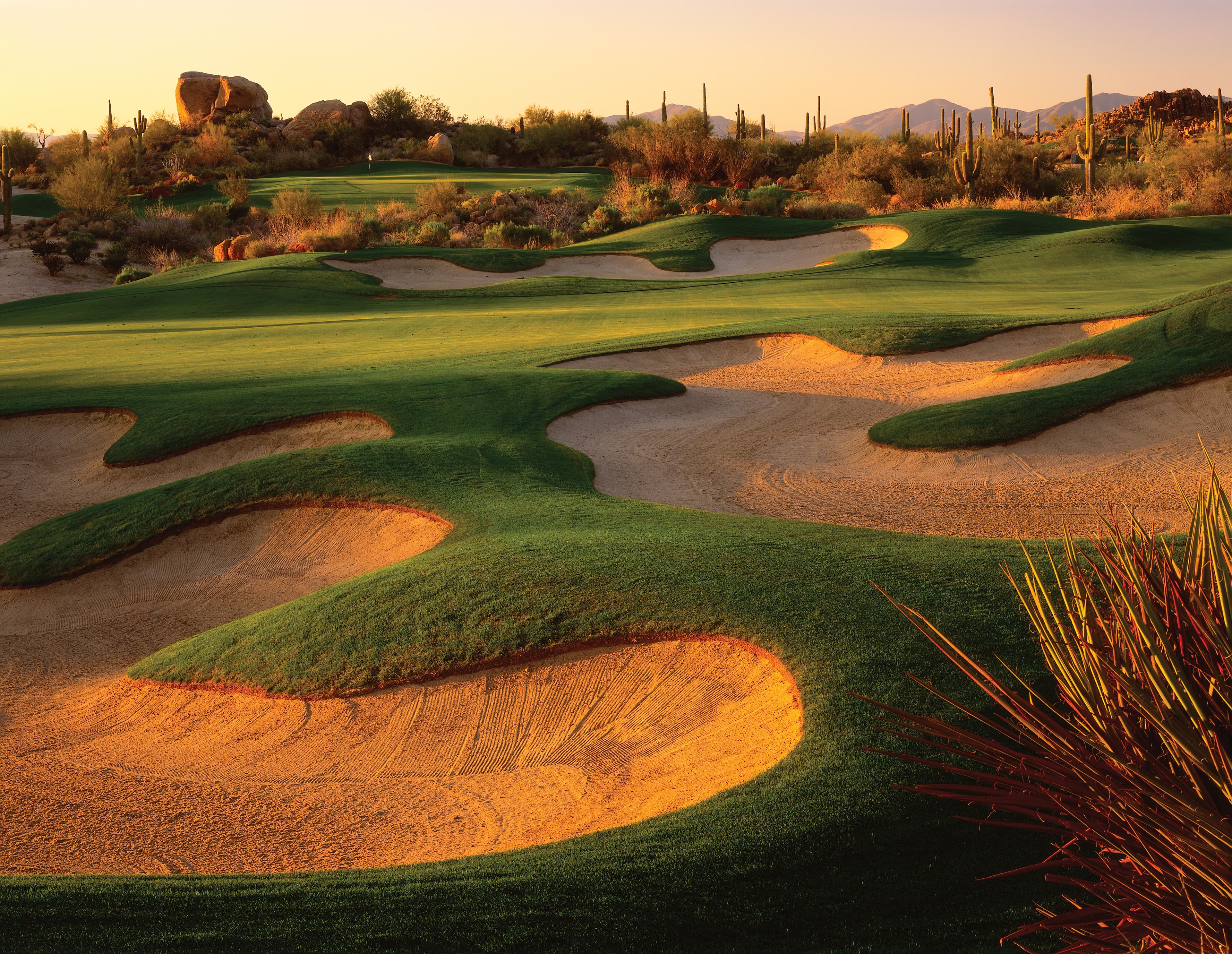
British links principles transplanted to the Sonoran Desert. Firm greens, bump-and-run approaches, and four par 5s exceeding 500 yards.
$100–$500PublicTom Weiskopf & Jay Morrish (1990); Weiskopf redesign 2007
GolfNowBook tee time
Premium
Troon North Golf Club — Pinnacle Course
Scottsdale, Arizona
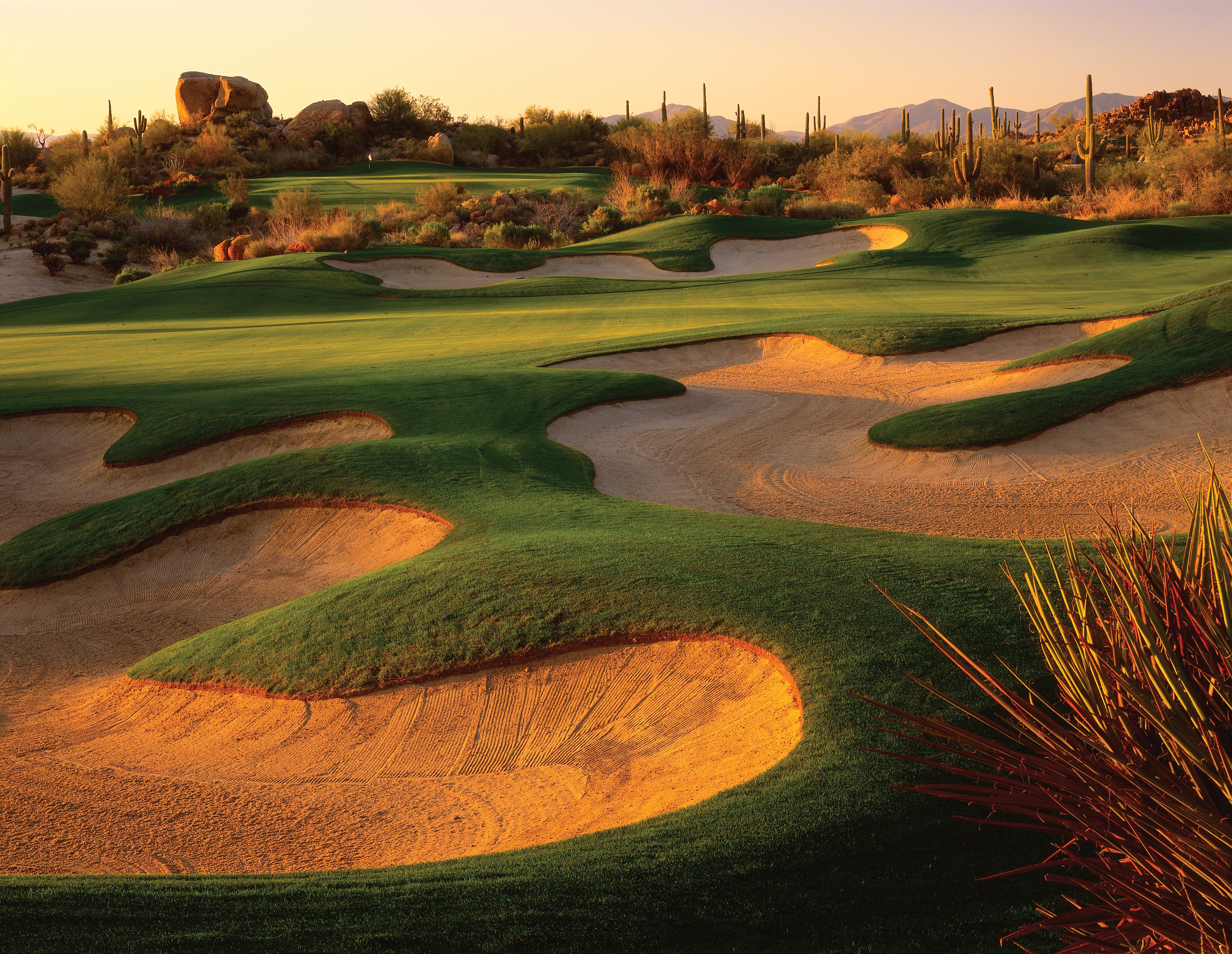
Desert target golf through steep arroyos and saguaro forests. The signature par-5 16th measures 609 yards through a natural wash.
$100–$325PublicTom Weiskopf & Jay Morrish (1995)
GolfNowBook tee time
Bucket List
We-Ko-Pa Golf Club — Cholla Course
Scottsdale, Arizona
Named one of the ten best new public courses in the world upon opening. Scott Miller's bolder, longer counterpart to the Saguaro.
$69–$309PublicScott Miller (2001)
PartnerBook tee time
Bucket List
We-Ko-Pa Golf Club — Saguaro Course
Scottsdale, Arizona
Ranked number one in Arizona by Golfweek for 15 of the past 16 years. Coore-Crenshaw minimalism on Fort McDowell Yavapai Nation land.
$69–$309PublicBill Coore & Ben Crenshaw (2006)
PartnerBook tee time
Plan Your Trip
Explore Scottsdale
Full guide: courses, stays, getting there.
Continue →3 Itineraries
Pre-planned trips to Scottsdale.
Continue →Off the Fairway
10 non-golf activities at Scottsdale.
Continue →Some links on this page are affiliate links. If you book through these links, we may earn a small commission at no extra cost to you. This does not influence our editorial recommendations.