 Pin it
PGA West — Jack Nicklaus Tournament Course
The most expensive public tee time in the Coachella Valley, with two island greens and Q-School pedigree to justify it.
Photo courtesy of Visit Greater Palm Springs · Visit Greater Palm Springs
Designed by Jack Nicklaus, Rick Jacobson, Thomas Pearson (1987)
$94–$366
Booking via GolfNow
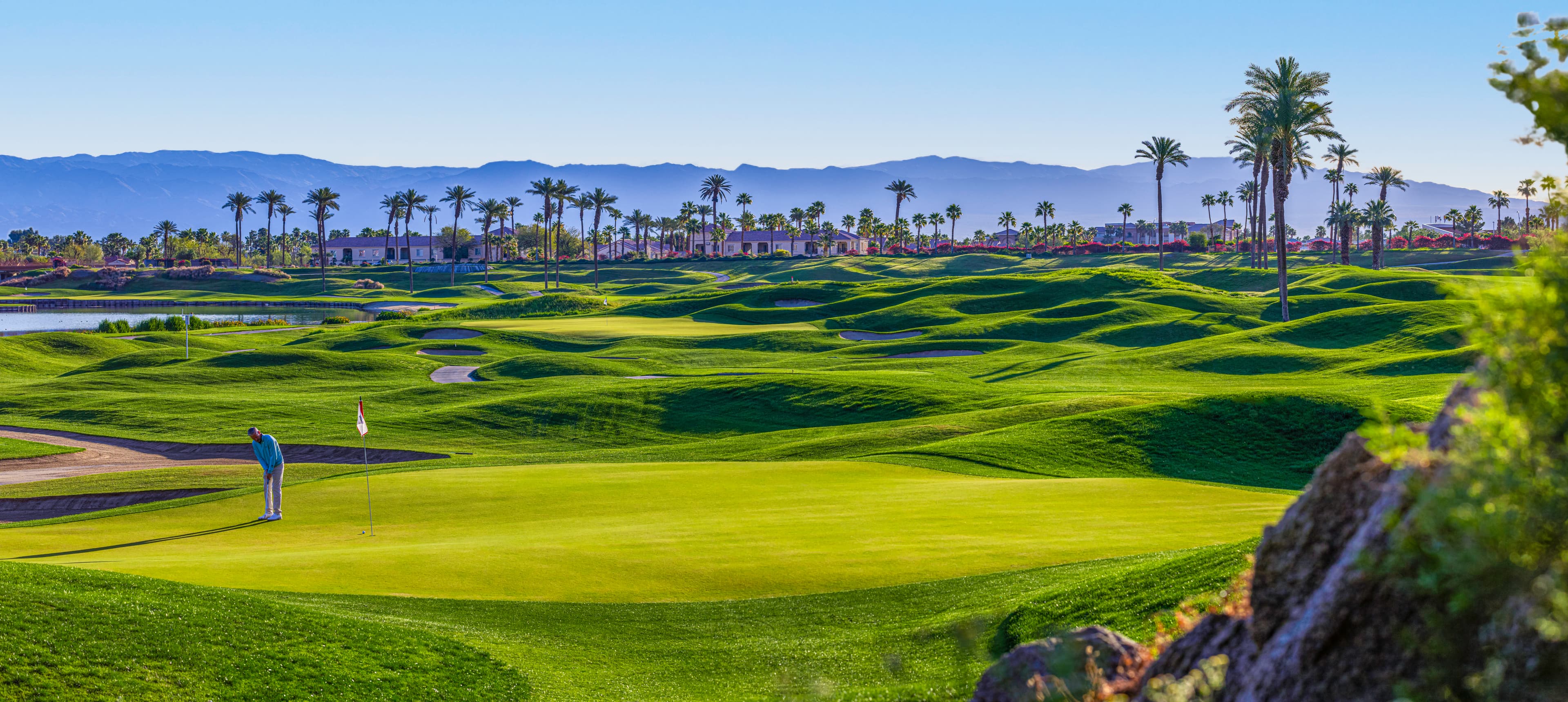
The Jack Nicklaus Tournament Course at PGA West opened in 1987, one year after Pete Dye completed the Stadium Course on the adjacent property. The two share a resort complex and a La Quinta address, and they share very little else. Where Dye's Stadium Course is a sustained confrontation with the architect's imagination, Nicklaus built a layout that operates on different principles: broad fairways that invite the driver, greens that reward well-struck irons, and a routing that builds difficulty through strategic placement rather than visual intimidation.
What to expect
The course stretches to 7,204 yards with a slope of 143 and has served as a biannual host of PGA Tour Qualifying School finals. That hosting history matters because it confirms a standard of conditioning and design rigour that goes beyond resort maintenance. A Q-School finals venue must present a fair test at the highest skill level, and this course meets that bar through length, green complexes, and strategic options off the tee.
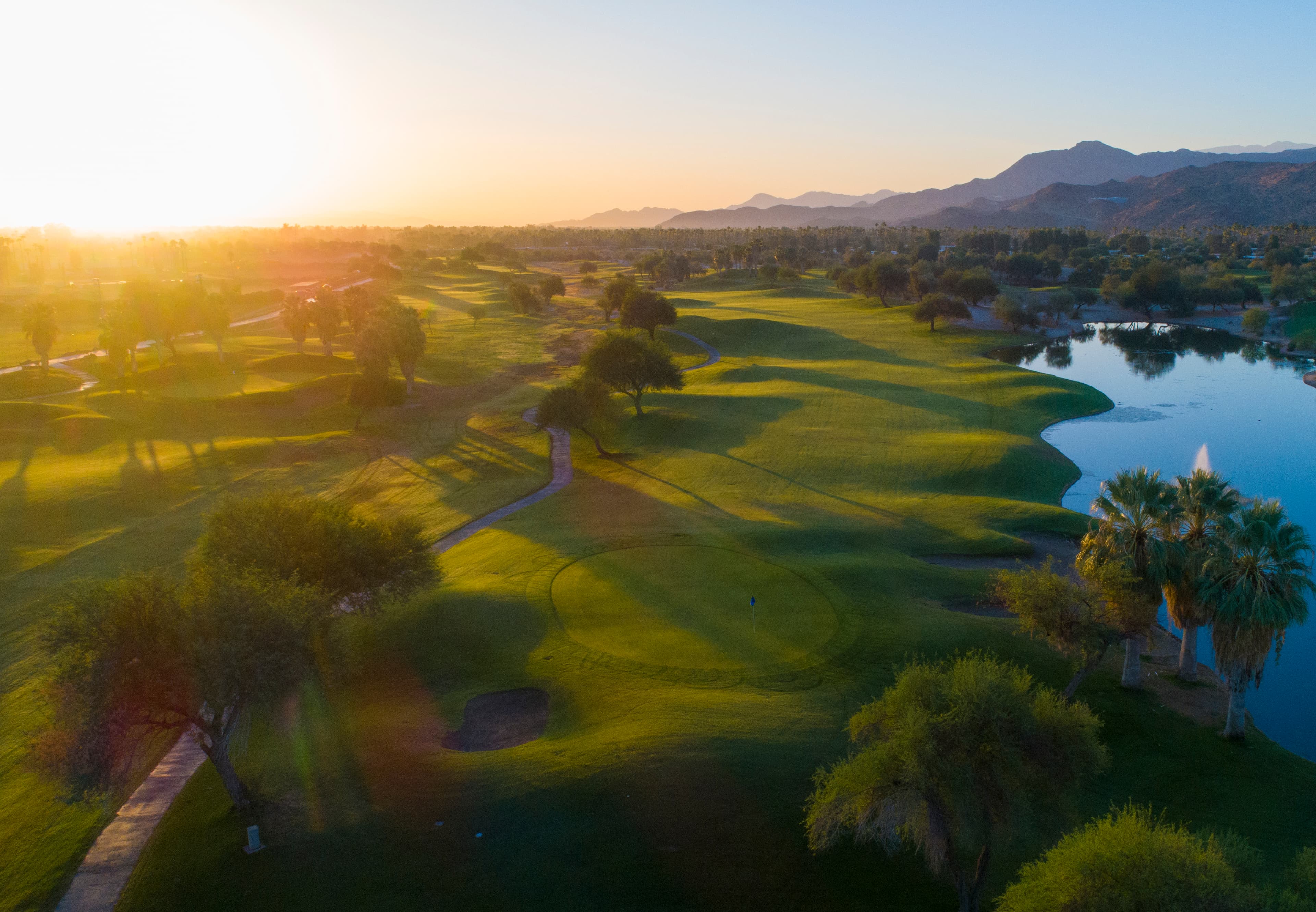
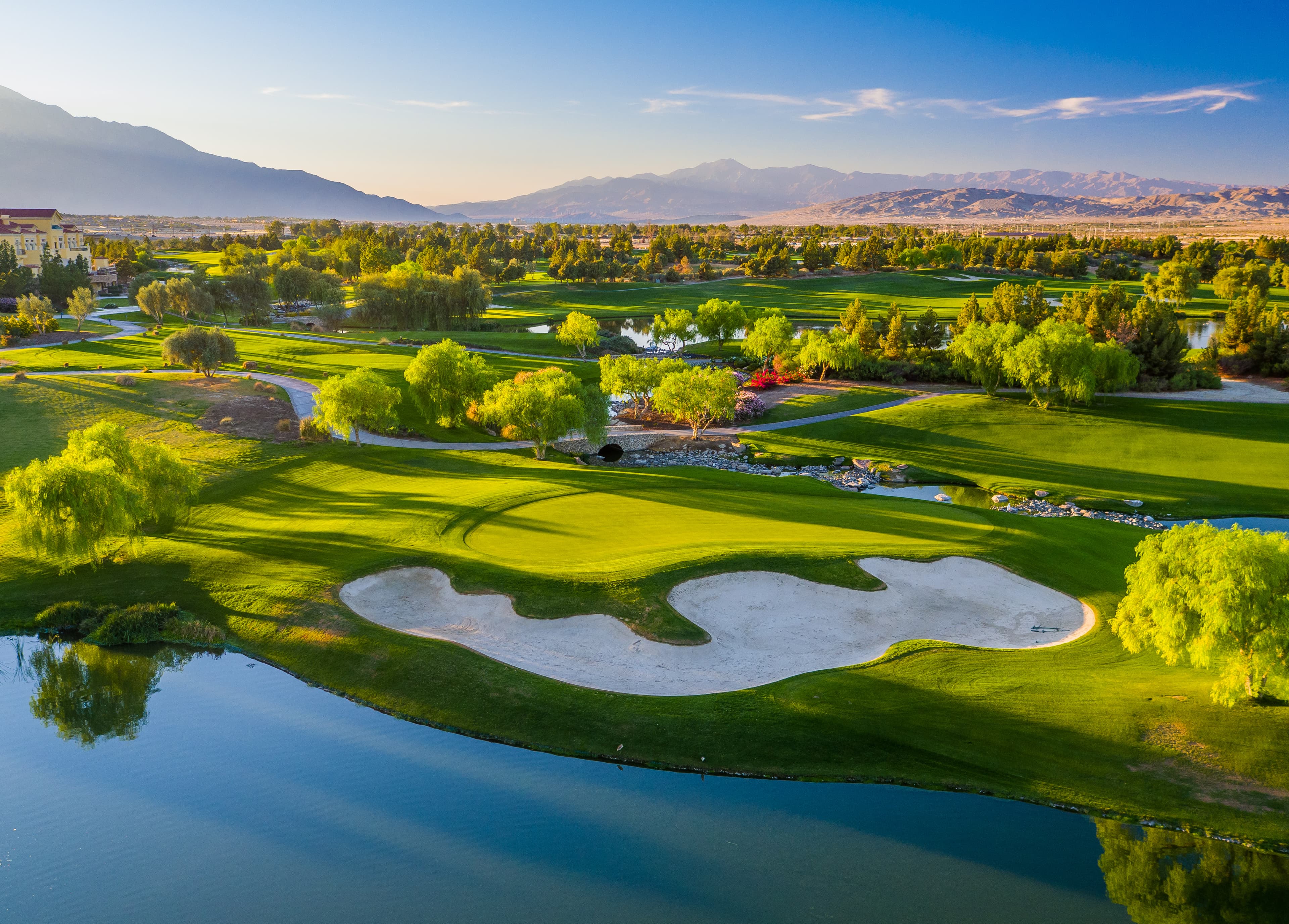
Two island greens are the course's most distinctive feature. Unlike the Stadium Course's single island green, which functions as a dramatic set piece, the Nicklaus island greens are integrated into the flow of the round. They demand precision, but the shots into them are not fundamentally different in character from the other approach shots. Nicklaus was not building theatre; he was building a course where every hole presents a clear strategic choice.
The front nine moves through open desert with the Santa Rosa Mountains visible throughout. Water features come into play strategically rather than punitively, with alternative lines for players who prefer to avoid the risk. Fairways are wider than the Stadium Course and reward good drives with favourable angles. The back nine tightens; approach shots become more demanding, and the greens show more contour. Nicklaus's signature greens accept a well-struck approach from the correct angle and reject anything else.
By the numbers
- Par
- 72
- Yardage
- 7,204
Is it worth the green fee?
This is the practical question. Peak-season rates of $289 to $366 make this the most expensive public tee time in the Coachella Valley, and the gap over the Stadium Course's peak rate of $200 to $264 is notable given that many golfers rank the Stadium Course higher on design merit alone. The off-peak rate of $94 to $150 is a dramatic swing and, at the lower end, places this course among the valley's better value plays during summer. Choose your timing carefully, or commit to the premium with eyes open.

Booking and trip fit
Tee times are available through the booking link on this page. Guests at La Quinta Resort receive booking priority. For golfers playing both PGA West courses on a single trip, the back-to-back contrast of Dye and Nicklaus on adjacent properties is instructive: two of the game's most influential architects arriving at entirely different conclusions about what a golf hole should look like.
The PGA West Stadium Course is the obvious sibling. For broader Palm Springs context, the Indian Wells Players Course or Indian Wells Celebrity Course, the Desert Willow Firecliff or Desert Willow Mountain View, and SilverRock Resort give you the rest of the public-access tier worth playing.
Where to Stay
Accommodations near PGA West — Jack Nicklaus Tournament Course

Hotel
ARRIVE Palm Springs
Palm Springs, California
Thirty-two rooms, no front desk, and a mid-century design sensibility on walkable North Palm Canyon Drive.
From $150/nightTahquitz Creek (4 mi)
ExpediaCheck availability

Hotel
Best Western Date Tree Hotel
Palm Springs, California
The lowest branded-hotel rate in the Coachella Valley, for golfers who trade driving time for green fees.
From $70/nightSilverRock (8 mi)
ExpediaCheck availability

Hotel
Courtyard by Marriott Palm Desert
Palm Springs, California
Two miles from Desert Willow with Bonvoy points and free parking, in the center of the golf corridor.
From $90/nightDesert Willow (2 mi)
ExpediaCheck availability

Hotel
Embassy Suites by Hilton La Quinta Hotel & Spa
Palm Springs, California
All-suite format with an on-site spa and restaurant, splitting the difference between resort and budget.
From $120/nightPGA West (4 mi)
ExpediaCheck availability
Compare all stays near PGA West — Jack Nicklaus Tournament Course
Live prices from Booking.com, Expedia and more — every nearby hotel and rental in one search.
Prices and availability from Booking.com, Expedia and others via Stay22. GolfTrailsHQ may earn a commission at no additional cost to you.
Other Courses Nearby
Premium
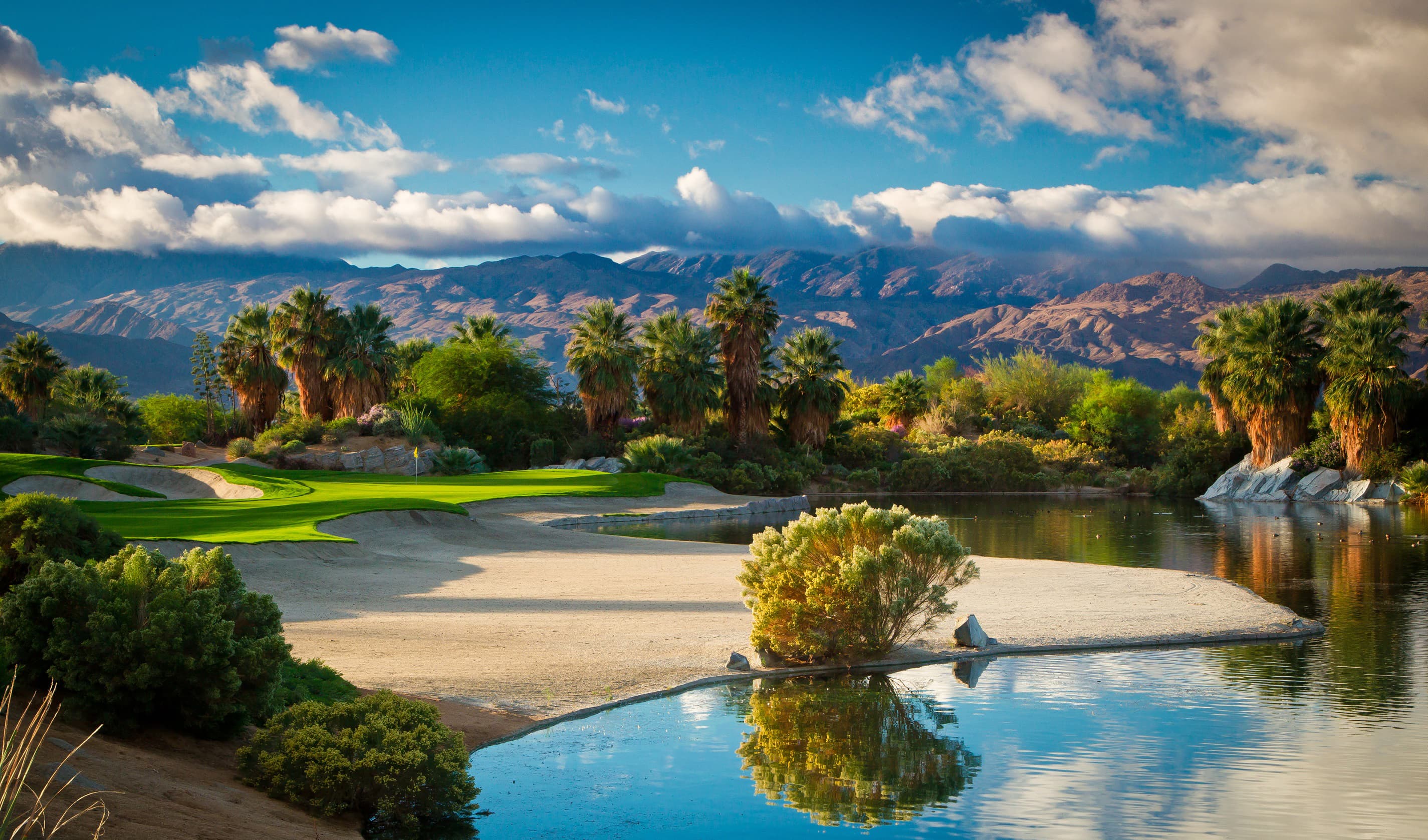
Desert Willow Golf Resort — Firecliff
Palm Springs, California
The more demanding half of Desert Willow, rated among the top public courses in California, where desert washes and elevation changes create a round that earns its reputation.
$73–$217PublicMichael Hurdzan / Dana Fry / John Cook (1997)
GolfNowBook tee time
Mid-Range
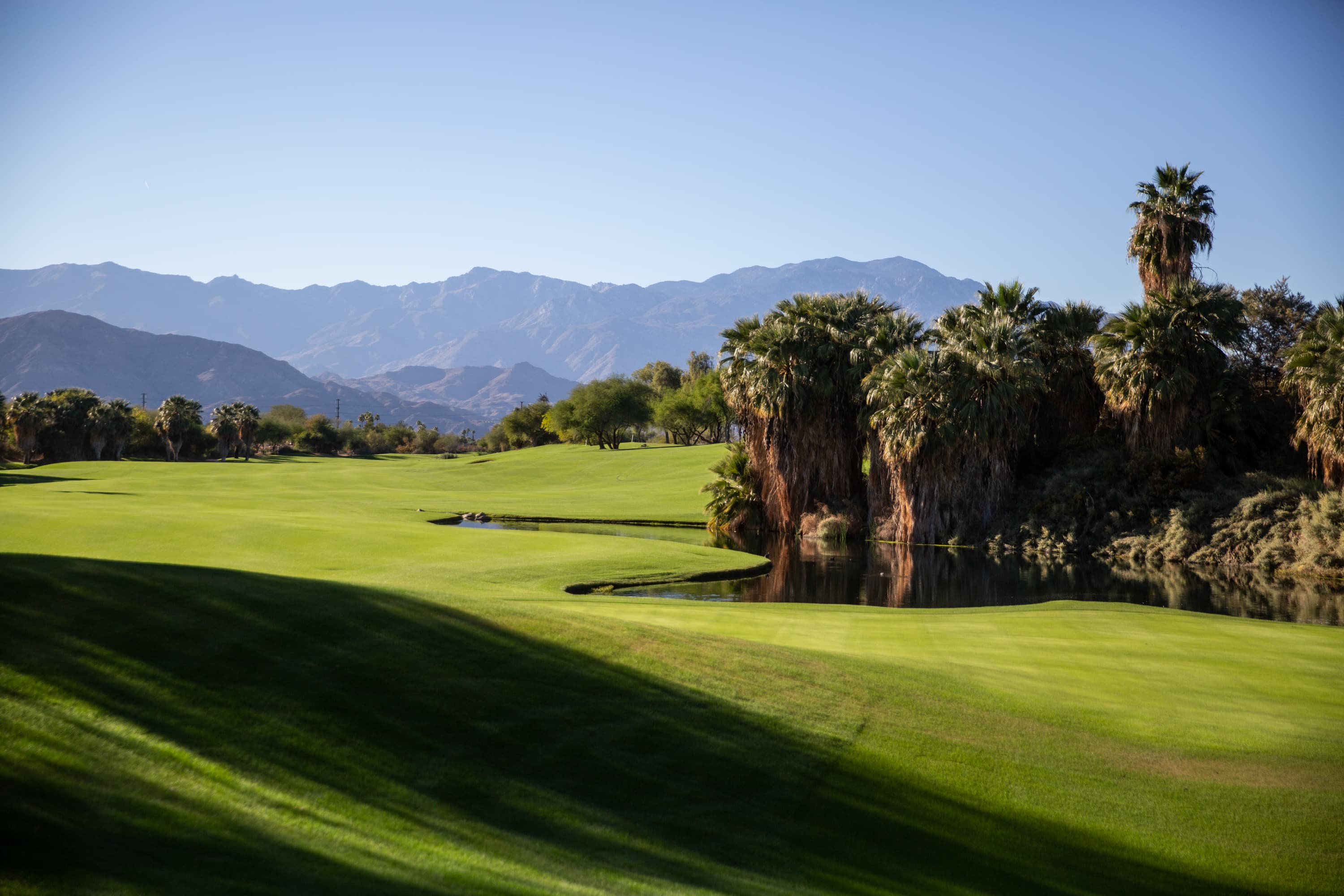
Desert Willow Golf Resort — Mountain View
Palm Springs, California
Desert Willow's gentler layout, where the mountain views outperform the scorecard difficulty and the conditioning matches its tougher sibling.
$73–$200PublicMichael Hurdzan / Dana Fry / John Cook (1998)
GolfNowBook tee time
Mid-Range
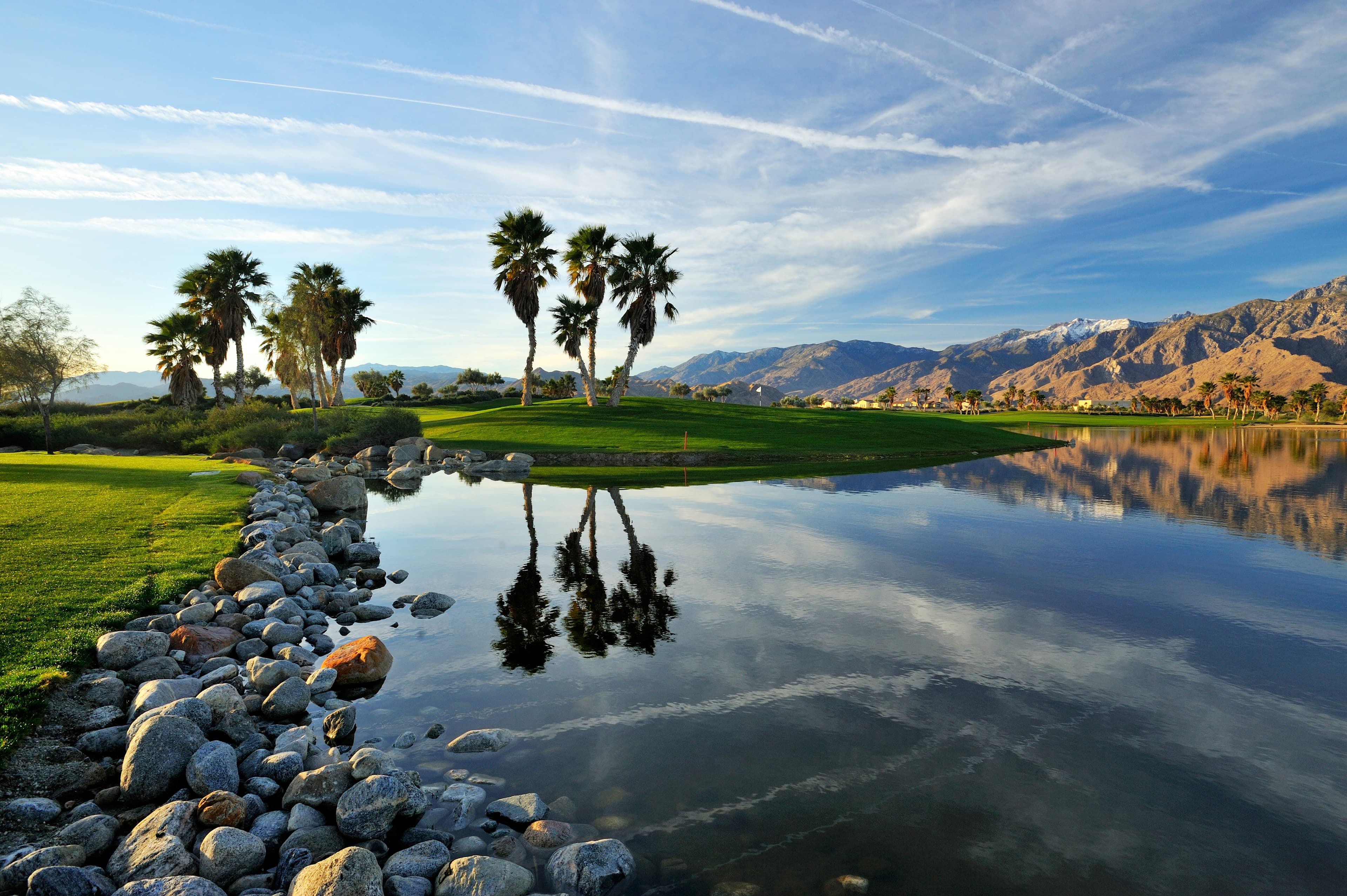
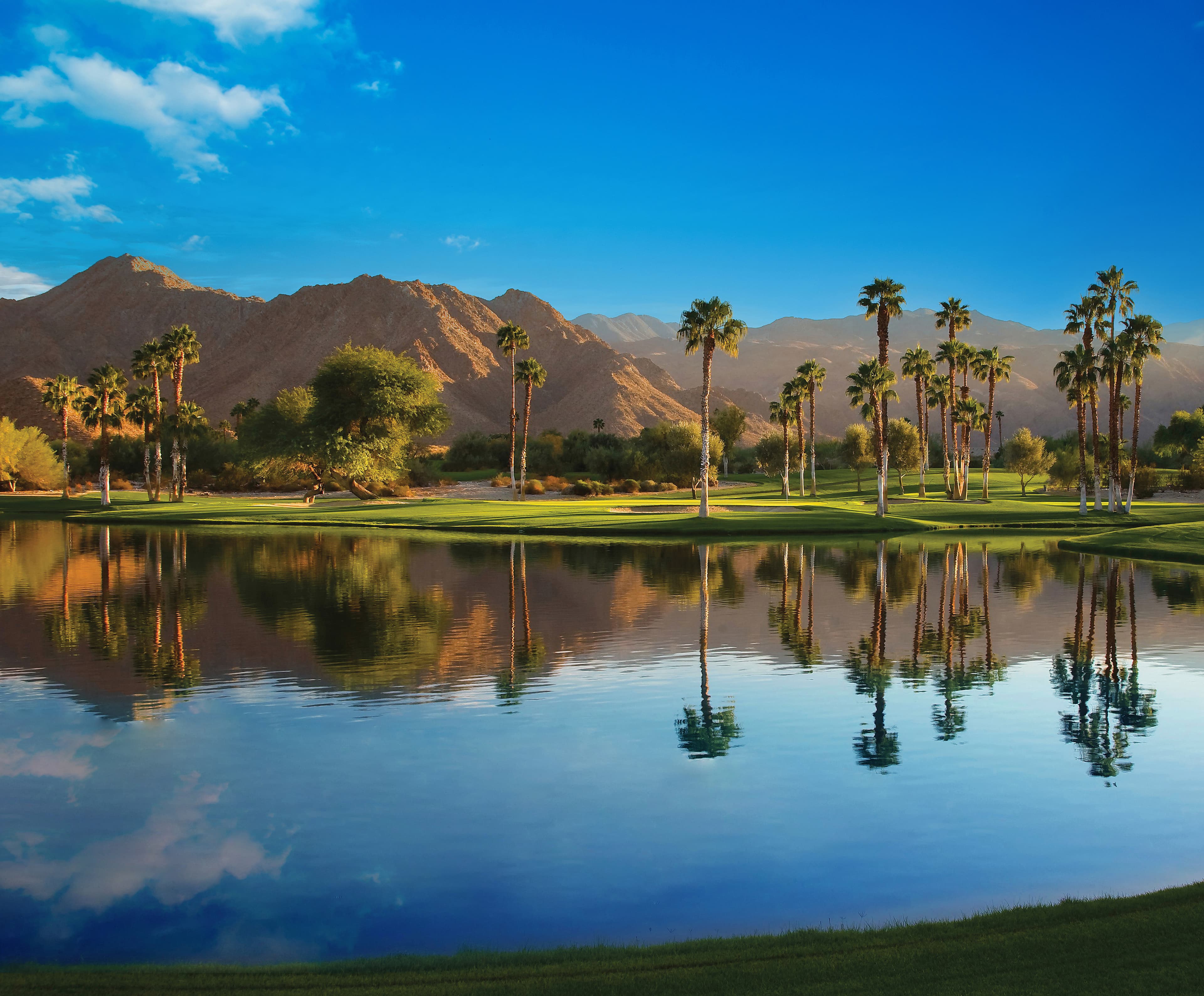
Escena Golf Club
Palm Springs, California
Generous corridors, clear sightlines, and the widest green-fee range in the valley make Escena the course that fits every budget.
$59–$204PublicNicklaus Design (2005)
GolfNowBook tee time
Mid-Range
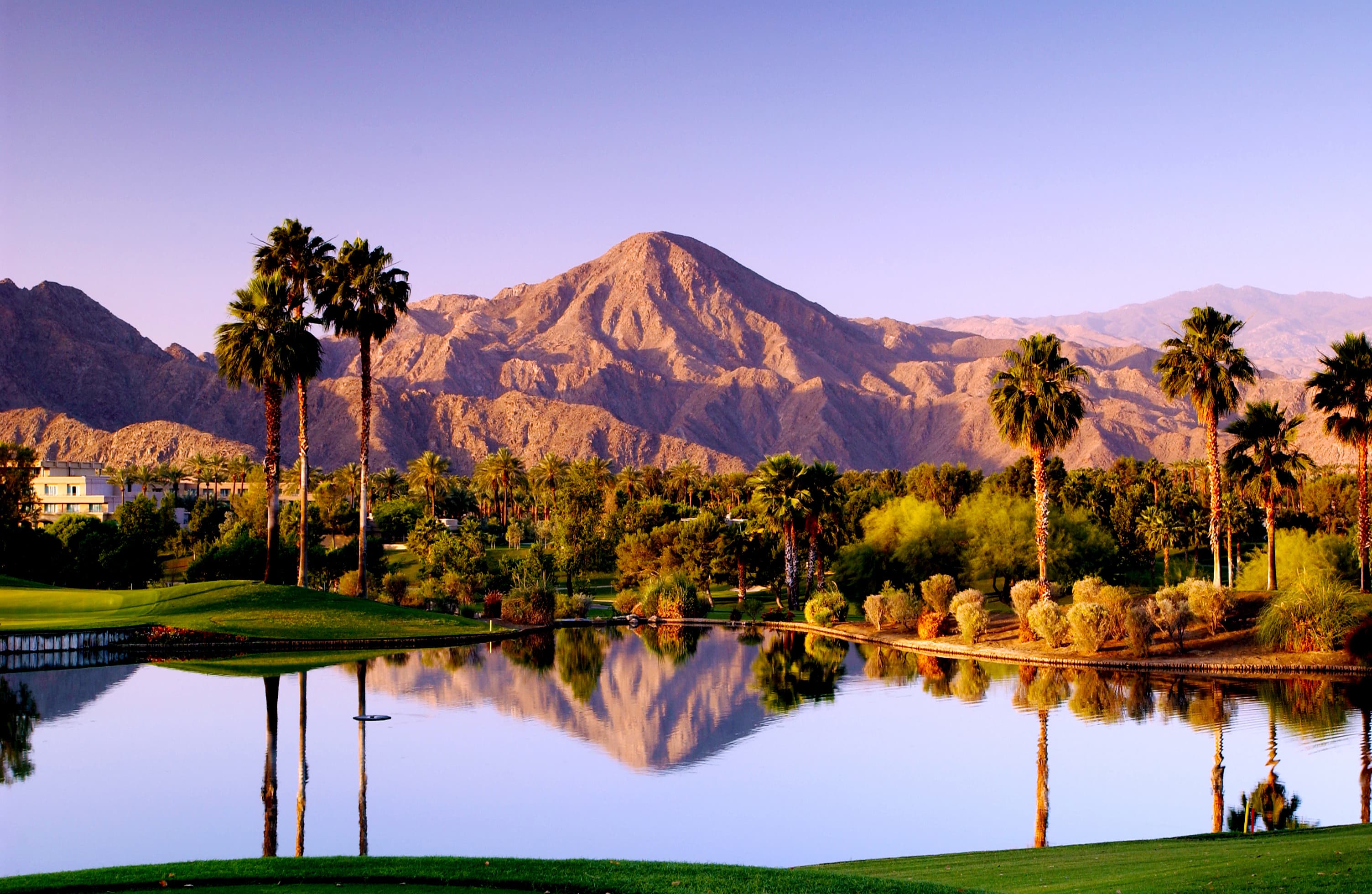
Indian Wells Golf Resort — Celebrity Course
Palm Springs, California
Split-level lakes, waterfalls, and television history on a resort course that prioritizes visual drama over strategic subtlety.
$72–$199ResortClive Clark (2006)
GolfNowBook tee time
Premium
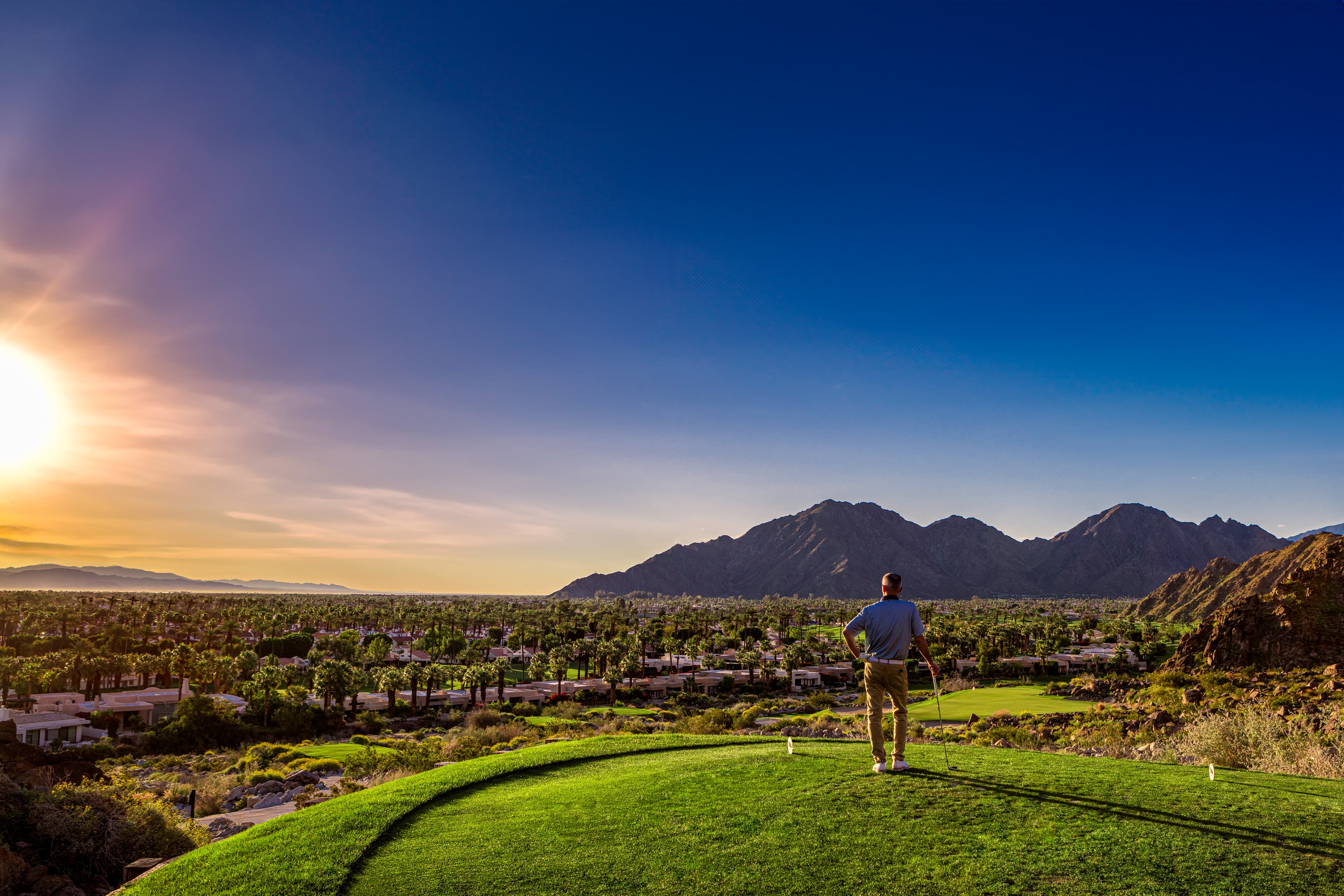
Indian Wells Golf Resort — Players Course
Palm Springs, California
John Fought's homage to classic American architecture, stretched to 7,376 yards across the Coachella Valley floor.
$72–$199ResortJohn Fought (2007)
GolfNowBook tee time
Bucket List
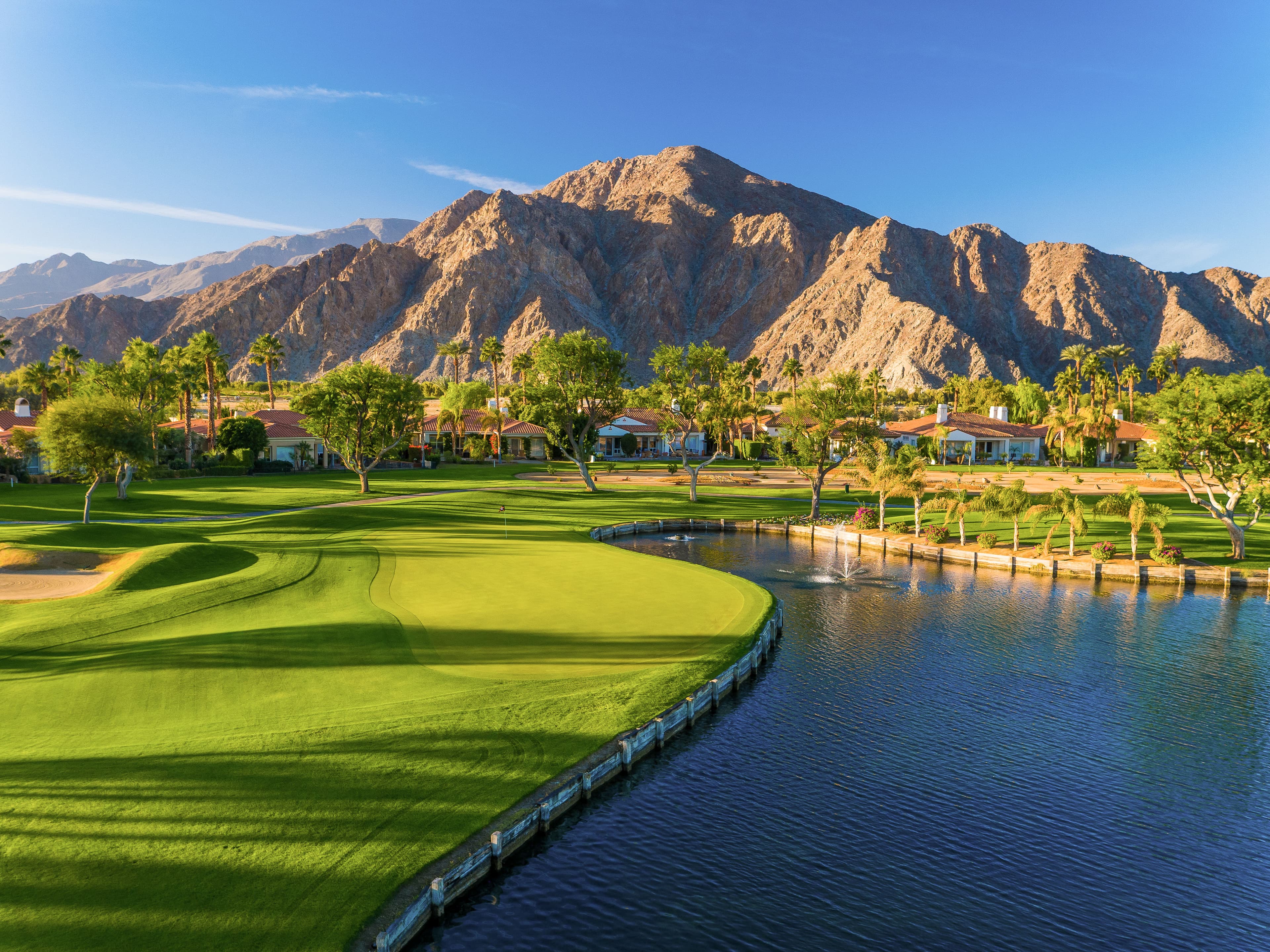
PGA West — Stadium Course
Palm Springs, California
Pete Dye's desert proving ground, where the 17th island green is the most famous hole you will probably lose a ball on.
$146–$264ResortPete Dye (1986)
GolfNowBook tee time
Mid-Range
SilverRock Resort (Arnold Palmer Classic Course)
Palm Springs, California
A former Bob Hope Classic host that charges municipal rates. The value gap between what SilverRock costs and what it delivers is the widest in the valley.
$80–$218PublicArnold Palmer (2005)
GolfNowBook tee time
Hidden Value
Tahquitz Creek Golf Resort — Legend Course
Palm Springs, California
The cheapest legitimate round in the Coachella Valley, on a 1959 municipal course with 40 Palmer-era bunkers and peak-season green fees under $65.
$25–$65PublicWilliam F. Bell (1959); Arnold Palmer renovation (1996)
GolfNowBook tee time
Mid-Range
The Classic Club
Palm Springs, California
Arnold Palmer's longest Coachella Valley design, with Bermuda greens and a Bob Hope Classic pedigree.
$80–$230PublicArnold Palmer (2006)
GolfNowBook tee time
Plan Your Trip
Explore Palm Springs
Full guide: courses, stays, getting there.
Continue →3 Itineraries
Pre-planned trips to Palm Springs.
Continue →Off the Fairway
10 non-golf activities at Palm Springs.
Continue →Some links on this page are affiliate links. If you book through these links, we may earn a small commission at no extra cost to you. This does not influence our editorial recommendations.