 Pin it
Historic Charleston Walking Tour
Three and a half centuries of architecture, rebellion, and reinvention, covered on foot in two hours.
- Duration
- 2 hours
- Cost
- $25-$40 per person
- Type
- Cultural
- What stands out
- Three and a half centuries of architecture, rebellion, and reinvention, covered on foot in two hours.
$25-$40 per person
Booking via Viator
Charleston's Historic District compresses 350 years of American history into a walkable grid, and a guided tour is the most efficient way to decode what you're looking at. Several operators run daily departures from the Market area; the routes overlap, and the difference is in the guide's range.
The experience
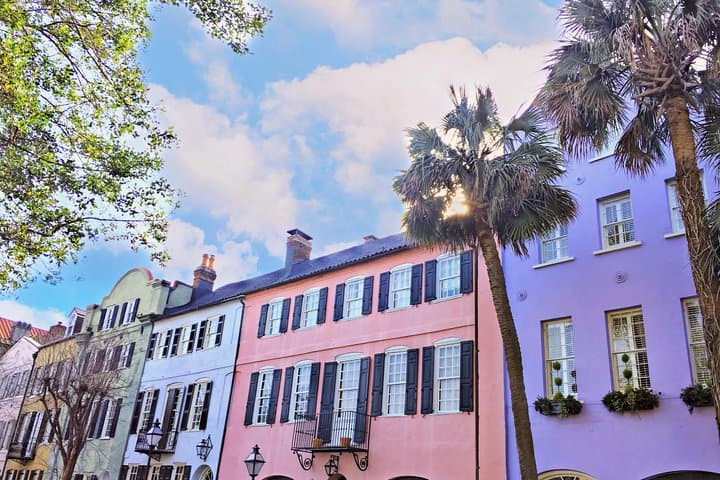
The standard circuit covers Rainbow Row, the thirteen pastel Georgian rowhouses on East Bay Street that date to the 1740s and remain the most photographed block in the city. Most routes continue to The Battery, the seawall promenade at the southern tip of the peninsula where Charleston Harbor opens up and Fort Sumter is visible across the water. St. Michael's Episcopal Church (1761) and St. Philip's Church anchor the religious architecture. What separates a good tour from a self-guided walk is context: the guides connect the architecture to the rice and indigo wealth, the role of enslaved labour, the fire of 1861, the earthquake of 1886, and the preservation movement that saved the district from demolition in the 1920s.
Logistics
$25 to $40 per adult, with some operators running on a tips-based model. Two hours, roughly one to one and a half miles at a gentle pace. Bulldog Tours, Charleston Strolls, and Old Charleston Walking Tours are among the most established operators. Comfortable shoes for uneven sidewalks. Tours run rain or shine; bring a hat and water in warmer months.
Some links on this page are affiliate links. If you book through these links, we may earn a small commission at no extra cost to you. This does not influence our editorial recommendations.