 Pin it
Congress Avenue Bat Bridge
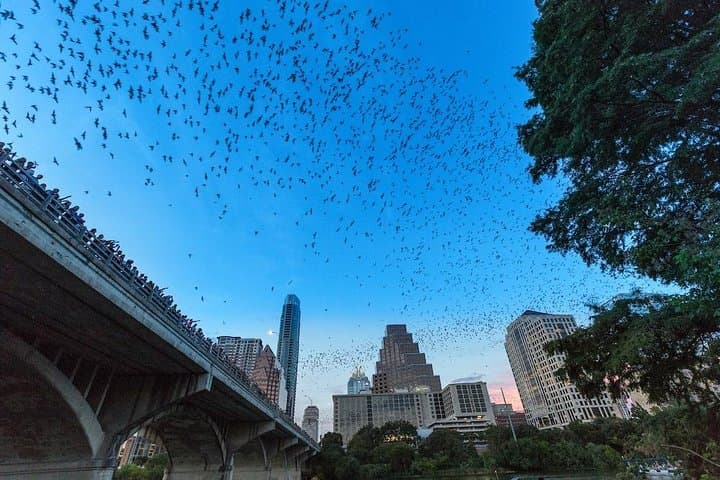
1.5 million Mexican free-tailed bats emerge from beneath a downtown bridge at dusk, and the whole city stops to watch.
- Duration
- 1-2 hours
- Cost
- Free
- Type
- Cultural
- What stands out
- 1.5 million Mexican free-tailed bats emerge from beneath a downtown bridge at dusk, and the whole city stops to watch.
Free
Booking via Viator
Every evening from March through October, roughly 1.5 million Mexican free-tailed bats emerge from beneath the Ann W. Richards Congress Avenue Bridge in central Austin. It's the largest urban bat colony in North America, and watching it is free, takes under an hour, and requires no booking.
The experience
The emergence happens at dusk and lasts 20 to 45 minutes. The bats exit in a dense, swirling column that moves south toward the agricultural land where they feed, eating an estimated 10,000 to 30,000 pounds of insects a night. Against a sunset sky, the effect is striking.
Viewing is free from the bridge sidewalk, which fills with spectators on warm evenings. The south side is the better vantage. Kayaks on Lady Bird Lake put you directly underneath the column, and the Statesman Bat Observation Center on the south bank gives another angle. As an after-round activity for any group, it's hard to beat for effort-to-payoff.
Logistics
Arrive 30 to 45 minutes before sunset to claim a spot on the bridge. The colony peaks in July and August once pups born in June join the flight. Cool or rainy evenings can delay or shrink the emergence, so check the weather. Park in nearby downtown garages. South Congress is a five-minute walk south, making dinner after the bats a natural pairing.
Some links on this page are affiliate links. If you book through these links, we may earn a small commission at no extra cost to you. This does not influence our editorial recommendations.